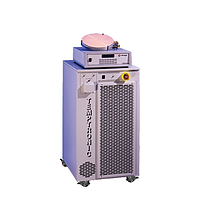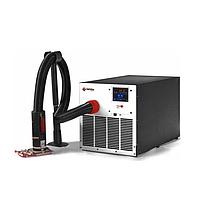
Semiconductor Thermal Test System
Reliable thermal conditioning is a critical part of semiconductor validation, characterization, and production test. When devices must be checked across hot and cold extremes, a Semiconductor Thermal Test System helps engineers create controlled temperature conditions directly at the device under test without slowing the overall workflow more than necessary.
In semiconductor environments, thermal forcing is commonly used for ICs, modules, hybrids, subassemblies, and printed circuit boards. The goal is not only to reach a target temperature, but to do so with repeatable control, fast transitions, and enough stability to support meaningful electrical test results.
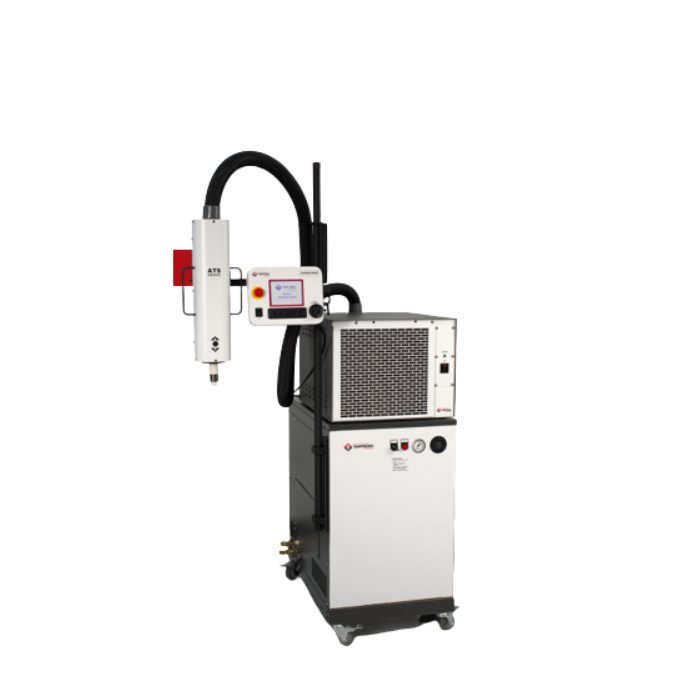
Where semiconductor thermal test systems fit in the test flow
These systems are designed to apply hot or cold air, or localized thermal energy, to a DUT during development, qualification, failure analysis, or production screening. Compared with broad environmental chambers, thermal forcing equipment is typically chosen when the test area is localized, cycle times matter, and engineers need direct control over the DUT temperature.
They are often used alongside electrical measurement and device evaluation setups in semiconductor labs and production lines. In broader workflows, thermal testing may complement processes such as automated optical inspection or defect analysis, especially when teams need to correlate thermal behavior with functional or physical inspection results.
Typical system capabilities that matter in real applications
A practical thermal test platform is judged by more than just its temperature range. Buyers usually compare how quickly the system can move between setpoints, how accurately it maintains temperature at the DUT, what type of sensor feedback it accepts, and whether it can support continuous operation in engineering or production environments.
Across the products in this category, examples include operating ranges from approximately -100 to +300°C, fine temperature resolution, and support for thermocouple-based DUT sensing. Many systems are also designed to achieve low temperatures without requiring LN2 or LCO2, which can simplify facility planning and day-to-day operation depending on the application.
Another important factor is the thermal delivery method. Some systems use controlled airflow for rapid heating and cooling of packaged devices, boards, and modules, while bench-top formats focus on localized thermal contact for smaller DUTs. This difference can have a major impact on fixture design, operator workflow, and repeatability.
Representative product options in this category
For users needing wide temperature coverage and fast thermal transitions, the Thermonics ATS and ECO series provide several options. Models such as the Thermonics ATS-870E-M, ATS-850E-M, and ECO-560/660 Thermostream are suited to applications that require rapid movement between hot and cold conditions while maintaining precise DUT control.
For production-oriented semiconductor testing, systems such as the Thermonics ATS-810E-M and ATS-810-WM illustrate how thermal forcing platforms can be tailored for continuous use, with variants that differ in cooling infrastructure and operating setup. These solutions are typically relevant where repeatability and throughput are as important as headline temperature performance.
Temptronic also offers strong coverage in this space, from Thermostream units such as the ATS-830E-M, ATS-710-WM, and ATS-645-T to localized bench-top systems like the Temptronic DCP-202 and ThermoSpot DCP-201. Bench-top platforms are especially relevant when the DUT is compact and the user wants targeted thermal stimulation rather than conditioning a larger surrounding area.
How to choose the right thermal test system
The first step is to define the required temperature range and the actual test objective. Some projects focus on burn-in style screening across standard hot and cold points, while others require aggressive characterization at very low or very high temperatures. If the test plan includes fast cycling, transition time becomes just as important as the ultimate temperature endpoints.
Next, consider the DUT format. Packaged semiconductors, power devices, modules, and populated boards do not all respond the same way to airflow or localized thermal contact. Small components may benefit from compact bench-top forcing systems, while larger assemblies may require higher airflow and broader thermal coverage. If your process also depends on thermal stability of surrounding equipment, reviewing related support equipment such as a chiller solution may be useful.
Utilities and installation conditions should also be reviewed early. Depending on the model, systems may require compressed dry air, controlled purge gas, specific power input, or cooling water. In production settings, these practical requirements can affect deployment speed and total operating cost as much as the thermal specification itself.
Bench-top versus Thermostream-style systems
Bench-top temperature forcing systems are generally chosen when users need localized control, compact footprints, and straightforward integration into engineering benches. The Temptronic DCP-202 and ThermoSpot DCP-201 are examples of this approach, supporting small DUT sizes and offering operator-oriented features such as touchscreen programming, ramp and soak control, and data-oriented operation.
Thermostream-style systems, by contrast, are better aligned with high-speed air-based thermal conditioning of components, boards, and modules. Products such as the ATS-830E-T, ATS-810E-T, and ATS-645-T illustrate the value of fast hot-to-cold and cold-to-hot transitions for users who need to reduce idle time between test states.
The best choice depends on whether the application prioritizes localized contact, airflow-based forcing, compact bench integration, or production throughput. Matching the thermal delivery method to the DUT and fixture design is usually more important than comparing only one specification in isolation.
Common semiconductor use cases
Thermal test systems are used in device characterization, engineering validation, incoming inspection support, and production screening. They help teams verify whether a device continues to meet electrical performance targets as temperature changes, which is essential for semiconductors used in automotive, industrial, communications, and high-reliability electronics.
They are also valuable when investigating marginal behavior that appears only at temperature extremes, such as timing drift, startup issues, or intermittent faults. In some labs, thermal forcing is combined with ESD simulation or other stress methods to build a more complete picture of device robustness under realistic operating conditions.
What to review before ordering
Before selecting a system, it helps to confirm the target DUT size, desired temperature profile, available utilities, and whether the application is for engineering use or 24/7 production. Users should also check sensor compatibility, airflow or contact method, interface preferences, and whether the setup needs logging or remote communication support.
For many buyers, the most efficient path is to narrow the shortlist by application type first, then compare models. For example, a wide-range Thermostream system may be appropriate for demanding rapid cycling, while a bench-top platform may be more practical for compact devices and localized testing. If the workflow extends beyond thermal forcing into a wider inspection environment, related categories such as semiconductor defect inspection may also be relevant.
Conclusion
A well-matched semiconductor thermal test setup can improve test repeatability, reduce transition time, and support more confident device evaluation across temperature extremes. Whether the requirement is a mobile bench-top unit or a higher-capacity Thermostream platform, the right choice depends on the DUT, the test method, and the facility conditions around it.
By comparing temperature range, control method, transition speed, and utility requirements in context, engineers and sourcing teams can select a system that fits both current test needs and future semiconductor validation workflows.
Get exclusive volume discounts, bulk pricing updates, and new product alerts delivered directly to your inbox.
By subscribing, you agree to our Terms of Service and Privacy Policy.
Direct access to our certified experts