For full functionality of this site it is necessary to enable JavaScript.
EMINKH.COM
0

Autofocus on Fluke Thermal Cameras

11/03/2025 11:40:09

“Hello EMIN Vietnam, I'm Nam. Let me ask: Does the Fluke thermal camera have autofocus? And where can I buy the genuine one in Hanoi?” A practical question that EMIN receives quite often. Find out the answer below!

Does the Fluke thermal camera have autofocus?

Thermal cameras are widely used today in the fields of engineering, equipment maintenance, electrical and mechanical inspection. For professional users, speed and image clarity are decisive factors when evaluating camera quality.

Fluke understands this, so it has developed LaserSharp® Auto Focus technology, a feature that helps the camera automatically focus with just one click. When the user points the laser at the position to be measured, the device will automatically calculate the distance and adjust the focus immediately, giving a clear thermal image without manual operation.
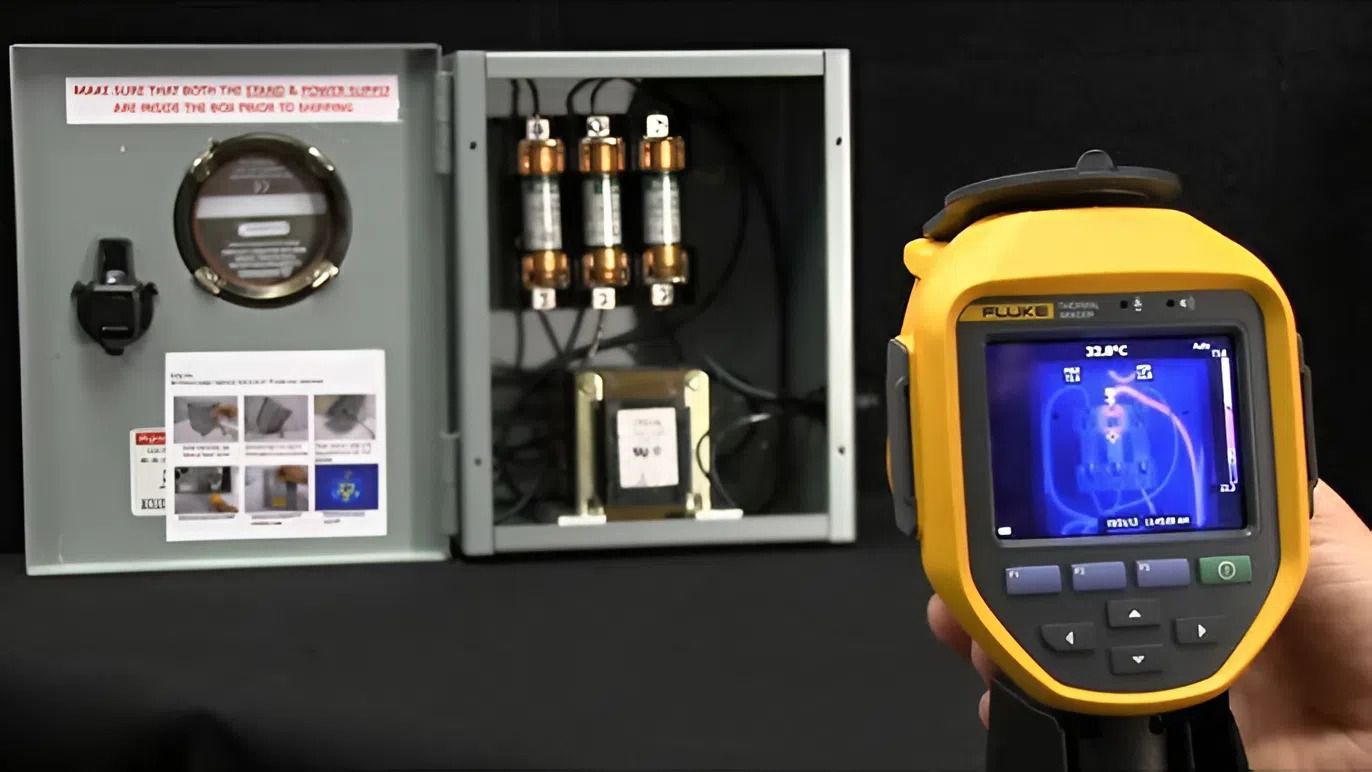
This way, you don't have to worry about blurring or distortion when measuring at different distances, a problem that's easy to encounter when focusing manually.

How LaserSharp® Auto Focus technology works

This feature uses a laser to determine the distance to the object, then the autofocus motor automatically adjusts the lens to the correct position.

This process takes place in a split second and produces a detailed, contoured thermal image, making it easier for users to observe and analyze, especially in working environments with limited light or many obstacles.

Typical Fluke camera lines with LaserSharp® Auto Focus include:

Fluke Ti401 Pro, quite suitable for maintenance engineers, industrial electricity.

or with compact devices such as: Fluke iSee™ TC01C, You can see details at: Fluke iSee™ TC01C Thermal Camera for Smartphones
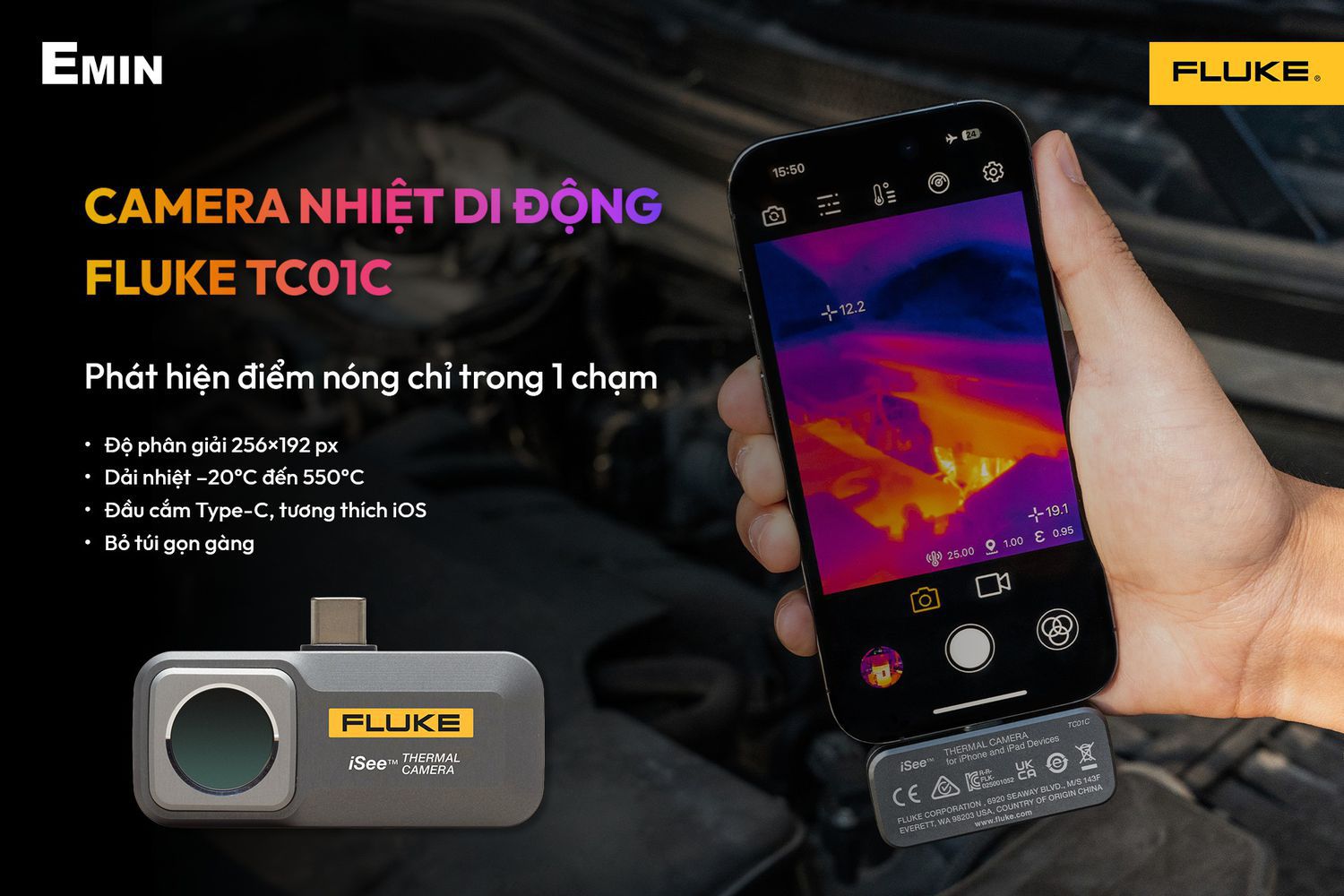
See more: Fluke thermal cameras are distributed by EMIN

Buy genuine Fluke thermal cameras in Hanoi

If you are looking for a place to buy genuine Fluke thermal cameras, EMIN Vietnam is an authorized distributor of Fluke in Vietnam.

At the Hanoi showroom, you can directly experience the product, get advice on choosing the model suitable for your needs, and enjoy the warranty and after-sales policy from the manufacturer.

Related News

Which products are tested using a -40°C to +150°C thermal shock chamber?
07/22/2026 14:45:25

Automotive circuit boards, sensors, modules, and plastic components can all experience issues after repeated transitions between cold and hot environments. A thermal shock chamber operating from -40°C to +150°C enables the replication of these temperature fluctuations under controlled testing conditions.

Does thermal shock cause damage to electronic components?
07/22/2026 10:40:49

An electronic component may operate stably under constant temperature conditions yet fail after repeated rapid transitions between hot and cold. The issue typically stems not from a specific temperature level, but rather from the rate of temperature change and the number of hot-cold cycles

The rigorous standards behind a multi-million-dollar MRI suite
07/21/2026 14:54:01

An MRI system may be correctly installed and fully connected to the power supply, yet still encounter issues if the surrounding environment fails to meet technical specifications. Electromagnetic interference, RF shielding, power quality, grounding, temperature, humidity, and particulate levels are all factors that may require assessment, depending on the facility's design and the manufacturer's requirements.

Sinusoidal and Random Vibration: A Test Setup Guide for Industrial Engineers
07/21/2026 10:30:38

During the operation of industrial machinery or the transportation of goods, persistent mechanical vibrations inevitably occur; these are a primary cause of material fatigue, loosened connections, and cracking in printed circuit boards (PCBs). To ensure product integrity before delivery to customers, R&D and QA/QC engineers must simulate these dynamic forces using vibration test systems.

Capacities of laboratory centrifuge tubes
07/20/2026 13:55:40

Tubes with capacities of 0.2 ml, 1.5 ml, 15 ml, or 50 ml are commonly found in laboratories, yet each type is associated with specific sample categories and equipment configurations. DNA and RNA samples typically require small-volume microtubes; blood and cell samples often utilize 5 ml or 15 ml tubes; while large-volume processing workflows may require tubes of 50 ml, 100 ml, or greater capacity

Stay Updated with Offers

Get exclusive volume discounts, bulk pricing updates, and new product alerts delivered directly to your inbox.

By subscribing, you agree to our Terms of Service and Privacy Policy.

Quick Support

Direct access to our certified experts