High-voltage equipment depends on healthy insulation to operate reliably. A discharge counter tester is used in partial discharge monitoring to help maintenance teams observe discharge activity and identify conditions that may warrant closer investigation. Used as part of a structured testing program, it can support insulation diagnosis, equipment condition assessment, and preventive maintenance.
What Is a Discharge Counter Tester?
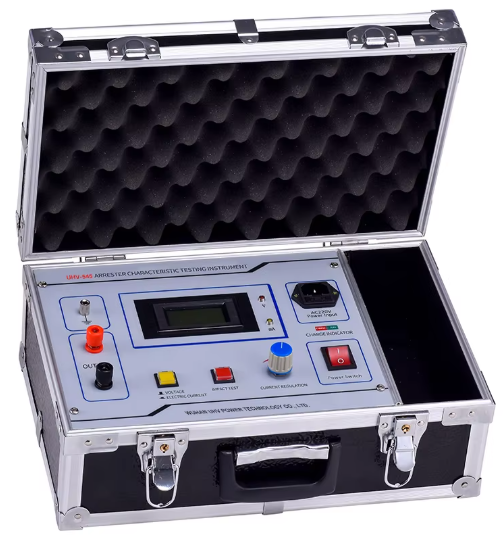
A discharge counter tester is an instrument used to detect and measure the number of partial discharges occurring in high-voltage electrical equipment. Partial discharge is a localized electrical discharge that can occur inside or on the surface of insulation without becoming a complete breakdown.
Although partial discharges may be small, repeated activity can gradually affect insulating materials. Over time, this may reduce insulation performance and increase the risk of equipment damage or failure. For this reason, monitoring discharge activity is relevant to the ongoing maintenance of high-voltage assets.
The tester evaluates partial discharge activity by detecting weak electrical pulse signals produced by the equipment. It counts and analyzes these signals to provide information that can be considered alongside other test findings.
Why Partial Discharge Monitoring Matters
Partial discharge monitoring is connected to the broader goal of maintaining safe, stable operation in power systems. Regular testing may help reveal potential insulation concerns before they develop into more serious problems. The resulting information can give maintenance personnel a basis for planning preventive actions and prioritizing further inspection.
A discharge counter tester is not only relevant to a single equipment type. The source data identifies generators, transformers, switchgear, and cables among the high-voltage equipment that may require regular discharge testing. In each case, test results should be interpreted in the context of the equipment’s design, operating condition, and maintenance history.
Factors That Can Influence Discharge Measurements
Obtaining useful discharge-counting data requires attention to conditions that can affect both partial discharge activity and the measurement itself. Important considerations include the following:
- Insulation condition: Aging, moisture, and fouling can raise the likelihood of partial discharge in insulating materials.
- Equipment structure: Internal design, joints, and insulation components can influence where discharges occur and how strong they are.
- Operating environment: Temperature, humidity, atmospheric pressure, and electromagnetic interference may affect measurements.
- Instrument performance: Tester sensitivity, accuracy, and appropriate operation have a direct effect on the quality of collected data.
Because these factors vary, a count should not be viewed in isolation. A larger count generally indicates more frequent partial discharge activity and may suggest a less favorable insulation condition. However, an informed assessment should consider the complete test context rather than relying on one value alone.
Using Results for Equipment Condition Assessment
A discharge counter tester can contribute to a more complete view of insulation health when its data is reviewed with other diagnostic results. The source data specifically notes dielectric loss and insulation resistance as examples of complementary information. Combining results can help form a broader evaluation report and support more informed maintenance decisions.
For practical condition assessment, teams can establish a consistent testing approach, record the operating and environmental conditions, and compare results over time. Repeated monitoring helps make changes in discharge activity easier to recognize. When unusual activity is identified, maintenance personnel can determine whether further investigation or additional tests are needed.
Good Practices for Discharge Testing
Use trained personnel
Operators should receive professional training and understand both instrument operation and data analysis. Proper setup and interpretation are essential when working with weak electrical pulse signals in high-voltage environments.
Maintain instrument accuracy
Regular calibration helps support the reliability of measurement data. Calibration should be incorporated into the test instrument maintenance process so that results remain dependable for comparison and evaluation.
Apply a comprehensive analysis
Discharge-counting data is most useful when reviewed with other insulation test data. This approach reduces the risk of drawing conclusions from a single measurement and supports a more complete equipment condition assessment.
Follow applicable procedures
Testing and data judgment should follow relevant national and industry requirements. During high-voltage work, personnel should follow high-voltage operating procedures, use insulation protective equipment, and perform work under professional guidance.
Frequently Asked Questions
How can partial discharge affect high-voltage equipment?
Partial discharge can gradually erode insulation, reduce its performance, and increase the possibility of equipment damage or failure.
Does a discharge counter tester diagnose every insulation problem by itself?
No. It provides partial discharge information that should be considered with equipment conditions and other testing data, such as dielectric loss and insulation resistance.
Which equipment can benefit from discharge testing?
Examples include generators, transformers, switchgear, and cables. The testing approach should match the specific equipment and operating context.
A discharge counter is a useful tool for observing partial discharge activity in high-voltage equipment. By using trained operators, maintaining instrument accuracy, documenting conditions, and reviewing results with other diagnostic data, organizations can strengthen their approach to insulation monitoring and preventive maintenance.
![[EMIN x Fluke] Seminar Series on Maintenance of M&E Systems and Rooftop Solar Infrastructure](/s-cdn/76/7679a73b2ae9c53b53b710053f094a7418765531.jpg)