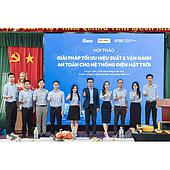
The Vietnam International Agricultural Exhibition AgroViet 2013 was held from November 14–17, 2013 at the Agricultural Trade Promotion Center, 489 Hoang Quoc Viet, Hanoi. This is an annual specialized exhibition in the field of Agriculture and Rural Development. It is also one of the key trade promotion activities of the entire agricultural sector, aiming to expand cooperation, seek partners, enhance knowledge exchange, and update scientific and technological advancements to improve product quality and productivity in agriculture, aquaculture, and livestock farming.
EMIN - DRAMINSKI participated in AgroViet 2013 at booth A76, focusing on introducing equipment from DRAMINSKI – a leading manufacturer of agricultural and veterinary equipment in Poland. These devices contribute significantly to grain and agricultural product preservation, as well as improving productivity and efficiency in livestock farming.
With the introduction from DRAMINSKI, EMIN was honored to serve as an information support partner for the Embassy of Poland at AgroViet 2013. Currently, EMIN is also the official importer and distributor of DRAMINSKI products in Vietnam.
Displayed equipment included:
- Grain and agricultural moisture meters: capable of recalibrating measurement values for each crop type to suit local conditions; allowing additional parameters for crops not pre-programmed in the device.
- Veterinary ultrasound machines (for cattle, horses, pigs, dogs, sheep, goats), pregnancy detectors, mastitis detectors, and estrus detection devices for livestock.