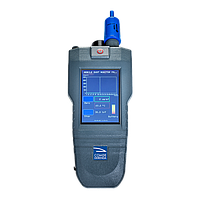
Dust monitor
Controlling airborne dust is important in workplaces, coating inspection, clean production areas, and environmental monitoring programs. The right dust monitor helps teams verify exposure levels, track process conditions, and document results with a method that fits the application, whether the job calls for portable spot checks, continuous aerosol measurement, or surface dust assessment.
On this page, you can explore dust monitoring instruments used for suspended particulate measurement as well as kits designed for dust contamination evaluation in preparation and quality control workflows. The category covers a practical range of technologies, from light-scattering meters and desktop aerosol monitors to ISO 8502-3 dust tape test kits and accessories.
Where dust monitors are used
Dust monitoring is relevant anywhere particulate matter can affect product quality, worker safety, equipment condition, or regulatory reporting. Typical use cases include industrial workshops, construction-related environments, coating and surface preparation, laboratories, indoor air investigations, and production spaces where airborne contamination must be tracked over time.
In some cases, the goal is to measure mass concentration in mg/m³ for airborne dust. In others, the task is to classify visible dust on a prepared surface before coating or bonding. Because these requirements differ, a category like this includes both real-time aerosol instruments and test kits based on standardized inspection methods.
Main types of instruments in this category
A practical way to choose a device is to start with the measurement objective. Real-time dust concentration meters typically use light-scattering technology to estimate particulate levels in air, making them suitable for trend monitoring, area checks, and process observation. Examples in this category include the TSI 8533 Desktop Aerosol Monitor, the KANOMAX 3444 Digital Dust Monitor, and the Sibata LD-3B Dust Concentration Meter.
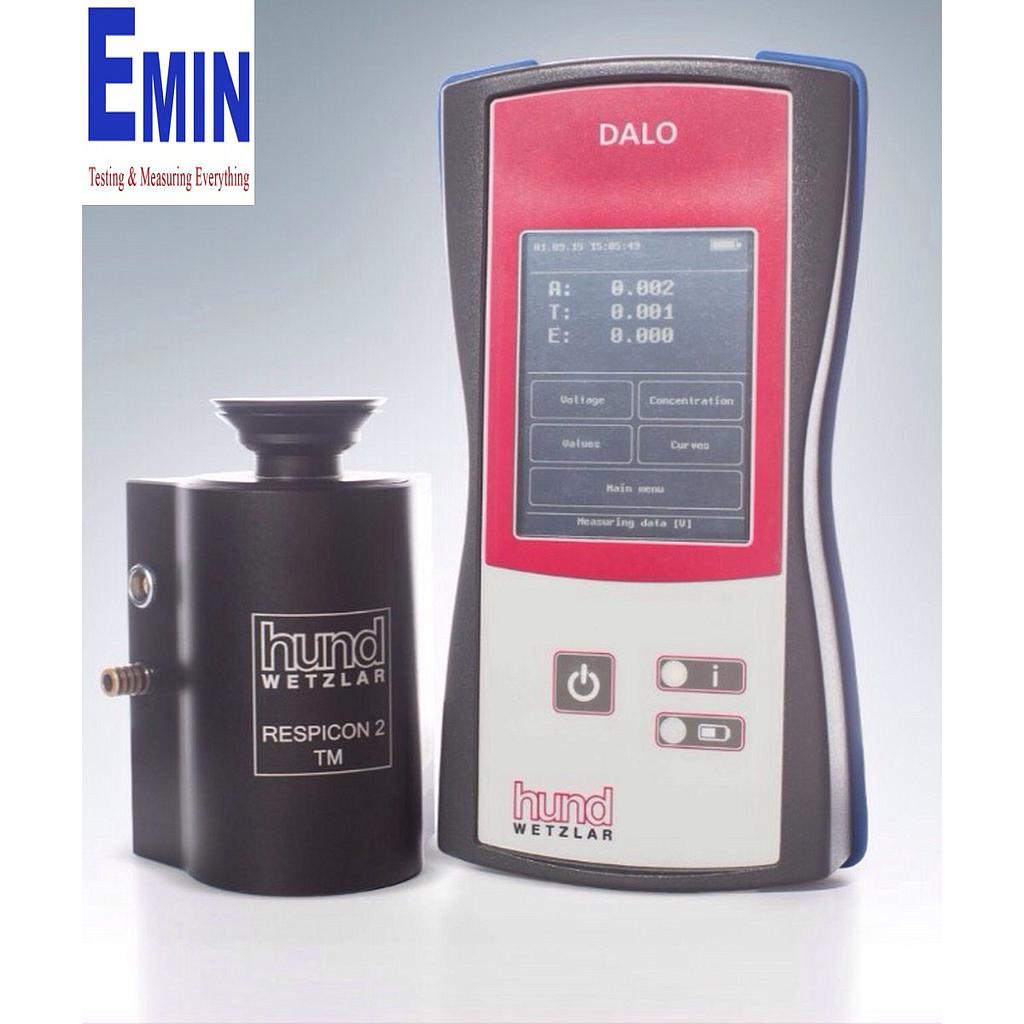
Another group is designed for occupational and fractional sampling. HUND instruments such as the Respicon 2 TM and Respicon TM are intended for size-selective dust collection and online measurement across inhalable, thoracic, and respirable fractions. This is useful when the particle fraction matters as much as the total concentration.
Surface cleanliness assessment is covered by test kits such as the TQCSheen SP3200 Dust Test KIT and the ELCOMETER E142----1 Dust Tape Test Kit. These products support standardized evaluation of dust quantity and particle size on surfaces, while accessories like the ELCOMETER 145 Dust Tape Roller play a supporting role in the inspection workflow.
Selection points that matter in real applications
The first question is whether you need to monitor airborne particles continuously or perform a pass/fail style inspection on a surface. For airborne monitoring, the important factors are measuring range, sensitivity at low concentrations, response time, logging capability, and available outputs such as analog or alarm signals. Instruments like the TSI 8533, for example, are suited to applications where displayed particulate fractions and data logging are useful for ongoing review.
Portability is also important. Battery-powered handheld units such as the Sibata LD-3B or KANOMAX 3444 can be easier to deploy for field surveys, temporary checks, or route-based inspections. If the measurement is part of a fixed or semi-fixed setup, a desktop or installed instrument may be more appropriate.
When your application is tied to workplace exposure or process dust behavior, consider whether you need broad total dust indication or size-resolved measurement. For users comparing different clean area strategies, related tools such as an air particle counter may also be relevant, especially when particle counting rather than mass concentration is the main requirement.
Examples of products covered in this category
Several products in this category illustrate how different measurement tasks are addressed. The TSI 8533 Desktop Aerosol Monitor supports real-time aerosol monitoring over a wide concentration range and displays multiple particulate fractions such as PM1, PM2.5, respirable, PM10, and total. This makes it suitable for users who need a more detailed view of airborne particulate behavior.
The Aeroqual SHPM Particulate Matter Sensor focuses on PM2.5 and PM10 measurement, which can be useful in indoor or localized environmental assessment. For portable dust concentration checks, the KANOMAX 3444 and Sibata LD-3B provide compact light-scattering solutions with data storage and field-friendly operation.
For coating inspection and surface preparation, the TQCSheen SP3200 and ELCOMETER E142----1 are representative of the dust tape test approach defined in ISO 8502-3. In this workflow, accessories such as the ELCOMETER 145 roller help apply the dust tape test method consistently. If your broader work also includes air cleanliness verification, you may want to compare with a general particle counter category.
Understanding monitoring methods
Many airborne dust instruments in this category use light scattering. In simple terms, particles passing through the sensing zone scatter light, and the instrument converts that signal into a concentration value based on calibration assumptions. This approach is effective for trend analysis and practical monitoring, but users should keep in mind that aerosol type, particle size distribution, and environmental conditions can influence how readings relate to gravimetric reference values.
Other systems combine real-time photometric measurement with physical particle collection. HUND Respicon models, for example, are intended for simultaneous separation of different inhalable fractions, supporting applications where respirable, thoracic, and inhalable dust need to be distinguished. That can be especially relevant in occupational hygiene and research-oriented measurement programs.
For surface dust testing, the principle is different. A standardized adhesive tape is used to collect dust from the surface, and the result is compared visually against reference classes. This does not replace airborne monitoring, but it is highly useful when preparing surfaces for coatings or when documenting cleanliness before the next process step.
Manufacturers commonly selected for dust monitoring
This category includes instruments from established manufacturers with different strengths. Aeroqual is often considered for particulate matter sensing in practical environmental applications, while TSI is widely associated with aerosol monitoring solutions and data-rich measurement platforms. KANOMAX and Sibata are well known choices for portable dust meters used in field and workplace measurements.
For surface contamination assessment, ELCOMETER and TQCSheen are relevant names because of their connection to inspection workflows and coating-related quality control. HUND adds another perspective with instruments aimed at fractional dust sampling and more specialized aerosol characterization. Users can select by measurement principle, portability, output requirements, and the type of dust information needed rather than by brand name alone.
How to choose the right dust monitor for your workflow
Start with the question you need the instrument to answer. If you need to know whether airborne particulate levels are rising, a real-time monitor with logging and alarms may be the right fit. If you need PM-focused readings for environmental assessment, a PM2.5/PM10-oriented solution can be more appropriate. If the task is verifying surface condition before coating, an ISO-based dust tape test kit is the more relevant tool.
It is also useful to think about deployment: handheld spot measurement, bench or desktop monitoring, personal or area sampling, or quality inspection at a defined process stage. In broader air quality projects, a complementary indoor air quality meter may help build a more complete picture alongside dust-specific data.
With the right instrument category in place, it becomes much easier to compare available models by measurement method, concentration range, data handling, and intended use. That leads to a more reliable selection process and more meaningful dust data in day-to-day operation.
Conclusion
Choosing a dust monitor is less about finding a one-size-fits-all device and more about matching the instrument to the measurement task. This category brings together solutions for airborne dust concentration, particulate fraction monitoring, and surface dust assessment, with representative products from TSI, Aeroqual, Casella, ELCOMETER, KANOMAX, Sibata, TQCSheen, and HUND.
By comparing the monitoring method, portability, data features, and application focus, buyers can narrow the options to the devices that fit their process, inspection standard, or environmental monitoring program. Whether the priority is real-time aerosol tracking or standardized dust tape testing, the category provides a useful starting point for technical evaluation.
Get exclusive volume discounts, bulk pricing updates, and new product alerts delivered directly to your inbox.
By subscribing, you agree to our Terms of Service and Privacy Policy.
Direct access to our certified experts