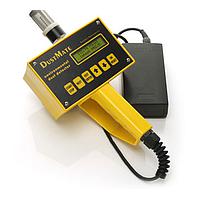
Dust Monitor Calibration Service
Reliable dust measurement depends on more than the instrument alone. In environmental monitoring, workplace exposure assessment, process control, and clean production areas, calibration plays a central role in keeping readings consistent, traceable, and suitable for decision-making.
Dust Monitor Calibration Service is intended for organizations that need to maintain the performance of aerosol monitors, dust meters, and related particulate measurement devices over time. Whether the equipment is used for routine inspection or compliance-oriented monitoring, periodic calibration helps reduce uncertainty, identify drift, and support confidence in recorded data.
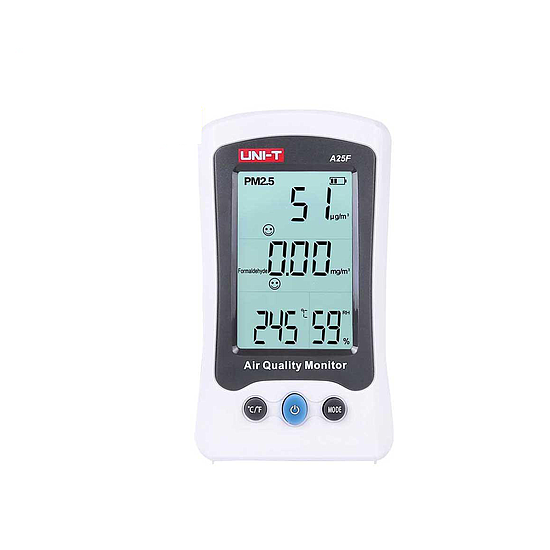
Why calibration matters for dust monitoring equipment
Dust monitors are commonly used to track airborne particulate levels in industrial plants, laboratories, construction environments, and indoor air quality programs. Because these instruments are often exposed to changing operating conditions, sensor response can shift over time, affecting the quality of measurements if calibration is not maintained.
A proper calibration service helps verify that the device responds within expected limits and remains suitable for its intended task. This is especially important when measurement results are used for trend analysis, maintenance planning, site assessment, or quality documentation.
Devices commonly covered by this service category
This category focuses on calibration support for dust and aerosol monitoring instruments from a range of established manufacturers. Typical examples include service options for TSI aerosol monitors, Aeroqual dust monitoring devices, and Casella dust monitors, along with instruments from KANOMAX, ELCOMETER, METONE, HUND, PCE, TQCSheen, and TURNKEY.
Representative services in this category include the TSI Aerosol Monitor Calibration Service, Aeroqual Dust Monitoring Device Calibration Service, and Casella Dust Monitor Calibration Service. These examples illustrate the scope of support available for users working with portable field instruments, fixed monitoring tools, or specialized dust-measuring equipment.
What a dust monitor calibration service helps verify
The exact calibration workflow can differ by instrument type, but the goal is generally the same: to confirm that the monitor is operating as intended and producing dependable readings. This may involve checking response behavior, reviewing measurement stability, and assessing whether the unit remains suitable for routine use.
For B2B users, the value of calibration is not only technical but also operational. A well-maintained monitor supports more consistent inspections, reduces the risk of questionable data, and helps teams manage assets more effectively across maintenance, EHS, laboratory, and production functions.
In practical terms, calibration is often part of a broader instrument lifecycle management approach. Instead of waiting for obvious failure, many organizations schedule recurring service intervals to keep critical monitoring devices available and reliable.
How to choose the right service for your instrument fleet
When selecting a service, the first consideration is compatibility with the specific make and type of device in use. This category includes model-specific service listings such as KANOMAX Dust Monitor Calibration Service, ELCOMETER Dust Monitor Calibration Service, METONE Dust Monitor Calibration Service, and TURNKEY Dust Monitor Calibration Service, making it easier to align the request with the instrument being maintained.
It is also useful to consider how the device is deployed. Instruments used in frequent field sampling, exposure studies, or continuous process checks may need more regular calibration attention than units used only occasionally. If your measurement program includes multiple types of particle instruments, it may also be helpful to review related services such as air particle counter calibration for adjacent equipment categories.
Supported brands and service examples
This category brings together service options for several widely used manufacturers in particulate and air quality measurement. Among the brands commonly referenced here are Casella, Aeroqual, TSI, KANOMAX, ELCOMETER, PCE, TQCSheen, HUND, METONE, and TURNKEY.
Examples of available listings include PCE Air Quality Meter Calibration Service, HUND Dust-measuring Equipment Calibration Service, and TQCSheen Dust Test KIT Calibration Service. These services are relevant for buyers looking after a mixed installed base, where different departments or sites may rely on different brands for dust-related measurement tasks.
Using manufacturer-aligned services can help simplify service planning, especially when asset records are organized by brand or device family. For procurement teams and maintenance coordinators, this can make it easier to identify the appropriate service path for each instrument without unnecessary ambiguity.
When to arrange calibration
Calibration is often scheduled as part of a preventive maintenance routine, but there are several situations where it becomes especially important. These include periods after heavy usage, before critical monitoring campaigns, after transport or storage, or whenever readings appear inconsistent with process conditions or historical trends.
Organizations that work with regulated environments or formal quality systems typically benefit from a planned service schedule rather than ad hoc intervention. A structured approach to measurement reliability can reduce downtime, support better recordkeeping, and improve confidence in dust exposure or air quality data across projects.
Related service needs within particulate measurement
Dust monitors are part of a wider instrument ecosystem used to assess airborne contamination and particulate conditions. In some applications, users may work with both dust monitors and particle counters depending on whether the focus is occupational dust, ambient particulates, or controlled-environment cleanliness.
For that reason, some buyers compare this category with the broader dust monitor calibration service scope when planning service coverage across multiple sites or device types. Reviewing related calibration paths can help standardize service procurement and create a more complete maintenance strategy for airborne particle instrumentation.
Choosing a practical service partner for ongoing instrument care
For most industrial and technical users, the real objective is not calibration as a standalone task, but dependable instrument performance over time. A well-matched service category helps buyers quickly identify support options for the devices they already own, whether that includes a TSI aerosol monitor, an Aeroqual dust monitoring device, a Casella dust monitor, or equipment from other supported manufacturers in this range.
If your team relies on dust measurement for safety, environmental monitoring, or process control, selecting the right calibration service is a practical step toward maintaining consistent data quality. This category is designed to help you navigate brand-aligned service options and choose the most relevant support for your monitoring equipment portfolio.
Get exclusive volume discounts, bulk pricing updates, and new product alerts delivered directly to your inbox.
By subscribing, you agree to our Terms of Service and Privacy Policy.
Direct access to our certified experts