
Air Particle Counter Repair Service
When an airborne contamination monitoring instrument starts drifting, failing startup checks, or producing unstable readings, production control and environmental verification can quickly become more difficult. A reliable Air Particle Counter Repair Service helps restore measurement confidence for cleanrooms, laboratories, HVAC validation work, pharmaceutical production, electronics assembly, and other controlled environments where particle data supports daily decisions.
This category focuses on repair support for air particle counters used to detect and count suspended particles in the air. Whether the issue involves sampling performance, display problems, internal faults, communication errors, or general wear from field use, repair service is often the practical step before replacing the instrument outright.
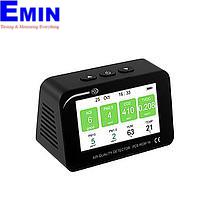
Why repair matters for air particle counting equipment
Air particle counters are used where data integrity matters. In many facilities, these instruments support contamination control programs, room qualification, process monitoring, and troubleshooting of air cleanliness issues. If the device is not operating correctly, the impact is not limited to the instrument itself; it can affect maintenance planning, audit readiness, and confidence in environmental monitoring results.
Repair service helps address faults that may develop over time through transport, continuous use, sensor contamination, pump wear, keypad or screen issues, or power-related problems. In practical terms, service work is intended to bring the unit back to stable operating condition so it can return to the workflow with less disruption.
Typical cases where repair service is needed
Not every failure appears as a complete shutdown. In many cases, users notice gradual changes such as unstable counts, inconsistent sampling behavior, unexpected alarms, charging issues, or difficulty completing normal operation. These symptoms can indicate problems in the sampling path, internal electronics, user interface, or other critical subsystems.
Repair may also be appropriate after accidental impact, harsh site use, long storage, or when the unit no longer behaves normally during routine verification. For organizations using multiple contamination monitoring tools, it can also be helpful to review related support options such as dust monitor repair service when the application includes both airborne particle and dust measurement equipment.
Supported brands and representative repair services
This category includes repair service coverage for instruments from widely recognized manufacturers used in industrial and environmental monitoring. Examples include service requests associated with TSI, Beckman, FLUKE, TESTO, Aeroqual, EXTECH, KANOMAX, PCE, HT, and METONE equipment, depending on the specific instrument submitted for evaluation and repair.
Representative service listings in this category include the TSI Particle Counter Repair Service, Beckman Particle Counter Repair Service, TESTO Particle Counter Repair Service, FLUKE Particle Counter Repair Service, METONE Particle Counter Repair Service, KANOMAX Particle Counter Repair Service, EXTECH Particle Counter Repair Service, and PCE Particle Counter Repair Service. For applications centered more broadly on airborne contamination monitoring, users may also compare with the dedicated air particle counter repair service scope shown in this category.
What to consider before sending a unit for repair
Before arranging service, it is useful to record the exact failure mode: whether the device powers on, whether it can complete sampling, what error messages appear, and whether the issue is constant or intermittent. Clear fault information can help speed up diagnosis and reduce unnecessary back-and-forth during intake.
Users should also note the operating environment, recent calibration history, accessories used with the instrument, and whether the issue started after transport, battery replacement, or field deployment. For B2B users managing a mixed installed base, identifying the exact manufacturer and instrument family is especially important when coordinating support for brands such as FLUKE or TESTO alongside other monitoring devices.
Repair service in the context of contamination control
An air particle counter is not usually a standalone purchasing decision; it is part of a broader monitoring ecosystem. Facilities often rely on several instruments to assess room conditions, particulate sources, filtration performance, and process cleanliness. That is why repair planning should be viewed as part of equipment lifecycle management rather than only a response to failure.
For example, an organization may operate both portable particle counters and dust-related instruments across maintenance, EHS, and quality teams. In that case, a service strategy that covers both this category and adjacent options such as repair support for dust monitors can make equipment upkeep more consistent across departments.
Choosing the right repair path
The best service route depends on the instrument type, fault condition, brand, and how critical turnaround time is to your operation. A portable unit used for routine spot checks may require a different service priority than an instrument tied to scheduled environmental monitoring or qualification work. Understanding the business impact of downtime helps determine how urgently the repair should be handled.
It is also worth checking whether the instrument is part of a larger fleet from brands such as Beckman, Aeroqual, or METONE, because standardizing support across similar devices can simplify maintenance planning. In many industrial settings, the real goal is not only fixing one instrument, but restoring operational continuity for the monitoring process as a whole.
Who this category is intended for
This category is relevant for cleanroom operators, quality assurance teams, pharmaceutical manufacturers, semiconductor and electronics facilities, hospitals, research laboratories, HVAC specialists, and service departments responsible for airborne particulate monitoring instruments. It is especially useful when an existing unit remains operationally important but requires technical attention due to malfunction or degraded performance.
Because repair needs vary by instrument design and usage history, reviewing the available brand-specific service listings can help narrow the right path more quickly. Examples in this category, such as Aeroqual Dust Monitoring Device Repair Service or METONE Particle Counter Repair Service, illustrate the range of supported equipment encountered in real-world industrial and environmental applications.
Conclusion
Maintaining a dependable particle monitoring workflow starts with keeping key instruments in working condition. This Air Particle Counter Repair Service category is designed to support businesses that need practical repair options for airborne particle counting equipment from established manufacturers, with a focus on restoring usability and reducing unnecessary replacement.
If your instrument is showing faults, unstable behavior, or performance concerns, reviewing the relevant service listing in this category is a sensible next step. With the right repair approach, many air particle counters can return to service and continue supporting contamination control, environmental monitoring, and quality-driven operations.
Get exclusive volume discounts, bulk pricing updates, and new product alerts delivered directly to your inbox.
By subscribing, you agree to our Terms of Service and Privacy Policy.
Direct access to our certified experts
