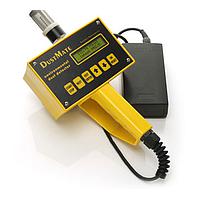
Dust Monitor Repair Service
Accurate dust monitoring depends on more than sensor sensitivity alone. In daily industrial use, airborne particle and dust instruments are exposed to contamination, drift, pump wear, damaged sampling paths, unstable power behavior, and communication issues that can gradually reduce confidence in the readings. When that happens, a professional Dust Monitor Repair Service helps restore reliable operation so the instrument can continue supporting environmental checks, process monitoring, workplace safety, and quality control.
This category is intended for organizations that need repair support for dust monitoring equipment used in technical and industrial environments. Whether the issue is a measurement fault, startup problem, response instability, or general wear after long-term use, repair service can be a practical step before replacement, especially for equipment that is already integrated into an established monitoring workflow.
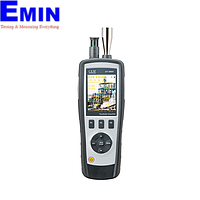
Why dust monitor repair matters
Dust monitors are often used where measurement consistency matters over time. In production areas, laboratories, field inspections, and indoor air quality programs, users rely on stable instrument behavior to compare conditions, investigate changes, and make operational decisions. If the device begins showing inconsistent values or has obvious functional problems, the issue is not only downtime but also uncertainty in the data.
A proper repair process focuses on the instrument’s measurement integrity, not just whether it powers on. This may include diagnosing faults affecting sensing performance, airflow, signal handling, display response, controls, or internal electronic operation. For companies managing multiple particulate instruments, repair can also support longer asset life and more predictable maintenance planning.
Typical issues seen in dust monitoring equipment
Dust monitoring devices can develop problems from regular exposure to airborne particles, transport, site conditions, or simple component aging. Common symptoms may include unstable readings, failure to start, unexpected alarms, poor response time, interrupted sampling, or communication errors when the instrument is connected to a broader monitoring setup.
Some applications also use related instruments such as aerosol monitors and air quality meters. Because these devices work in demanding measurement environments, faults may affect pumps, optical paths, filters, connectors, internal boards, or user interfaces. If your requirement is closer to aerosol or particle-counting equipment, it may also be useful to review the broader air particle counter repair service category for adjacent service needs.
Supported brands and service coverage
This category includes repair service options for equipment from established manufacturers used in dust and particulate monitoring. Common examples include instruments from TSI, Aeroqual, Casella, ELCOMETER, KANOMAX, PCE, HUND, METONE, TURNKEY, and TQCSheen. Mentioning these brands helps clarify the scope of supported platforms without implying that every instrument shares the same internal design or service path.
Representative service listings in this category include the TSI Aerosol Monitor Repair Service, Aeroqual Dust Monitoring Device Repair Service, Casella Dust Monitor Repair Service, and PCE Air Quality Meter Repair Service. There are also repair services for METONE, TURNKEY, KANOMAX, ELCOMETER, HUND, and TQCSheen equipment. These examples illustrate the range of instruments that may fall under dust and airborne particulate measurement service requirements across industrial and environmental applications.
How to evaluate whether repair is the right option
Repair is usually worth considering when the instrument remains relevant to your workflow, accessories are still in use, and the fault appears isolated rather than terminal. For many technical teams, the key questions are straightforward: Is the measurement problem repeatable? Has the device suffered contamination or impact? Is the issue affecting operation, data trust, or both?
It is also useful to document the observed behavior before submitting the unit. Clear notes about startup failure, display messages, unstable measurements, pump noise, abnormal warm-up, or intermittent communication can make diagnosis more efficient. If your organization already manages several related service needs, the main dust monitor repair services area can help when comparing service options across similar instrument types.
Repair service in the context of broader maintenance planning
For B2B users, repair is rarely a standalone event. It is part of a wider asset management approach that may include inspection, calibration planning, spare instrument availability, and scheduled maintenance intervals. A repaired dust monitor can often return to service more quickly and economically than a full equipment change, especially when personnel are already trained on that platform and existing procedures depend on it.
This is particularly relevant in facilities where dust monitoring is linked to compliance, process visibility, or workplace exposure management. In such cases, restoring a known instrument may reduce disruption compared with changing to a new device with different operating characteristics. The best approach is usually to align repair decisions with downtime tolerance, historical instrument condition, and the criticality of the measurement point.
Examples of instruments in this category
Several product entries in this category show how service demand can span different device formats. The Casella Dust Monitor Repair Service and TURNKEY Dust Monitor Repair Service relate directly to dedicated dust monitoring equipment, while the TSI Aerosol Monitor Repair Service reflects overlap between aerosol measurement and particulate monitoring applications.
Other examples such as the KANOMAX Dust Monitor Repair Service, ELCOMETER Dust Monitor Repair Service, METONE Dust Monitor Repair Service, and HUND Dust-measuring Equipment Repair Service show that repair needs are not limited to one use case or one product family. The inclusion of the PCE Air Quality Meter Repair Service and TQCSheen Dust Test KIT Repair Service also highlights that some workflows combine direct dust monitoring with broader air quality or test-oriented measurement tools.
Choosing a service path that fits your application
The right repair request starts with identifying the role of the instrument in your operation. A unit used for routine area checks may have different urgency than one supporting continuous monitoring, troubleshooting of dust sources, or critical verification tasks. That context helps determine whether fast restoration, deeper fault diagnosis, or comparison with related equipment categories is the most practical next step.
It can also be helpful to review manufacturer-specific equipment ecosystems when you standardize by brand. For example, users maintaining fleets built around Casella or KANOMAX instruments may prefer service decisions that keep workflows consistent across teams and sites. Internal standardization often matters as much as the individual repair itself.
Final thoughts
When a dust monitor no longer performs as expected, repair service provides a practical route to restore function, protect data confidence, and extend the useful life of important measurement equipment. This category brings together repair options for a range of dust, aerosol, and air quality monitoring instruments used in industrial and technical environments.
If you are comparing supported brands, reviewing likely fault types, or deciding whether an instrument should be repaired instead of replaced, this page is a useful starting point. A well-chosen repair service helps maintain operational continuity while keeping critical dust measurement tasks aligned with the needs of your application.
Get exclusive volume discounts, bulk pricing updates, and new product alerts delivered directly to your inbox.
By subscribing, you agree to our Terms of Service and Privacy Policy.
Direct access to our certified experts