What is a centrifuge and how does it work in the laboratory?
Centrifuges are indispensable equipment in modern laboratories, operating on the principle of centrifugal force. When a sample is placed in a centrifuge and spun at high speed, centrifugal force pushes the components with higher density out, while the lighter components stay closer to the center of rotation. This process helps to separate the different components in a mixed sample quickly and effectively.
In molecular biology laboratories, centrifuges are used to separate DNA, RNA, or proteins from cell samples, allowing scientists to collect components needed for research or testing. In medicine, centrifuges separate plasma from whole blood for diagnostic testing.
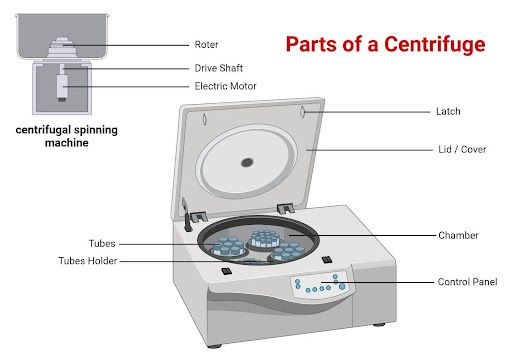
Common applications of laboratory centrifuges
1. Extraction and analysis of biological components
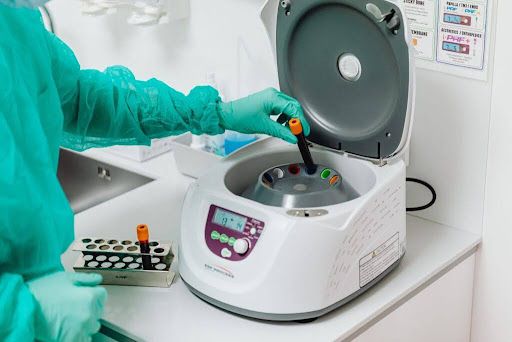
Laboratory centrifuges are widely used to separate components in blood samples such as red blood cells, white blood cells, plasma and platelets. For example, in clinical testing, plasma separation helps analyze important biochemical indicators such as cholesterol, glucose or other biomarkers. In addition, laboratory centrifuges are also used to collect cells from culture fluids, separate organelles such as mitochondria, plastids in cytological research. In molecular laboratories, centrifuges help extract DNA, RNA for PCR techniques, gene sequencing or protein analysis.
2. Sample preparation and chemical analysis
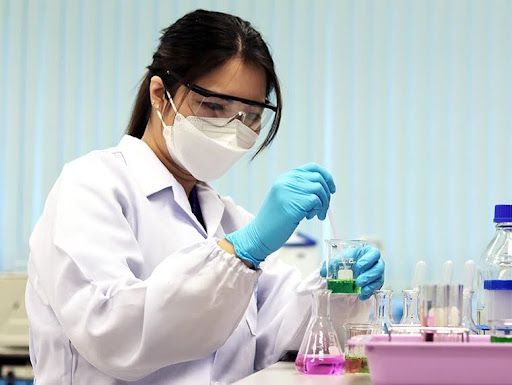
In chemistry and industry, centrifuges are used to separate solid-liquid or liquid-liquid mixtures, for example to separate sediments in solutions, to analyze ingredients in foods, drugs or chemicals. Some research also uses laboratory centrifuges to study the viscosity of solutions under different pressure and temperature conditions, to support product development in the pharmaceutical and cosmetic industries.
3. Application in sample preservation and processing
Laboratory centrifuges are also used to dry samples by removing water while preserving the sample structure, which is useful in preserving biological tissue or preparing medical biopsies. This helps maintain sample quality before further analysis.
Types of centrifuges and features suitable for the laboratory
Low speed centrifuge
This type of machine usually rotates at a speed of 4000 to 5000 rpm, suitable for simple sample separation, cell or plasma separation at room temperature. The machine usually uses a nodding or fixed angle rotor. Specifically, the KECHENG DD6C low-speed centrifuge has a maximum speed of 6500 rpm and a capacity of up to 6 x 1000ml, suitable for many different types of samples. The machine is equipped with an intelligent control system and automatic rotor recognition, making it easy and safe to operate. With a capacity of 1500W and quiet operation, the product is suitable for biological, chemical and medical laboratories.
High speed and ultra speed centrifuges
High-speed centrifuges can reach 15,000 to 30,000 rpm, used to separate complex biological molecules such as proteins, viruses or nanoparticles. Some ultra-high-speed laboratory centrifuges can spin even faster, supporting in-depth research on molecular interactions. For example, the Zonkia HC-2068 High-Speed Centrifuge reaches a maximum speed of 16,500 rpm and a centrifugal force of up to 18,110 × g, suitable for laboratories that need fast and accurate sample separation. The machine has a rotor capacity of 24 positions for 1.5ml or 2.2ml small sample tubes, allowing processing of multiple samples at the same time with stable speed and flexible time control. The device operates quietly, with a noise level below 60dB, providing convenience and safety in operation.
Continuous centrifuge
This series of machines allows processing of large sample volumes without stopping to load or remove samples, saving time and improving work efficiency in large-scale industrial or research laboratories. In particular, the DLAB D1008 Spindown Centrifuge is the ideal device for laboratories requiring precision and versatility. With a compact, easy-to-use design, the machine can operate at many different speeds, suitable for applications from plasma separation, cell analysis to DNA/RNA sample preparation.
Equipped with modern safety systems such as electronic door lock, imbalance and overspeed alarm, the Spindown DLAB D1008 laboratory centrifuge can ensure the safety of users and samples. The digital display clearly displays operating parameters such as speed, time and temperature, helping to control the centrifugation process more accurately and efficiently.