Signs that the image quality from the UNI-T industrial endoscope is deteriorating
After using the UNI-T industrial endoscope for a long time, many technicians begin to notice that the displayed images are no longer as sharp as they were when they first started. One of the obvious signs is that the image becomes blurred, losing detail at the edges of objects or in the center. Sometimes the image may have light noise, color distortion or uneven light distribution, making it more difficult to observe surface defects, cracks or leaks. These changes are often gradual and can easily be overlooked, especially when the operator is too familiar with the old display interface.
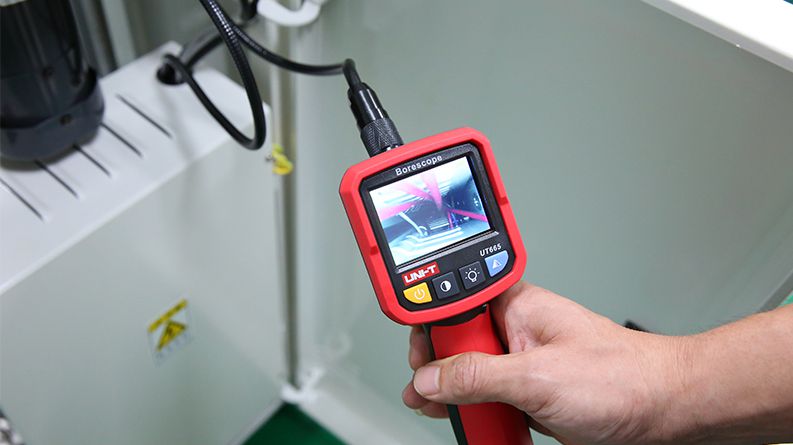
Additionally, the loss of focus may be accompanied by slight image shake, processing delays, or blurring as the camera moves. This is a sign that the image sensor may be deteriorating, or that the optical and lighting systems are starting to lose their effectiveness. In some cases, dust, oil, or moisture on the probe may also cause the image to be distorted.
What causes the lens and probe of the UNI-T industrial endoscope to become blurry?
During the use of the UNI-T industrial endoscope, the probe and lens are often in direct contact with dust, oil, steam or chemicals in the working environment. This is one of the common causes of image fading over time. Especially when the user operates in narrow areas, prone to collision or with humid surfaces, it is inevitable that the probe will be contaminated. If these layers are not cleaned regularly, they can reduce the clarity of the lens and directly affect the quality of observation.
In addition, although the probe's construction material is designed to be heat-resistant and corrosion-resistant, it can still be slightly scratched or worn after a long period of use, especially when rubbing against rough metal surfaces. These small scratches gradually accumulate, scattering light and causing the captured image to lose sharpness. In addition, if the device is not properly stored after use, condensation in the camera head can also cause blurring and affect the ability to focus. These factors, although not too difficult to control, are easily overlooked in daily operation.
Why are images from the UNI-T endoscope getting sharper?
During continuous use in harsh industrial environments, the image sensor of the UNI-T endoscope may begin to show signs of deterioration. The displayed image is no longer sharp, there are noise points, uneven light and dark areas or color deviations - these are typical signs that the CMOS or CCD sensor inside the device has reduced performance. Especially in older models, the heat generated during prolonged operation can easily cause components to degrade faster, directly affecting the quality of observation.
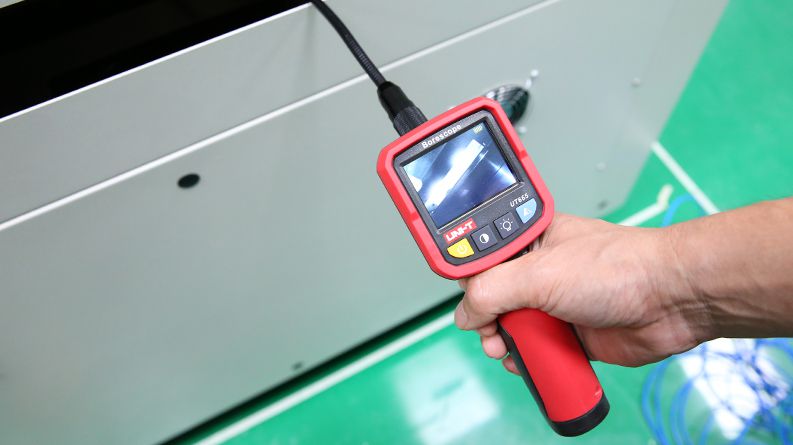
Some new models such as the UNI-T UT665 have improved thermal control and signal processing capabilities, helping the sensor operate more stably even when used continuously for a long time. In addition, the hardware design of the UNI-T UT665 also supports better anti-interference in low light conditions, allowing image clarity to be maintained even when working in narrow spaces or difficult-to-light locations.
See more: UNI-T INDUSTRIAL ENDOSCOPE at EMIN
Image sensor in UNI-T endoscope degrades after long time
Over time, operating the UNI-T endoscope in environments with high temperatures, fine dust or chemical fumes can cause the image sensor to begin to degrade. Some obvious signs include graininess, color distortion, uneven light and dark areas or dead pixels, which make the image less sharp than before. These problems are often mistaken for lens or lamp failure, while the real cause lies deep within the device's image processor.
Depending on the type of sensor used, usually CMOS or CCD, the degree of aging can vary, but is directly affected by the working conditions and intensity of use. If the machine is regularly operated continuously for long periods of time or is not allowed to rest between working sessions, the heat build-up will accelerate the signal degradation process. In addition, mechanical impacts or slight electrical leakage over multiple charging cycles can also affect the sensor circuit.
How to properly clean and maintain the probe to maintain sharp images
During use of the UNI-T industrial endoscope, the probe is frequently exposed to a variety of surfaces: from sharp metal edges to areas contaminated with oil, dust or water. If not cleaned properly, these stains will adhere to the lens and protective layer, significantly reducing image sharpness. Careless cleaning with a dry cloth or regular paper towel can cause sand and dust to scratch the probe surface, damage the anti-reflective coating and cause incorrect light reflection.
Solution:
To ensure effective observation, users should use a specialized solution or 70% isopropyl alcohol with a soft, lint-free cloth to periodically clean the probe. After cleaning, it should be completely dry before storing it in the box. Avoid closing the lid when the probe is still damp because it can cause condensation inside. In addition, periodically checking the connection between the wire and the probe is equally important, because this area is prone to loosening, cracking or breaking after many bends, affecting the image transmission signal that is not easily detected by the naked eye.
If cleaning and testing have been tried but the image still does not improve, users can bring the device to EMIN for technical support to advise on specific errors and suggest appropriate repair options. This is also a safe way to avoid further damage to the device due to improper operation.
When to replace UNI-T endoscope instead of repair, consider cost and image efficiency
Continuing to repair the UNI-T industrial endoscope is not always as effective as expected, especially when the device has been used for a long time or has multiple failures at the same time. Serious errors such as weakened image sensors, flickering screens, broken endoscopes or unstable processing boards can significantly increase the cost of repair. In many cases, the total cost of replacing components and repair work is almost equivalent to or even exceeds the price of a new machine.
In addition to financial factors, users also need to consider the ability to meet actual work requirements. If the device is outdated in terms of resolution, processing speed or lacks necessary features such as recording, storage, external connections, etc., trying to maintain it will directly affect the performance and accuracy of the inspection. Instead of spending more time and money on subsequent repairs, investing in a new device will help the work operate more stably and effectively in the long run.