In industrial production facilities, particularly boiler rooms, heat-treatment systems, furnaces, metallurgical workshops, and backup power generation stations, carbon monoxide (CO) poses a persistent threat to human life and property. CO is difficult to detect through human senses because it is colorless, odorless, tasteless, and non-irritating at initial exposure. It is highly toxic to the nervous system and presents a significant explosion hazard when it accumulates to flammable concentrations. Effective CO control therefore requires a comprehensive engineering strategy, from combustion optimization to continuous automated monitoring using CO gas detectors.
Regulatory Framework and Current CO Exposure Limits
To ensure occupational safety and environmental protection, Vietnamese regulatory authorities have established technical standards governing CO concentrations:
QCVN 05:2023/BTNMT (replacing QCVN 05:2013/BTNMT): The National Technical Regulation on Ambient Air Quality specifies a maximum CO concentration of 30,000 µg/Nm³ (approximately 25 ppm) for a 1-hour averaging period and 10,000 µg/Nm³ (approximately 8.5 ppm) for an 8-hour averaging period.
Decision No. 3733/2002/QĐ-BYT: This regulation specifies an 8-hour time-weighted average (TWA) occupational exposure limit of 20 mg/m³ (approximately 17.5 ppm) for workers in production areas directly exposed to CO. The permissible short-term peak concentration must not exceed 30 mg/m³.
QCVN 01:2021/BCA and TCVN 5738:2021: These fire prevention and firefighting regulations and standards address fire detection and safety requirements for industrial facilities. Applicable requirements for hazardous gas detection and emergency ventilation should be determined based on the facility's specific hazards and the relevant provisions of each standard.
In-Depth Analysis: CO Formation, Biological Effects, and Gas Explosion Hazards
Chemical Mechanisms of CO Formation in Industrial Processes
CO is primarily generated by the incomplete combustion of carbon-containing fuels, including coal, fuel oil (FO/DO), liquefied petroleum gas (LPG), compressed natural gas (CNG), and biomass. This occurs when oxygen (O₂) is insufficient or when the air-to-fuel ratio control system operates outside its intended range.
If the combustion chamber temperature drops suddenly or the residence time of the combustion mixture is insufficient, the oxidation of CO into carbon dioxide (CO₂) may remain incomplete. As a result, substantial quantities of CO can escape through the exhaust system or leak back into occupied work areas.
Biological Effects and Neurotoxicity
High affinity for hemoglobin: Once inhaled and absorbed through the lungs into the bloodstream, CO binds to hemoglobin (Hb), forming carboxyhemoglobin (COHb) and interfering with the blood's ability to transport oxygen. CO has approximately 200–250 times greater affinity for hemoglobin than oxygen (O₂).
Clinical progression according to exposure concentration:
20–35 ppm: Depending on exposure duration and individual susceptibility, prolonged exposure may cause headaches and reduced concentration. These values should not be interpreted as universally safe occupational exposure limits.
200 ppm: Headaches, fatigue, dizziness, and nausea may develop after 2–3 hours of exposure.
800–1,600 ppm: Severe poisoning may cause loss of consciousness, convulsions, and coma. Without prompt treatment, death may occur within approximately two hours, depending on the concentration and exposure duration.
Above 3,200 ppm: Life-threatening poisoning can develop rapidly, potentially causing respiratory failure and death within minutes.
Actual symptoms and their onset vary with concentration, exposure duration, physical condition, and other factors. Suspected CO poisoning requires immediate emergency medical attention.
Fire and Explosion Hazards
Industrial operators often focus on CO toxicity while overlooking its flammability. CO is a combustible gas with a broad flammable range in air:
Lower Explosive Limit (LEL): 12.5% by volume, equivalent to 125,000 ppm.
Upper Explosive Limit (UEL): 74.0% by volume, equivalent to 740,000 ppm.
In confined or partially enclosed spaces, such as flue ducts, drying chambers, heated cable tunnels, and enclosed metallurgical workshops, ventilation failures can allow CO to accumulate. If its concentration reaches the flammable range, an ignition source may trigger an explosion.
Potential ignition sources include electrical sparks from relays, electrostatic discharges, and overheated equipment surfaces. CO has an autoignition temperature of approximately 609°C. Once ignited, the rapid combustion of the gas-air mixture can generate high-pressure shock waves and intense heat, potentially damaging equipment, structures, and surrounding infrastructure.
Comprehensive Engineering Solutions for CO Safety and Monitoring
To control the combined risks of toxicity and explosion, industrial facilities should implement a multilayered protection strategy covering operational controls, ventilation, gas detection, and automated safety responses.
Combustion Optimization and Industrial Ventilation
Optimize the combustion air-to-fuel ratio: Use flue gas analyzers to accurately adjust excess air and maintain combustion efficiency while controlling CO emissions. Target CO concentrations should be established according to the combustion system design, applicable emission limits, and operating conditions rather than relying on a single universal threshold.
Implement negative-pressure control and explosion-protected exhaust fans: Maintain a slight negative pressure in appropriate furnace and combustion areas to reduce the risk of hazardous gas escaping into surrounding workspaces. Emergency exhaust fans and associated electrical equipment should be selected according to the applicable hazardous-area classification and relevant explosion-protection requirements, such as ATEX or IECEx certification where applicable.
Applications of Specialized Gas Detection Technology
Installing single-gas detector enables accurate monitoring and early warning of abnormal CO concentrations.
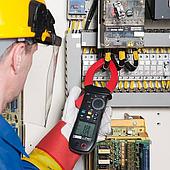
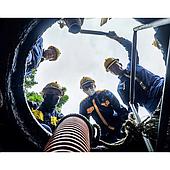
Portable gas detectors: During maintenance operations and confined-space inspections, personnel should carry compact personal CO detectors. Before entering a potentially hazardous area, workers must verify that the atmosphere is safe using appropriate gas-testing procedures and suitable protective equipment.
Fixed gas detectors: Install detectors at locations with a high risk of gas leakage or accumulation, including combustion equipment, fuel supply systems, and gas distribution stations. Depending on the system design, these devices can transmit signals via 4–20 mA or Modbus RS-485 to a central control system such as a programmable logic controller (PLC) or supervisory control and data acquisition (SCADA) system.
For example, a facility may configure its automated response to activate additional ventilation when the CO concentration reaches 35 ppm and shut off the fuel supply through a solenoid valve at 50 ppm. These are illustrative setpoints, not universal safety limits. Actual alarm and shutdown thresholds must be determined through a site-specific risk assessment, applicable regulations, detector specifications, and the requirements of the process safety system.
Standard Emergency Response Procedures for CO Leaks
1. Raise the alarm and evacuate personnel: When a gas detector triggers a Level 1 alarm, such as at a configured threshold above 25 ppm, immediately initiate the site's emergency response procedure. Evacuate nonessential personnel from the affected area using designated safe routes. Avoid entering or crossing contaminated areas, and follow the site's wind-direction and evacuation guidance.
2. Isolate the fuel supply: Trained emergency response personnel equipped with suitable self-contained breathing apparatus (SCBA) should isolate the fuel supply to the combustion system using designated emergency shutoff controls. Unprotected personnel must not enter the hazardous area to operate valves manually.
3. Initiate emergency ventilation: Activate the designated emergency ventilation system if it is safe and appropriate to do so. Ventilation equipment must be suitable for the hazardous atmosphere, and exhaust must be discharged to a safe location. Do not re-enter the affected area until qualified personnel have verified that gas concentrations are below the established safe-entry limits.
4. Provide emergency medical assistance: Move exposed individuals to fresh air only if this can be done without endangering rescuers. Call emergency medical services immediately. Trained responders should administer high-concentration oxygen when indicated and available, while medical professionals assess whether hyperbaric oxygen therapy is appropriate. Do not delay emergency care while attempting to arrange a specific treatment.