
For full functionality of this site it is necessary to enable JavaScript.
EMINKH.COM
0

How is temperature and humidity affect air conditioning electricity costs?

04/06/2026 09:58:07

What is the ideal room temperature? Does high humidity cause air conditioning to consume more electricity? Let's find out how to effectively save electricity on air conditioning.

What Is the Ideal Room Temperature?

A range of 25-27°C is often ideal bring comfort and energy efficiency. However, in reality, many people still experience issues such as air conditioners running continuously, low temperature settings that don’t feel cool, and even significantly higher electricity bills. This suggests that temperature is not only the reason. Another, often overlooked factor is quietly influencing cooling performance: indoor humidity.

So, What Is the Ideal Humidity Level?

In practice, when humidity is maintained between 40-60% and the temperature is set at 26-27°C, the air feels comfortable and cool without needing to lower the temperature further.

High humidity doesn’t just make the air feel stuffy and damp it can also increase the risk of respiratory issues and allergies. It creates an ideal environment for mold and bacteria to grow, and can even damage electronic devices.

When humidity is high:

- Sweat evaporates more slowly from the body

- Heat tends to “linger” on the skin

- The perceived temperature feels higher than the actual measured temperature

This often leads to a familiar reaction: lowering the air conditioner temperature even further to compensate for discomfort. Ironically, this is exactly what causes higher energy consumption.

Why Do Air Conditioners Use More Electricity in High Humidity?

In humid conditions, an air conditioner doesn’t just cool the air it also has to remove excess moisture. This dehumidification process consumes a significant amount of energy, yet it’s often overlooked.
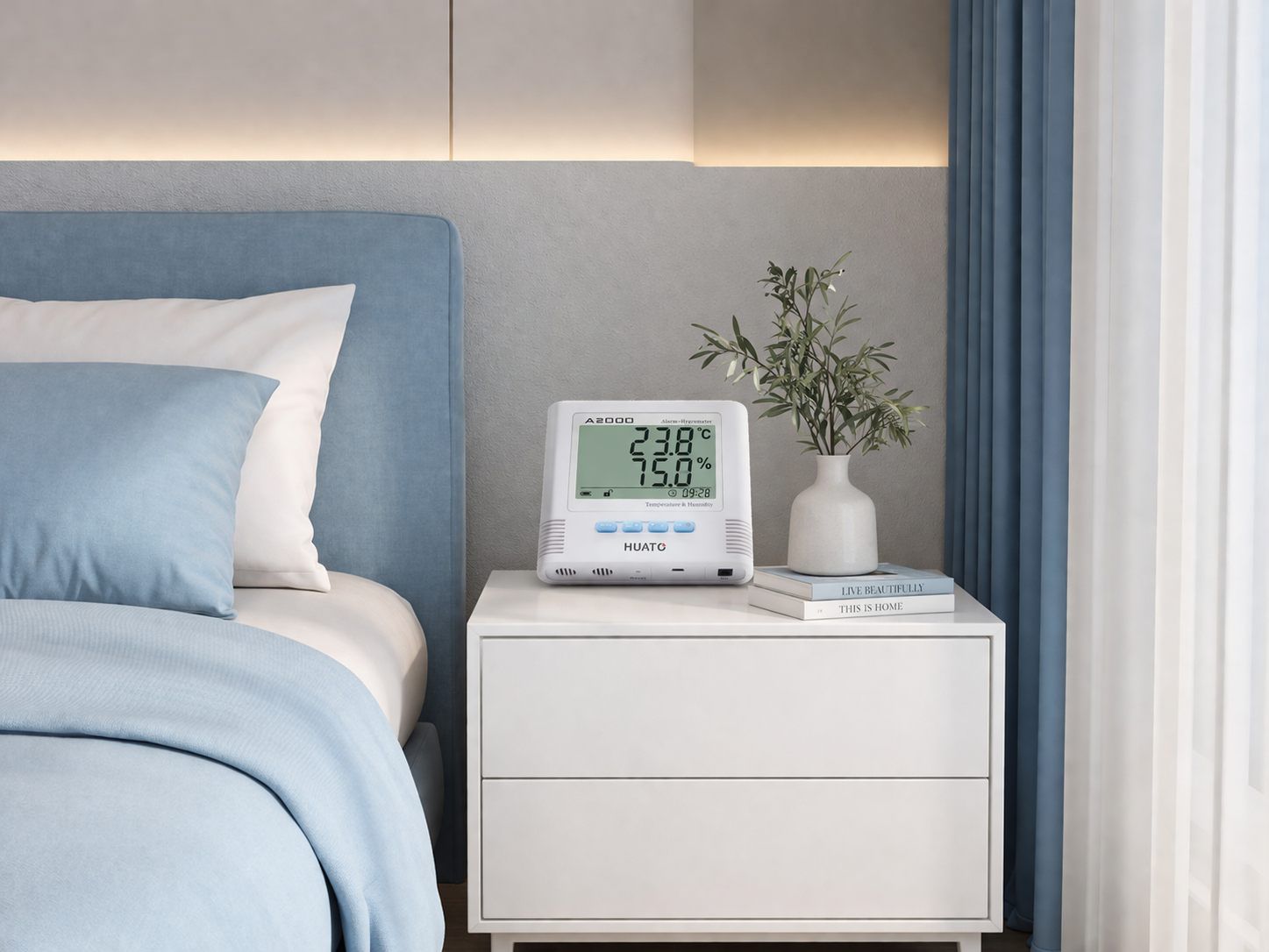
In other words, your AC is solving two problems at once: cooling and dehumidifying.

The higher the humidity, the more energy is required to extract moisture from the air. This explains why many households feel that their AC runs all day without effectively cooling the room while electricity bills continue to rise.

How to Save Energy: Don’t Focus on Temperature Alone

If you measure indoor conditions and find humidity levels above 70%, lowering the temperature to 22-23°C may still not provide comfort while energy consumption increases rapidly. In such cases, using a dehumidifieris a more effective solution to reduce indoor moisture levels.

As electricity costs continue to rise, understanding the relationship between temperature and humidity not only improves living comfort but also offers a smarter way to manage long-term expenses.

Today, using atemperature and humidity meter is becoming increasingly common, helping users gain accurate data to better control their indoor environment.

Related News

Which products are tested using a -40°C to +150°C thermal shock chamber?
07/22/2026 14:45:25

Automotive circuit boards, sensors, modules, and plastic components can all experience issues after repeated transitions between cold and hot environments. A thermal shock chamber operating from -40°C to +150°C enables the replication of these temperature fluctuations under controlled testing conditions.

Does thermal shock cause damage to electronic components?
07/22/2026 10:40:49

An electronic component may operate stably under constant temperature conditions yet fail after repeated rapid transitions between hot and cold. The issue typically stems not from a specific temperature level, but rather from the rate of temperature change and the number of hot-cold cycles

The rigorous standards behind a multi-million-dollar MRI suite
07/21/2026 14:54:01

An MRI system may be correctly installed and fully connected to the power supply, yet still encounter issues if the surrounding environment fails to meet technical specifications. Electromagnetic interference, RF shielding, power quality, grounding, temperature, humidity, and particulate levels are all factors that may require assessment, depending on the facility's design and the manufacturer's requirements.

Sinusoidal and Random Vibration: A Test Setup Guide for Industrial Engineers
07/21/2026 10:30:38

During the operation of industrial machinery or the transportation of goods, persistent mechanical vibrations inevitably occur; these are a primary cause of material fatigue, loosened connections, and cracking in printed circuit boards (PCBs). To ensure product integrity before delivery to customers, R&D and QA/QC engineers must simulate these dynamic forces using vibration test systems.

Capacities of laboratory centrifuge tubes
07/20/2026 13:55:40

Tubes with capacities of 0.2 ml, 1.5 ml, 15 ml, or 50 ml are commonly found in laboratories, yet each type is associated with specific sample categories and equipment configurations. DNA and RNA samples typically require small-volume microtubes; blood and cell samples often utilize 5 ml or 15 ml tubes; while large-volume processing workflows may require tubes of 50 ml, 100 ml, or greater capacity

Stay Updated with Offers

Get exclusive volume discounts, bulk pricing updates, and new product alerts delivered directly to your inbox.

By subscribing, you agree to our Terms of Service and Privacy Policy.

Quick Support

Direct access to our certified experts