
For full functionality of this site it is necessary to enable JavaScript.
EMINKH.COM
0

Professional connector processing techniques for electromechanical and hydraulic systems.

12/19/2025 09:57:36

In mechanical and electrical construction, the system-wide pressure testing phase is when defects at pipe joints are most apparent. Even a small leak can necessitate dismantling and reinstalling the piping, incurring additional costs and impacting construction schedules. Therefore, pipe end treatment is not simply a matter of tightening, but rather creating a tight and stable connection from the very beginning, starting with the material structure.

Overcoming challenges when constructing in confined spaces

On construction sites, many installation locations are deep inside machine recesses, close to the ceiling, or within technical cabinets. Limited workspace makes it difficult to use large tools, or even impossible to reach the required pressing point.

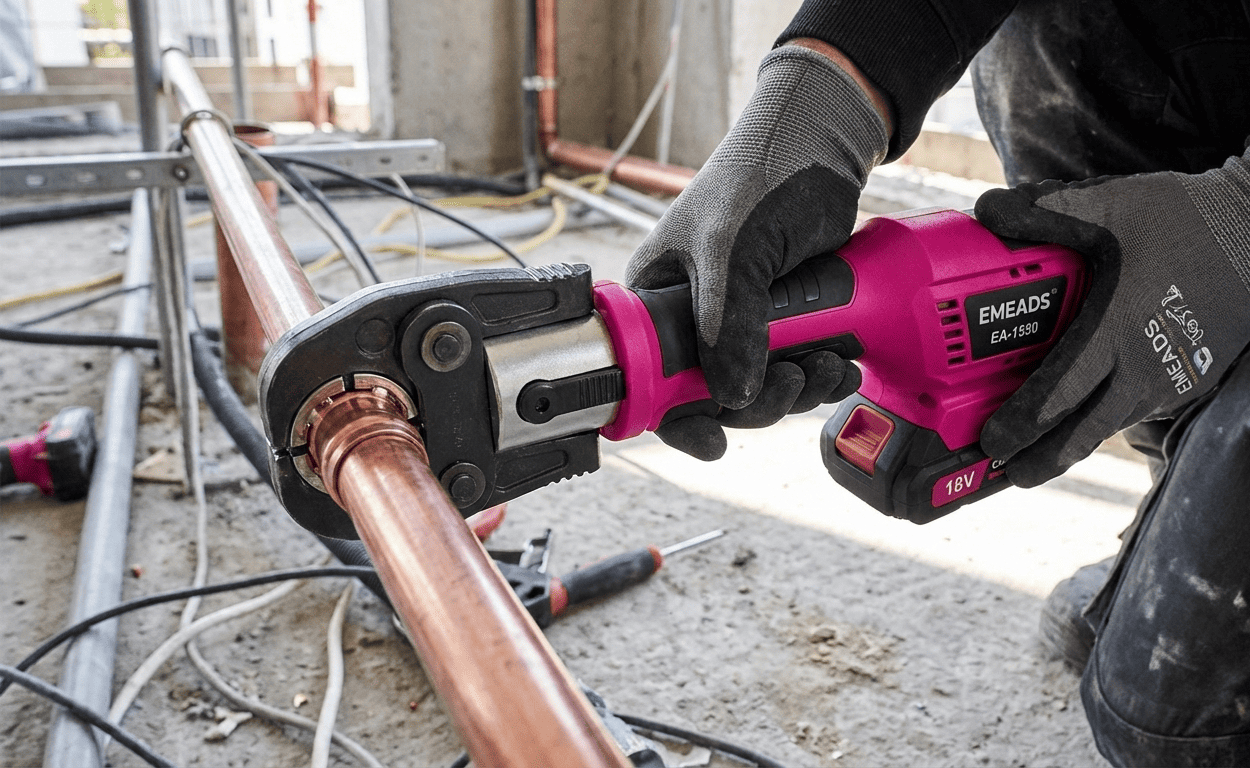
Modern form-fitting pliers are designed with compact pressing heads and optimized handle opening angles. This allows the tool to fit into narrow spaces while still providing sufficient pressing force. The pliers' heads can rotate flexibly, allowing for adjustment of the pressing direction without changing the user's standing position, reducing operation time and minimizing collisions with surrounding equipment.
Ensuring a tight seal through concentric pressure

Une uneven pressure distribution around the pipe circumference is a common cause of leaks after installation. With manual methods, the pipe ends are prone to localized deformation, creating very small gaps that are difficult to detect with the naked eye.

Hydraulic crimping mechanisms distribute pressure evenly from multiple directions to the center of the pipe end. This process maintains the pipe's shape, limiting dents or cracks. When the pressure is evenly distributed, the joint achieves a tight seal across the entire contact surface, suitable for fluid or gas systems operating under high pressure.

Optimize time for mobile maintenance work

In industrial maintenance, downtime directly impacts operating costs. Disassembling an entire pipeline just to address a single faulty connector is often not a cost-effective solution.

Handheld crimping tools allow technicians to work directly on-site without complex preparation. Devices like the EA 15100 enable quick and easy crimping with just the push of a button. Standard crimping jaws ensure high repeatability, completing the connection on the first attempt and minimizing the need for rework.

View the full product range at: Pipe end forming crimping pliers

The automatic mechanism helps control the clamping force and increase safety.

Over-pressing is a common error during construction, which can weaken the pipe end or damage the clamp jaws. This error is difficult to control relying solely on the operator's feel.

The integrated pressure sensor system automatically shuts off and returns the clamp jaws to their original position when the designed force is reached. This ensures consistent joint quality, regardless of the user's experience. The non-slip handle design and balanced weight distribution allow workers to work continuously for extended periods while maintaining stability and accuracy.

Related News

Which products are tested using a -40°C to +150°C thermal shock chamber?
07/22/2026 14:45:25

Automotive circuit boards, sensors, modules, and plastic components can all experience issues after repeated transitions between cold and hot environments. A thermal shock chamber operating from -40°C to +150°C enables the replication of these temperature fluctuations under controlled testing conditions.

Does thermal shock cause damage to electronic components?
07/22/2026 10:40:49

An electronic component may operate stably under constant temperature conditions yet fail after repeated rapid transitions between hot and cold. The issue typically stems not from a specific temperature level, but rather from the rate of temperature change and the number of hot-cold cycles

The rigorous standards behind a multi-million-dollar MRI suite
07/21/2026 14:54:01

An MRI system may be correctly installed and fully connected to the power supply, yet still encounter issues if the surrounding environment fails to meet technical specifications. Electromagnetic interference, RF shielding, power quality, grounding, temperature, humidity, and particulate levels are all factors that may require assessment, depending on the facility's design and the manufacturer's requirements.

Sinusoidal and Random Vibration: A Test Setup Guide for Industrial Engineers
07/21/2026 10:30:38

During the operation of industrial machinery or the transportation of goods, persistent mechanical vibrations inevitably occur; these are a primary cause of material fatigue, loosened connections, and cracking in printed circuit boards (PCBs). To ensure product integrity before delivery to customers, R&D and QA/QC engineers must simulate these dynamic forces using vibration test systems.

Capacities of laboratory centrifuge tubes
07/20/2026 13:55:40

Tubes with capacities of 0.2 ml, 1.5 ml, 15 ml, or 50 ml are commonly found in laboratories, yet each type is associated with specific sample categories and equipment configurations. DNA and RNA samples typically require small-volume microtubes; blood and cell samples often utilize 5 ml or 15 ml tubes; while large-volume processing workflows may require tubes of 50 ml, 100 ml, or greater capacity

Stay Updated with Offers

Get exclusive volume discounts, bulk pricing updates, and new product alerts delivered directly to your inbox.

By subscribing, you agree to our Terms of Service and Privacy Policy.

Quick Support

Direct access to our certified experts