Rooftop solar PV systems operate continuously outdoors and are exposed to sunlight, rain, dust, humidity, and temperature fluctuations. Over time, performance may decline due to dirty solar panels, loose connectors, deteriorated cables, hot spots, or inverter alarms.
1. Preparation Before Maintenance
Before inspection, collect information about the system, including the wiring diagram, installed capacity, number of solar panels, number of inverters, PV string configuration, and operating history.
Power generation data should also be reviewed before accessing the rooftop. Comparing output between months or between inverters and PV strings operating under similar conditions can help identify areas requiring further inspection.
The technician should then define the scope of work, prepare the necessary test equipment, and implement appropriate safety measures. The system must be isolated in accordance with the applicable procedure before performing any work that may involve contact with energized components.
2. Visual Inspection of Solar Panels and Mounting Structure
Inspecting the solar panels is the first step after ensuring safe working conditions.
The module surface should be checked for dust, bird droppings, cracks, discoloration, delamination, and other abnormalities. Areas that are frequently shaded should also be identified because partial shading can reduce the output of an entire PV string.
Aluminum frames, mounting structures, bolts, and roof connection points should be checked for looseness, corrosion, or deformation.
For systems that have been operating for many years, particular attention should be paid to areas where water may accumulate or where components are frequently exposed to moisture.
3. Cleaning Solar Panels Under Appropriate Conditions
Not every system requires cleaning at the same frequency. The level of contamination, surrounding environment, and degree of power loss should be considered before scheduling cleaning.
Cleaning should be performed using a method recommended by the manufacturer. Avoid excessive mechanical force on the module surface and do not clean panels when they are excessively hot.
After cleaning, inspect the surface again to ensure that no dirt or objects remain that could cause localized shading.
For commercial systems, recording the panel condition and power output before and after cleaning can help determine an appropriate cleaning frequency instead of applying a fixed schedule to every system.
4. Inspecting DC Cables and Connectors
The DC system requires careful inspection because PV strings can remain energized even when the inverter has stopped operating.
Cables should be checked for damaged insulation, improper fixation, aging, and mechanical damage. Connectors should be inspected for deformation, burn marks, discoloration, or signs of overheating.
If a connector shows signs of overheating, the underlying cause should be identified before the system is returned to service. Increased contact resistance at a connection point can generate heat and cause localized power losses.
For systems with multiple strings, the inspection should be combined with current and voltage measurements to identify branches showing abnormal differences.
5. Thermal Inspection Using an Infrared Camera
A thermal camera for solar panel inspection can help identify abnormal temperature areas that are difficult to detect through visual inspection.
Technicians can inspect individual modules, connectors, junction boxes, and connection points under suitable operating conditions.
A significantly hotter area compared with similar locations may indicate a connection fault, uneven current distribution, or an abnormal condition within a module.
Thermal images should be evaluated together with solar irradiance, ambient temperature, and system load at the time of inspection. Equipment condition should not be determined solely from an isolated hot spot.
6. Measuring PV String Voltage and Current
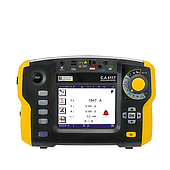
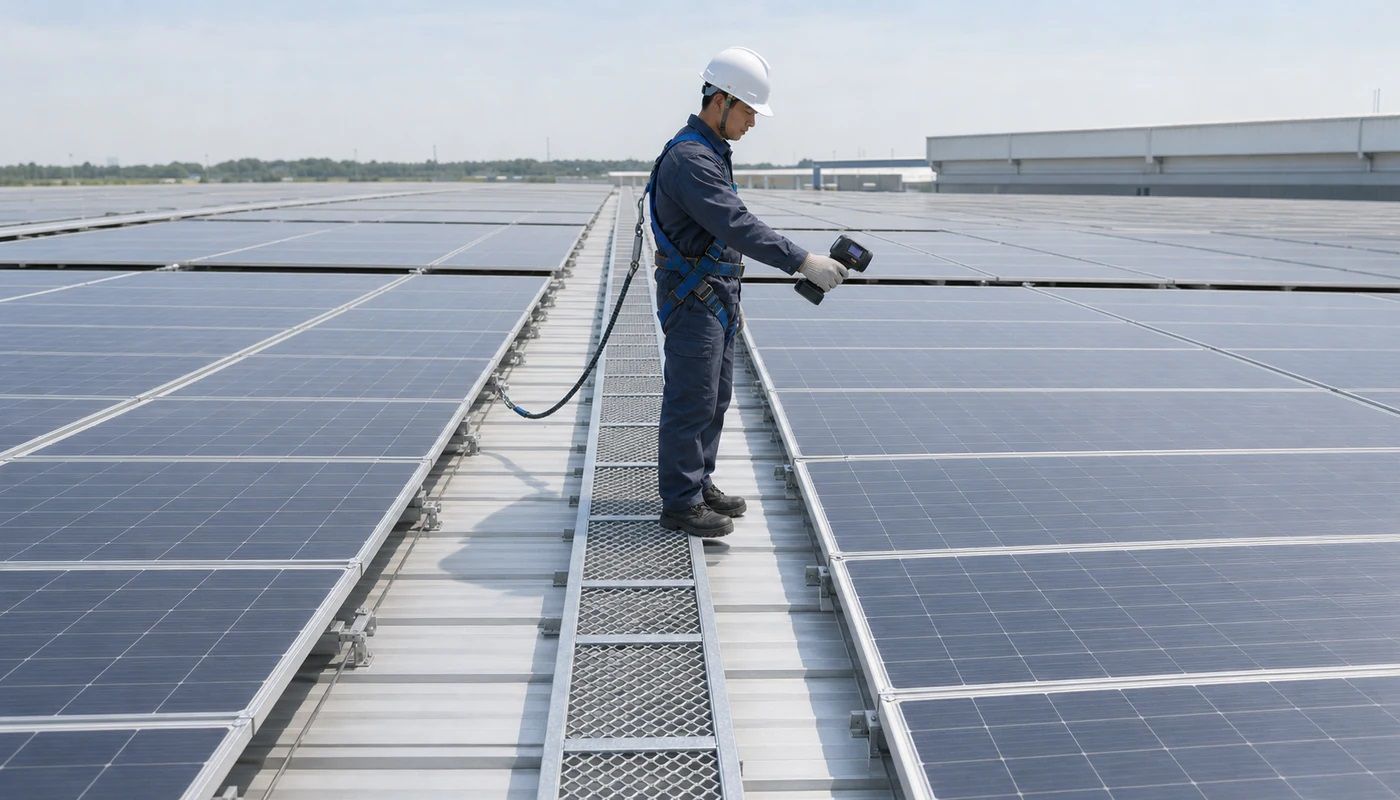
After the physical inspection, the system's electrical parameters should be evaluated using a Fluke solar PV analyzer.
The open-circuit voltage and current of each string can be measured and compared with the design specifications and other equivalent strings. Abnormal differences may indicate issues with modules, connectors, cables, or shading conditions.
Measurement results should include the measurement time and environmental conditions. Solar irradiance and temperature directly affect the electrical characteristics of PV modules, so measurements taken under different conditions should not be compared without considering these factors.
7. Checking Insulation Resistance and Grounding
Insulation resistance should be measured according to the appropriate system configuration and test procedure. The results help assess the insulation condition of PV circuits, cables, and related components.
If insulation resistance decreases abnormally, areas susceptible to moisture ingress, damaged cable insulation, or other insulation faults should be investigated before the system continues operating.
The grounding system should also be checked for conductor continuity and the condition of connection points. For rooftop systems, the bonding between module frames, metal structures, and the grounding system should be checked against the original design.
8. Inspecting the Inverter and Electrical Panels
The inverter should be inspected for both physical condition and operating data.
Alarm history, downtime, DC input voltage, MPPT status, and AC parameters can help identify abnormalities that may not be visible during a physical inspection.
Cooling fans, ventilation openings, dust accumulation, and the temperature conditions around the inverter should also be checked.
AC/DC electrical panels should be inspected for connection points, protective devices, circuit breakers, fuses, and signs of overheating. Connection points showing abnormal temperatures should be investigated before the system is returned to operation.
9. Checking Protection and Lightning Protection Systems
Overcurrent protection devices, surge protective devices (SPDs), and related components should be inspected according to the system configuration.
For SPDs, check the status indicator and connection condition. If an SPD has operated in response to an overvoltage event or has been affected by lightning, its condition should be assessed before continued use.
The lightning protection and grounding systems should also be inspected after severe weather events, particularly for installations in areas with frequent thunderstorms.
10. Correcting Abnormalities and Post-Maintenance Verification
Issues identified during inspection should be classified according to their potential impact.
Problems involving electrical safety, severe hot spots, insulation damage, or protective devices should be prioritized. Issues that affect performance but do not present an immediate safety risk can be included in the next maintenance plan.
After repairs, relevant parameters should be checked again to verify that the condition has improved. Simply clearing an inverter alarm or replacing a component without investigating the underlying cause may not resolve the problem.
11. Creating a Maintenance Record
Each maintenance session should include a report documenting the system condition and measurement results.
Records should include power output, solar panel condition, thermal images where applicable, PV string voltage and current, insulation resistance, grounding condition, inverter parameters, and corrective actions taken.
The value of these records lies in their ability to support comparisons between maintenance intervals. A parameter that gradually changes over several inspection cycles can provide an earlier indication of deterioration than a sudden fault.
For commercial systems, this data can also support condition-based maintenance scheduling and help identify areas requiring priority attention.
Frequently Asked Questions About Rooftop Solar PV Maintenance
How often should a rooftop solar PV system be maintained?
The frequency depends on the system size, installation environment, and operating conditions. Residential systems can be inspected periodically and cleaned when the panels become contaminated. Commercial systems should have a technical inspection schedule based on power generation data, fault history, and environmental conditions.
Is maintenance necessary if the system is still generating electricity normally?
Yes. Normal power generation does not necessarily mean that every component is operating optimally. Connectors, cables, solar panels, inverters, and grounding systems may deteriorate before causing an obvious fault.
When should a solar PV system be inspected outside the regular maintenance schedule?
An inspection is recommended after storms, lightning events, roof repairs, or an unexpected reduction in power output. Repeated inverter alarms, hot spots on solar panels, discolored connectors, or burn marks are also signs that require prompt inspection.
Does solar PV maintenance only involve cleaning the panels?
No. Cleaning is only one part of the maintenance process. Technical maintenance also includes inspecting modules, cables, DC connectors, inverters, electrical panels, protective devices, insulation resistance, and grounding systems.
Can homeowners inspect a solar PV system themselves?
Users can visually inspect the panels and mounting structure and monitor power output or inverter alarms. Measurements involving high voltage, insulation resistance, current, or grounding should be performed by qualified personnel using appropriate test equipment.
What is a thermal camera used for in solar PV maintenance?
A thermal camera helps identify abnormal temperatures on solar panels, connectors, junction boxes, and connection points. Thermal images should be evaluated together with solar irradiance, ambient temperature, and system load.
Why should measurement results be recorded after each maintenance session?
Data from different inspection periods helps track system trends. A parameter may remain within an acceptable range but show a continuous unfavorable trend, indicating that the corresponding area may require further investigation.
Do commercial solar PV systems require a dedicated maintenance procedure?
Yes. The procedure can be organized by area, inverter, or PV string to quickly identify locations with abnormal performance or electrical parameters. For larger systems, additional string-level data analysis, power quality measurements, or thermal inspections can be incorporated.
A practical maintenance workflow can be organized into eight steps:
Review operating data → Isolate the system and implement safety measures → Inspect solar panels and mounting structures → Clean panels → Inspect DC circuits and perform thermal inspection → Measure electrical parameters, insulation resistance, and grounding → Inspect inverters, electrical panels, and protection systems → Document results, correct faults, and monitor performance.
=> EMIN × Fluke: Rooftop Solar PV and MEP Infrastructure Maintenance Workshop
The EMIN × Fluke workshop series on MEP systems and rooftop solar infrastructure maintenance will take place in Da Nang on October 27, 2026, and in Southern Vietnam on October 30, 2026. The workshops will focus on rooftop solar PV diagnostic procedures with technical experts, along with hands-on experience using field measurement equipment.