Chiller
Stable thermal control is a basic requirement in semiconductor inspection, test, and process support environments. When equipment, fixtures, sensors, or devices under test must stay within a controlled temperature window, selecting the right chiller helps protect measurement consistency, process repeatability, and system uptime.
On this page, you can explore chillers and external circulation systems used for cooling or combined heating and cooling in technical applications. The range includes compact open-circuit units for laboratory or equipment integration, as well as higher-capacity process chillers designed for demanding temperature control tasks across wider setpoint ranges.
Where chillers fit in semiconductor and technical workflows
In wafer and chip related environments, temperature management often supports more than simple cooling. A chiller may be used to stabilize test fixtures, circulate conditioned fluid through external devices, remove heat from inspection equipment, or support thermal cycling and controlled process conditions.
This is especially relevant when systems involve optics, sensitive electronics, precision stages, or thermally influenced measurement results. For broader temperature-driven evaluation tasks, users may also compare this category with a semiconductor thermal test system when the application goes beyond circulation cooling and requires dedicated thermal test capability.
Main chiller types available in this category
The product mix shown here spans several practical formats. Open-circuit chillers are often selected when fluid is circulated to an external tank, jacket, or process loop. Compact examples from TAITEC, such as the CL-81, CL-151, and CL-601, illustrate this style with digital control, circulation capability, and temperature stability suited to equipment support or bench-scale thermal management.
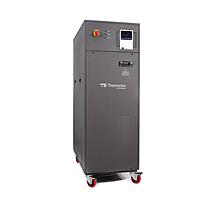
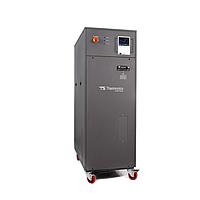
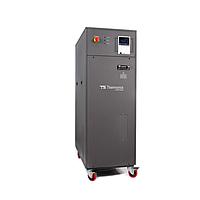
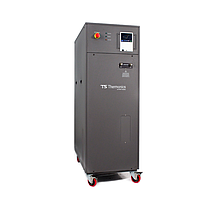
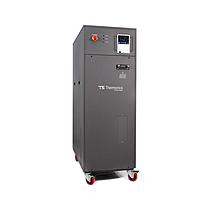
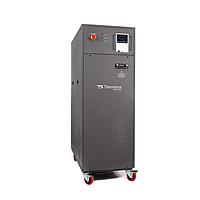
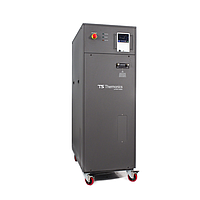
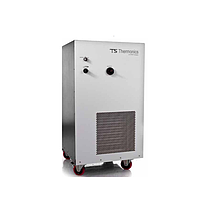
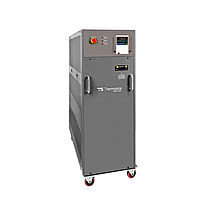
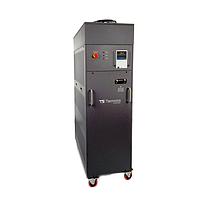
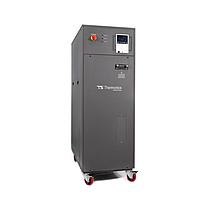
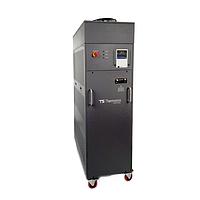
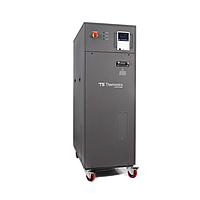
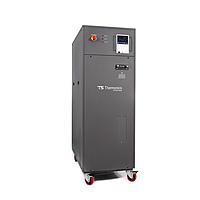
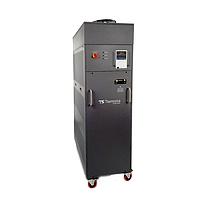
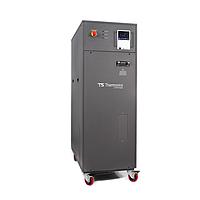
There are also cooling pump configurations, such as the TAITEC CH-402N and CH-602N, which combine refrigeration and temperature control for circulation-based applications. At the higher-performance end, Thermonics process chillers such as the W-80-600, W-80-1800, W-80-2500, A-80-500, and A-80-2400 address lower temperature setpoints and more demanding process loads, including applications where deep cooling and controlled heating are both important.
How to choose the right chiller
The first decision point is usually the required temperature range. Some applications only need moderate cooling near ambient conditions, while others require sub-zero operation. In this category, available examples range from compact units operating down to around -10°C or -15°C, up to process chillers with setpoint capability extending to -85°C.
The second factor is thermal load. Cooling capacity, heater output, and circulation performance should match the amount of heat that must be removed and the speed at which the system needs to recover or stabilize. For example, a compact unit like the TAITEC CL-81 may be suitable for lighter external circulation duties, while larger systems such as the Thermonics W-80-2500 or A-80-2400 are better aligned with heavier process demands.
It is also important to check installation conditions, including power supply, condenser type, fluid compatibility, and facility utilities. Some units are air-cooled, while others are water-cooled and therefore depend on available facility water. Communication features, alarm outputs, and external sensor support may also matter when the chiller must be integrated into automated equipment.
Key performance considerations for technical buyers
In B2B and engineering environments, selection is rarely based on nominal cooling power alone. Buyers typically review control accuracy, fluid stability, flow rate, pressure or lift capability, and available safety functions. These characteristics influence whether a chiller can maintain repeatable temperature conditions under real operating load rather than only in ideal specifications.
For example, the TAITEC open-circuit series highlights fine temperature control and digital display functions, while the Thermonics process chiller range emphasizes process fluid management, remote communications, alarms, and diagnostics. Those details are often critical when the chiller becomes part of a larger inspection or automation cell instead of serving as a standalone utility device.
Physical footprint and connection layout should not be overlooked either. In compact instrument setups, dimensions, hose connection size, and service access can affect integration time just as much as thermal performance. For users comparing neighboring equipment in the same workflow, the broader chiller selection can be reviewed alongside inspection-focused categories depending on the full system requirement.
Representative products and application fit
Several products in this category illustrate how different chillers serve different operating profiles. TAITEC CL-81 and CL-151 units are compact open-circuit models suited to applications that need controlled circulation, digital monitoring, and practical integration into laboratory or equipment support setups. The CL-601 extends that concept with higher cooling capacity and stronger circulation performance for more demanding loads.
The TAITEC CH-402N and CH-602N cooling pump models are relevant where a water bath and pump-based thermal control arrangement is preferred. Their specified temperature span and built-in safety functions make them useful reference points for users who need stable circulation with both cooling and heating control.
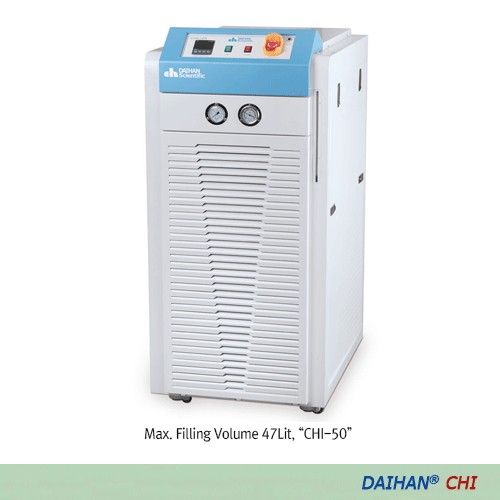
For deeper low-temperature process control, Thermonics systems such as the W-80-600, W-80-1800, and W-80-2500 provide water-cooled process chiller options, while the A-80-500, A-80-1700, and A-80-2400 provide air-cooled alternatives. A model like the DaiHan DH.Chi0020 may also be relevant for users looking for a heavy-duty refrigerated external circulator format in a mid-size capacity class.
Integration, safety, and automation readiness
Modern chillers are often expected to do more than maintain fluid temperature. In automated technical environments, features such as external signal output, remote setting, fault alarms, low-flow protection, and sensor diagnostics can simplify system integration and reduce the risk of unplanned downtime.
That is why many buyers look for support functions such as communication interfaces, temperature monitoring outputs, and protective interlocks in addition to core thermal specifications. When the chiller is connected to inspection tools or process equipment, these functions help operators react quickly to abnormal conditions and maintain traceable control over the thermal loop.
In applications where thermal behavior affects inspection results directly, it may also be useful to review adjacent categories such as semiconductor defect inspection or AOI equipment to understand how temperature stabilization supports measurement consistency in the wider inspection process.
Choosing by application instead of by model alone
A practical way to narrow options is to begin with the process itself: what needs to be cooled, how much heat is entering the loop, what temperature band must be held, and whether the system needs open-circuit circulation, a refrigerated bath, or a low-temperature process chiller. This approach usually leads to a better shortlist than starting from brand or capacity alone.
For routine equipment support, a compact circulation chiller may be enough. For sub-zero semiconductor test or process stabilization, a wider setpoint range, stronger heating capacity, and better integration features may be necessary. Looking at operating environment, utility availability, and control architecture early in the selection process can prevent mismatch later.
Conclusion
This category brings together chillers for applications ranging from compact external circulation to advanced low-temperature process control. Whether the priority is stable fluid temperature, sub-zero capability, integration with automated equipment, or support for inspection-related workflows, the right choice depends on balancing temperature range, load, circulation performance, and installation conditions.
By comparing the intended thermal task with the available product types from TAITEC, Thermonics, and DaiHan, technical buyers can build a more accurate shortlist and move toward a chiller configuration that fits both the process requirement and the surrounding equipment environment.
Get exclusive volume discounts, bulk pricing updates, and new product alerts delivered directly to your inbox.
By subscribing, you agree to our Terms of Service and Privacy Policy.
Direct access to our certified experts