
For full functionality of this site it is necessary to enable JavaScript.
EMINKH.COM
0

Comparing 150mm and 200mm calipers, which one is a bestseller you shouldn't miss?

04/07/2026 16:24:48

150mm and 200mm calipers are two common sizes, found in almost every mechanical toolkit. The 50mm difference may seem insignificant, but in practice it significantly affects the measuring range and ease of use

Differences in measurement scope and utility

The 150mm version is suitable for small details, components, or general daily measurement tasks. Thanks to its compact and lightweight design, it's easy to carry and convenient for quick checks in the workshop or on-site.

In contrast, the 200mm measuring tape expands the measuring range to include larger details such as shafts, molds, or surfaces exceeding the limits of the 150mm version. However, the longer body requires a bit more comfortable working space.

Stability when measured over a wide range
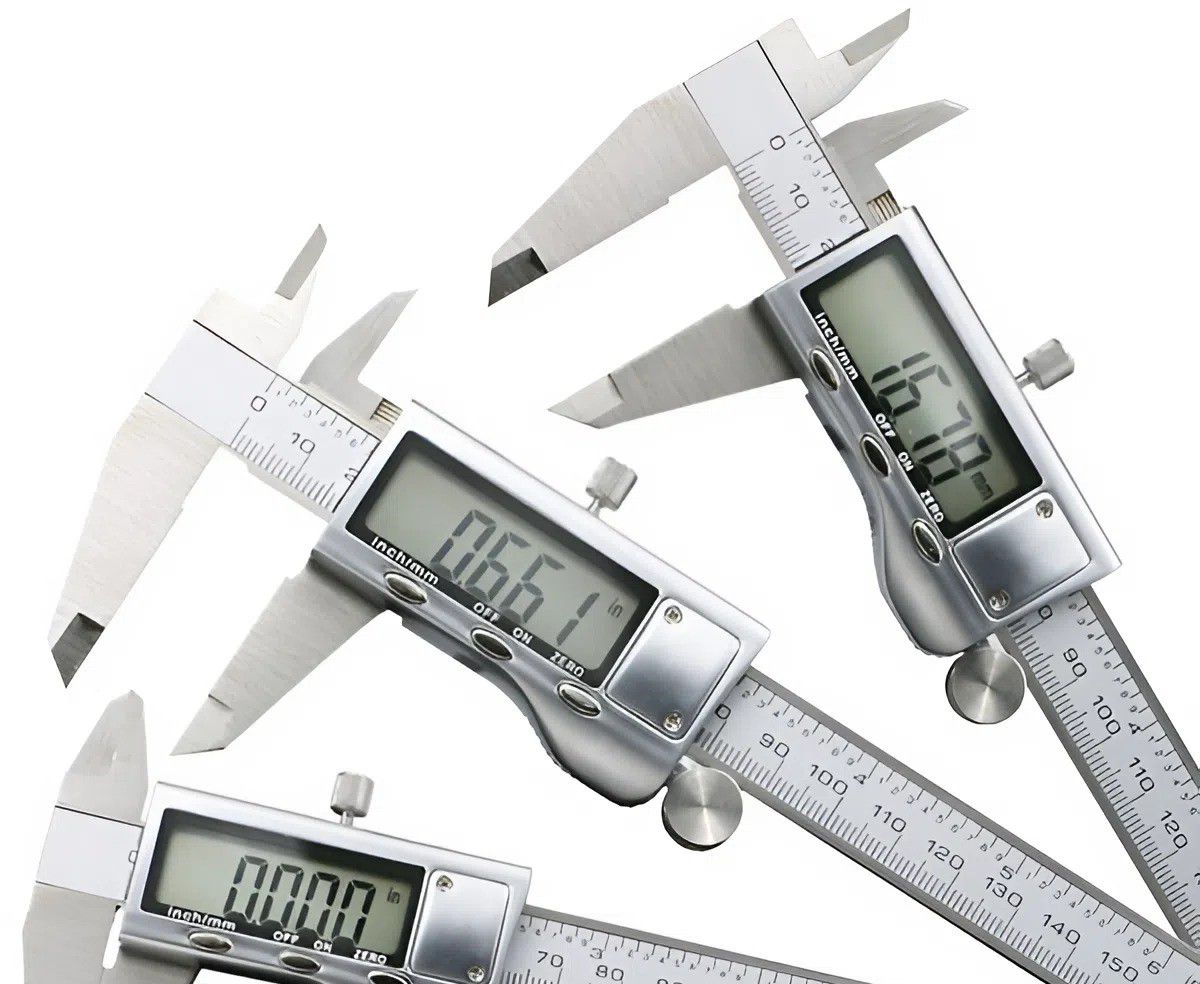
Basically, the accuracy difference between the two types is not significant if they come from reputable manufacturers. However, when measuring over a large range (nearly 150–200mm), the 200mm ruler usually feels more solid and stable, minimizing errors during operation.

If working in environments with a lot of oil, grease, dust, or coolant, it is advisable to prioritize rulers that are waterproof and dustproof to ensure long-term durability.

Additionally, depending on your usage habits, you can choose:

- Electronic ruler: Easy to read, fast, suitable for repeated measurements.

- Mechanical ruler: Battery-free, durable, suitable for harsh environments.

Check out some popular models.

150mm Calipers: You can consider models such as the Mitutoyo 530-312 (mechanical) or the Mitutoyo 500-196-30 (electronic). These are popular, easy-to-use models suitable for everyday measurement needs and are currently available at EMIN.

200mm Calipers: For a larger measuring range, you can consider the Mitutoyo 530-114 (mechanical) or the Insize 1108-200. These models are well-suited for working with larger parts and are also available at EMIN.

Balancing needs and costs

Generally, a 200mm measuring tape is more expensive than a 150mm version, but this difference isn't significant in the long run. For tasks primarily involving small and medium-sized details, the 150mm version is still sufficient, allowing for quick and easy operation and optimizing initial investment costs.

Conversely, if you frequently encounter larger details, choosing a 200mm measuring tape will give you more control during work. You won't need to switch tools mid-way or encounter measurement limitations, thus making the work smoother and saving time.

In summary, no single type is superior in every case; what matters is suitability to your needs. The 150mm version is compact and suitable for general daily tasks. The 200mm version is more suitable for measuring larger details.

If you're unsure which type to choose, you can base your decision on your specific work requirements or consult EMIN for more information to find a reasonable solution that balances efficiency and cost.

Related News

Which products are tested using a -40°C to +150°C thermal shock chamber?
07/22/2026 14:45:25

Automotive circuit boards, sensors, modules, and plastic components can all experience issues after repeated transitions between cold and hot environments. A thermal shock chamber operating from -40°C to +150°C enables the replication of these temperature fluctuations under controlled testing conditions.

Does thermal shock cause damage to electronic components?
07/22/2026 10:40:49

An electronic component may operate stably under constant temperature conditions yet fail after repeated rapid transitions between hot and cold. The issue typically stems not from a specific temperature level, but rather from the rate of temperature change and the number of hot-cold cycles

The rigorous standards behind a multi-million-dollar MRI suite
07/21/2026 14:54:01

An MRI system may be correctly installed and fully connected to the power supply, yet still encounter issues if the surrounding environment fails to meet technical specifications. Electromagnetic interference, RF shielding, power quality, grounding, temperature, humidity, and particulate levels are all factors that may require assessment, depending on the facility's design and the manufacturer's requirements.

Sinusoidal and Random Vibration: A Test Setup Guide for Industrial Engineers
07/21/2026 10:30:38

During the operation of industrial machinery or the transportation of goods, persistent mechanical vibrations inevitably occur; these are a primary cause of material fatigue, loosened connections, and cracking in printed circuit boards (PCBs). To ensure product integrity before delivery to customers, R&D and QA/QC engineers must simulate these dynamic forces using vibration test systems.

Capacities of laboratory centrifuge tubes
07/20/2026 13:55:40

Tubes with capacities of 0.2 ml, 1.5 ml, 15 ml, or 50 ml are commonly found in laboratories, yet each type is associated with specific sample categories and equipment configurations. DNA and RNA samples typically require small-volume microtubes; blood and cell samples often utilize 5 ml or 15 ml tubes; while large-volume processing workflows may require tubes of 50 ml, 100 ml, or greater capacity

Stay Updated with Offers

Get exclusive volume discounts, bulk pricing updates, and new product alerts delivered directly to your inbox.

By subscribing, you agree to our Terms of Service and Privacy Policy.

Quick Support

Direct access to our certified experts