The role of air chamber in GMP clean room system
The air chamber is an intermediate device located at the entrance of the clean room, with the task of removing dust, microorganisms and impurities on clothes, shoes, trolleys or materials before entering the production area. Thanks to the high-speed clean air flow combined with HEPA filter, the air in the chamber is continuously cleaned and blown directly onto the surface to be cleaned at a speed of about 20-25 m/s.
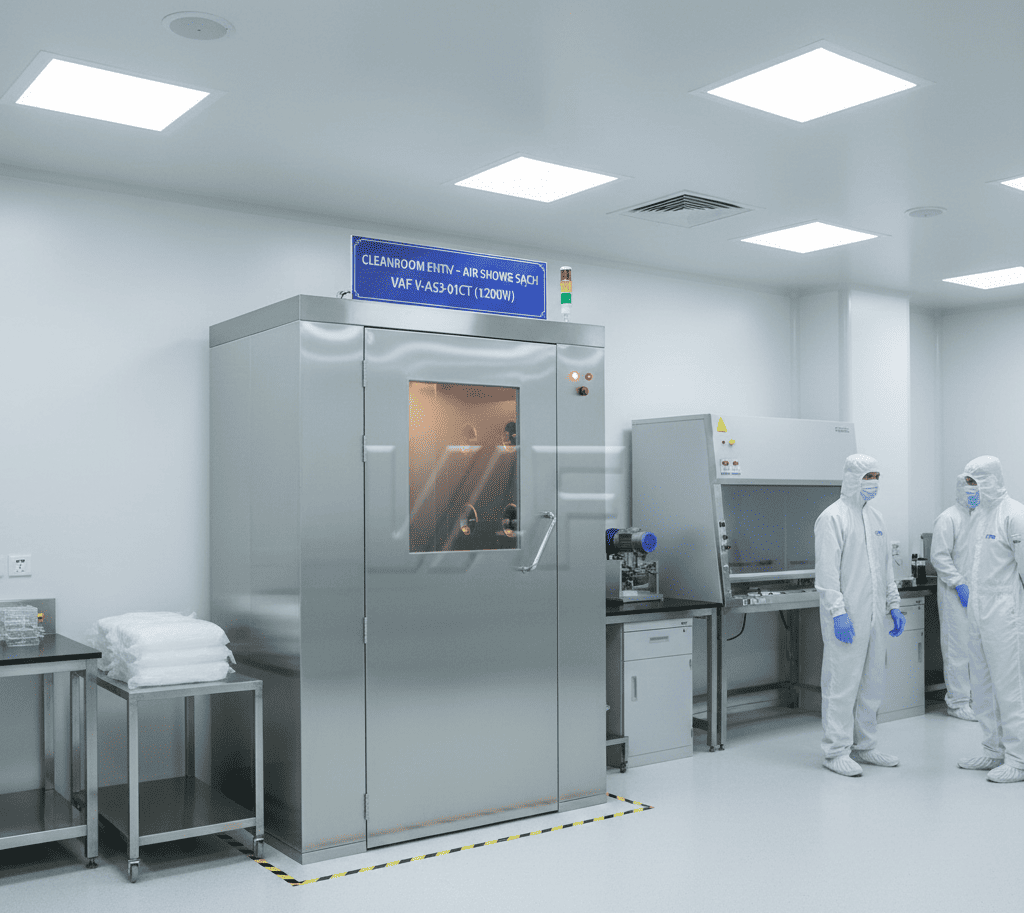
More than just an auxiliary device, the air blower plays a key role in maintaining a stable cleanliness level, ensuring product quality and optimizing long-term operating performance.
Installing a standard air chamber will help businesses:
Legal compliance with meeting the mandatory requirements of regulatory agencies (e.g., Drug Administration, Ministry of Health) on GMP, ISO, HACCP standards.
Maximum pollution control, long-term stability of cleanliness level, reducing the load on the main air filtration system (AHU, HEPA box) inside the clean room.
Protect product quality and optimize production, prevent product damage due to contamination, thereby minimizing the rate of defective products, saving on recycling or disposal costs.
Therefore, installing a GMP-standard air chamber is a smart investment for the sustainable development of the business.
Refer to additional materials for a better understanding of the laboratory air blowing experiment:
Essential knowledge about blowing clean air into a room
Things to keep in mind when using an air shower/air blower.
So when does a business need to upgrade or install a new air chamber?
In fact, many air chamber installation systems do not achieve optimal efficiency because they ignore important technical factors. Learning from these common mistakes will help businesses ensure the quality of their clean room systems.
Enterprises should consider installing a new air chamber or upgrading when there is a change in production scale such as expanding the factory or production line. In addition, upgrading the clean room level according to new GMP standards also requires equipment to meet the corresponding standards. If the frequency of entry and exit increases, the risk of cross-contamination is high, or the old system operates poorly, and the dust filter is ineffective, it is time to take immediate action. Investing in installing an air chamber at the right time will help enterprises save a lot of costs in troubleshooting later and ensure continuous and effective production operations.
Optimal air chamber installation solution from EMIN
With many years of experience in implementing cleanroom projects, EMIN offers a complete air chamber installation solution from design consultation, construction, and acceptance, you can refer to: EMIN Air Shower
Not only providing equipment, EMIN also supports consulting on the correct GMP-level configuration, providing full equipment to measure wind speed, pressure, and dust for acceptance testing, maintenance, and periodic replacement of HEPA filters.