To evaluate and control water hardness, specialized measuring devices are used to accurately determine the mineral content that causes hardness. Based on the measurement results, users can apply appropriate treatment solutions, ensuring water meets standards for use in daily life and production.
Signs of hard water
Hard water contains many metal ions such as Mg²⁺ and Ca²⁺. These ions easily combine with other components in water, forming Carbonate and Bicarbonate salts, leading to some typical phenomena that help identify hard water:
- Change the taste of food: Hard water can change the taste of food when used in cooking.
- Difficult to freeze: Hard water with high hardness is often difficult to freeze, and even impossible to freeze in some cases.
- Reduces the effectiveness of soap and detergents: Ca²⁺ ions in water combine with soap ingredients to create insoluble Calcium Stearate salt, causing less foam to appear. When washing, hands feel slimy and difficult to clean completely. Washing clothes with hard water can make the fabric stiff, rotten, and easily damaged.
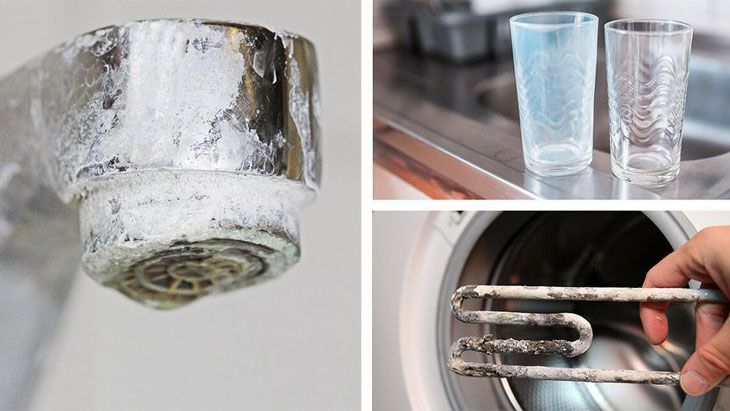
- Scale on appliances: Appliances and items such as faucets, pots and pans, and toilet walls often have plaque or residue when using hard water.
- Effects on skin and hair: Hard water makes skin dry and rough, hair becomes stiff and prone to breakage.
Popular hard water treatment methods
To soften hard water, people often apply many different methods, depending on the level of hardness of the water. Using a water hardness measuring device helps accurately determine the water condition, thereby choosing the most effective treatment method. Below are some popular methods:
1. Ion exchange method
Use a cationic filter layer capable of exchanging Na⁺ or H⁺ ions with Ca²⁺ and Mg²⁺ ions in hard water. This is a way to soften water based on the properties of insoluble substances that have the ability to exchange ions, bringing high efficiency to fixed hard water sources..
2. Using chemicals
By adding the right amount of chemicals such as Na₂CO₃, NaOH, Ba(OH)₂ or Na₃PO₄, the Ca²⁺ and Mg²⁺ ions in the water will react to form insoluble compounds that are easily removed. To be effective, careful calculations are needed to ensure no excess reaction, avoiding affecting water quality.
3. Heat method
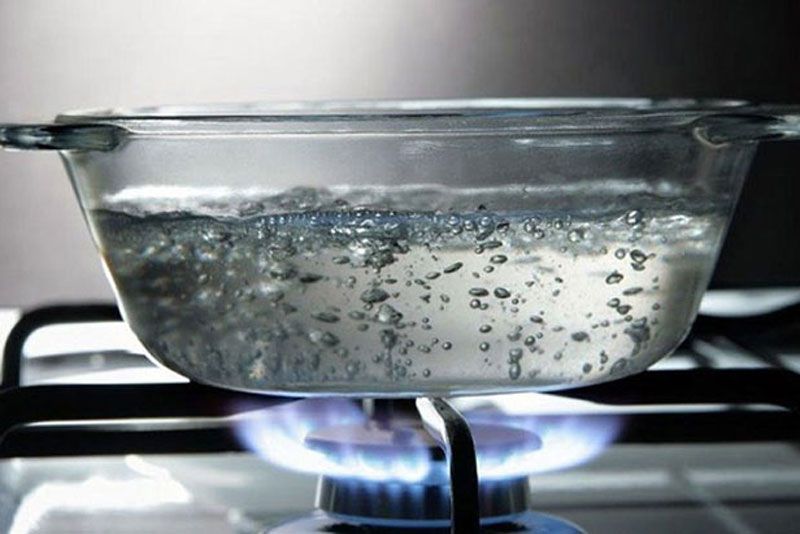
This method takes advantage of temperature to heat or distill water. High temperatures precipitate the salts of Ca²⁺ and Mg²⁺, then these precipitates simply need to be filtered off. However, heat methods are only effective with temporary hard water and are not suitable for treating permanent hard water.
4. Use white vinegar
With its natural acidity, vinegar can react with Calcium (Ca²⁺) and Magnesium (Mg²⁺) ions in water, reducing hardness and preventing scale formation. This method is often used for small-scale or domestic purposes.
Be careful when using white vinegar to soften hard water:
Although white vinegar can reduce water hardness by partially neutralizing minerals, this method does not completely remove Calcium (Ca²⁺) and Magnesium (Mg²⁺) ions in water. If your water source has high hardness or needs treatment for industrial purposes, you should consider applying professional water treatment methods for better results..
5. Treat hard water using synthetic methods
The synthetic method is a combination of many different methods, bringing greater efficiency in softening hard water.
- Use substances containing Aspartic Acid: This is an amino acid that has the ability to form complexes with Ca²⁺ and Mg²⁺ ions, preventing them from accumulating into residue and helping to soften water.
- Use EDTA: EDTA is a strong chelating agent that can form complexes with Calcium and Magnesium ions, preventing precipitation and scaling in water, thereby helping the water become softer..
The synthetic method is highly appreciated for its ability to effectively remove Calcium and Magnesium concentrations, providing softer and safer water for various uses. Depending on the water condition and specific needs, applying a combination of methods will help optimize the effectiveness of hard water treatment.
Conclude:
Above are the methods of treating water hardness that we want to share with you. Refer to the water hardness tester at EMIN