
For full functionality of this site it is necessary to enable JavaScript.
EMINKH.COM
0

The reason make a CAT IV Clamp Meter Still Burn Out?

05/04/2026 11:45:47

A CAT IV clamp meter does not guarantee absolute safety if the environment contains high transient voltage spikes or if the measurement procedure is not performed correctly. In many cases, the real danger is not the voltage displayed on the screen, but extremely short voltage surges capable of generating arc flash and destroying the instrument within microseconds.

CAT IV Does Not Mean Protection Against Every Electrical Fault

The CAT IV rating is designed to evaluate a measuring instrument’s ability to withstand transient overvoltage at power entry points or outdoor electrical systems. However, this standard only applies under limited testing conditions.

In modern industrial systems, especially those using variable frequency drives (VFDs), capacitor banks, or large inductive loads, voltage spikes often occur within extremely short periods of time. This is one of the most common reasons why a clamp meter’s insulation can fail even when the measured voltage remains within the permitted range.

Why Do Voltage Transients Easily Cause Arc Flash?

Unlike stable AC voltage, transient voltage surges rise extremely quickly and can reach several kilovolts within just a few microseconds. At that moment, the air between conductive gaps becomes ionized, forming an internal arc flash inside the measuring device.

This process happens faster than the response time of fuses or protection circuits. As a result, even a CAT IV clamp meter can still burn out before the current exceeds its rated limit.

Measurement Distance Directly Impacts Safety

In many electrical accidents, the issue is not the CAT rating itself but the measurement position. When the clamp jaw gets too close to busbars or areas exposed to high transient voltage, strong electromagnetic fields can trigger surface discharge and arc formation.

This becomes especially dangerous in environments with dust, moisture, or test probes that have deteriorated after long-term use.
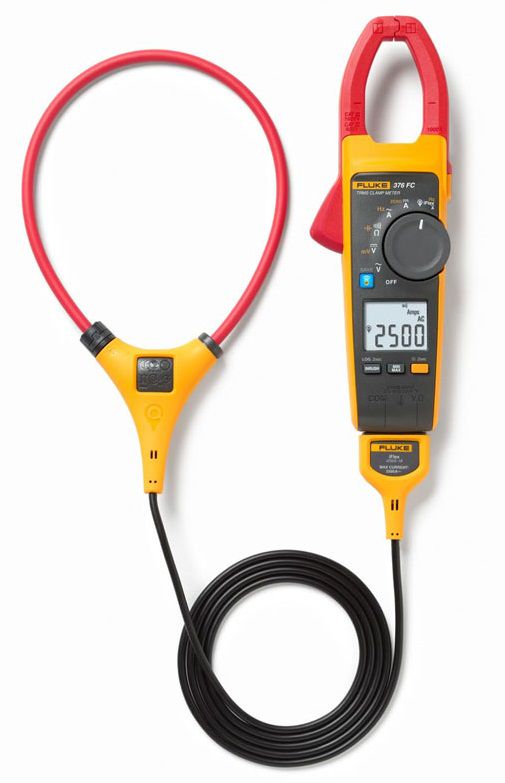
Not All CAT IV Clamp Meters Are the Same

Even when two clamp meters carry the same CAT IV rating, their actual design quality can vary significantly. Industrial-grade models such as Fluke 376 FC and Hioki CM4373-50 typically feature:

  • Larger insulation clearance distances

  • Better arc-resistant materials

  • Multi-stage overvoltage protection circuits

  • Higher resistance to repetitive surge events

Meanwhile, some general-purpose models such as Kyoritsu 2055 are mainly intended for standard building electrical work and routine maintenance. Their protective capability may degrade more quickly when used continuously in environments with heavy electrical noise and frequent transient surges.

A proper understanding of transient overvoltage, maintaining a safe working distance, and selecting equipment that matches the actual operating environment are the key factors in ensuring electrical safety during field measurements.

Related News

Does thermal shock cause damage to electronic components?
07/22/2026 10:40:49

An electronic component may operate stably under constant temperature conditions yet fail after repeated rapid transitions between hot and cold. The issue typically stems not from a specific temperature level, but rather from the rate of temperature change and the number of hot-cold cycles

The rigorous standards behind a multi-million-dollar MRI suite
07/21/2026 14:54:01

An MRI system may be correctly installed and fully connected to the power supply, yet still encounter issues if the surrounding environment fails to meet technical specifications. Electromagnetic interference, RF shielding, power quality, grounding, temperature, humidity, and particulate levels are all factors that may require assessment, depending on the facility's design and the manufacturer's requirements.

Sinusoidal and Random Vibration: A Test Setup Guide for Industrial Engineers
07/21/2026 10:30:38

During the operation of industrial machinery or the transportation of goods, persistent mechanical vibrations inevitably occur; these are a primary cause of material fatigue, loosened connections, and cracking in printed circuit boards (PCBs). To ensure product integrity before delivery to customers, R&D and QA/QC engineers must simulate these dynamic forces using vibration test systems.

Capacities of laboratory centrifuge tubes
07/20/2026 13:55:40

Tubes with capacities of 0.2 ml, 1.5 ml, 15 ml, or 50 ml are commonly found in laboratories, yet each type is associated with specific sample categories and equipment configurations. DNA and RNA samples typically require small-volume microtubes; blood and cell samples often utilize 5 ml or 15 ml tubes; while large-volume processing workflows may require tubes of 50 ml, 100 ml, or greater capacity

How Much Does Atmospheric Pressure Need to Drop Before It Rains ?
07/20/2026 10:11:04

A barometric pressure meter (barometer) often detects changes in weather conditions before rainfall begins. As atmospheric pressure falls, the structure of the surrounding air mass is also changing. However, there is no fixed pressure threshold that guarantees rain will occur.

Stay Updated with Offers

Get exclusive volume discounts, bulk pricing updates, and new product alerts delivered directly to your inbox.

By subscribing, you agree to our Terms of Service and Privacy Policy.

Quick Support

Direct access to our certified experts