
For full functionality of this site it is necessary to enable JavaScript.
EMINKH.COM
0

Tips for treating damp floors before painting using a concrete moisture meter.

01/06/2026 11:30:39

When the moisture content in concrete exceeds or drops too low, the surface is prone to problems if not properly treated. This is especially true with water-repellent paints, as the paint has difficulty adhering, the floor is prone to peeling, and over time, this reduces durability and affects the overall finish.

Measure the moisture content of the concrete before painting.

The moisture content of the floor directly affects the choice of paint type and application method. Therefore, it's essential to determine the moisture level of the concrete using specialized measuring equipment from the outset to understand the actual condition of the surface. For most civil construction and factory buildings, the ideal moisture content is usually between 5-8%.

In practice, many people use common devices such as the EM-480 concrete and plaster moisture meter to monitor the floor condition before painting. These two models are easy to use, provide quick results, and are suitable for assessing the site before construction.

See more diverse products at: Wood and Building Materials Moisture Meters

If the concrete is too wet or has dried beyond acceptable limits, the paint layer will have difficulty adhering to the substrate. The common consequence is the need for multiple coats of paint, an uneven paint surface, and potential peeling after a short time, reducing the durability and aesthetic appeal of the structure.

Concrete floor surface treatment

Floor painting only achieves good durability and aesthetics when the concrete subfloor is properly prepared from the start. The surface needs to be uniformly roughened to ensure strong paint adhesion and prevent moisture penetration later on.
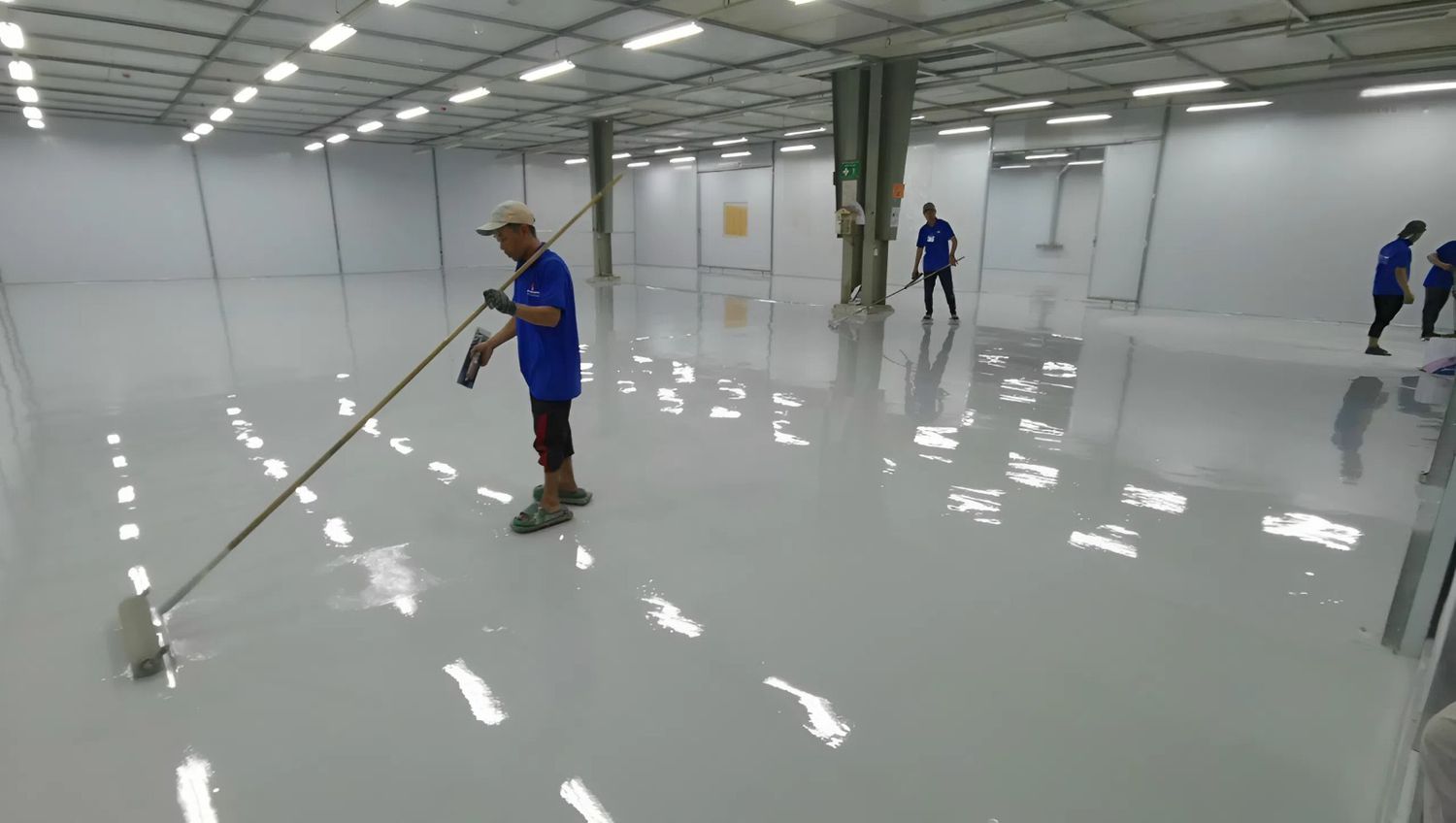
For areas with weak or deteriorated subfloors, thorough treatment is necessary before roughening. Flaking, pitted, or damaged concrete should be removed. Then, use an industrial grinder or sandblasting machine to roughen the surface. Areas with cracks need more careful treatment to prevent them from spreading after use.

After roughening, the floor needs to be thoroughly cleaned. Fine dust, sand particles, and remaining impurities must be vacuumed or swept away to ensure the subsequent paint layer adheres evenly and achieves a high-quality finish.

For damp concrete floors, several drying methods can be applied before painting. In practice, many contractors use specialized gas torches to quickly dry the surface. This method reduces moisture immediately, facilitating subsequent construction steps and saving costs.

To enhance long-term moisture resistance, it's essential to use appropriate waterproofing materials for concrete. These materials penetrate deep into the subfloor structure, limiting moisture evaporation from below. Depending on the floor condition and budget, a suitable solution can be chosen to ensure the quality of the finished surface. Additionally, a moisture-resistant primer is often used to increase the stability of the topcoat.

Before applying any treatment, it's crucial to determine the floor's moisture level to select the most appropriate solution, avoiding waste and ensuring safety during construction.


Related News

Which products are tested using a -40°C to +150°C thermal shock chamber?
07/22/2026 14:45:25

Automotive circuit boards, sensors, modules, and plastic components can all experience issues after repeated transitions between cold and hot environments. A thermal shock chamber operating from -40°C to +150°C enables the replication of these temperature fluctuations under controlled testing conditions.

Does thermal shock cause damage to electronic components?
07/22/2026 10:40:49

An electronic component may operate stably under constant temperature conditions yet fail after repeated rapid transitions between hot and cold. The issue typically stems not from a specific temperature level, but rather from the rate of temperature change and the number of hot-cold cycles

The rigorous standards behind a multi-million-dollar MRI suite
07/21/2026 14:54:01

An MRI system may be correctly installed and fully connected to the power supply, yet still encounter issues if the surrounding environment fails to meet technical specifications. Electromagnetic interference, RF shielding, power quality, grounding, temperature, humidity, and particulate levels are all factors that may require assessment, depending on the facility's design and the manufacturer's requirements.

Sinusoidal and Random Vibration: A Test Setup Guide for Industrial Engineers
07/21/2026 10:30:38

During the operation of industrial machinery or the transportation of goods, persistent mechanical vibrations inevitably occur; these are a primary cause of material fatigue, loosened connections, and cracking in printed circuit boards (PCBs). To ensure product integrity before delivery to customers, R&D and QA/QC engineers must simulate these dynamic forces using vibration test systems.

Capacities of laboratory centrifuge tubes
07/20/2026 13:55:40

Tubes with capacities of 0.2 ml, 1.5 ml, 15 ml, or 50 ml are commonly found in laboratories, yet each type is associated with specific sample categories and equipment configurations. DNA and RNA samples typically require small-volume microtubes; blood and cell samples often utilize 5 ml or 15 ml tubes; while large-volume processing workflows may require tubes of 50 ml, 100 ml, or greater capacity

Stay Updated with Offers

Get exclusive volume discounts, bulk pricing updates, and new product alerts delivered directly to your inbox.

By subscribing, you agree to our Terms of Service and Privacy Policy.

Quick Support

Direct access to our certified experts