How can electricity be understood?
Medium voltage is the voltage level ranging from 1kV to 35kV, equivalent to about 1000V to 35000V. This is the source used to supply industrial zones, factories or places that need large power loads.
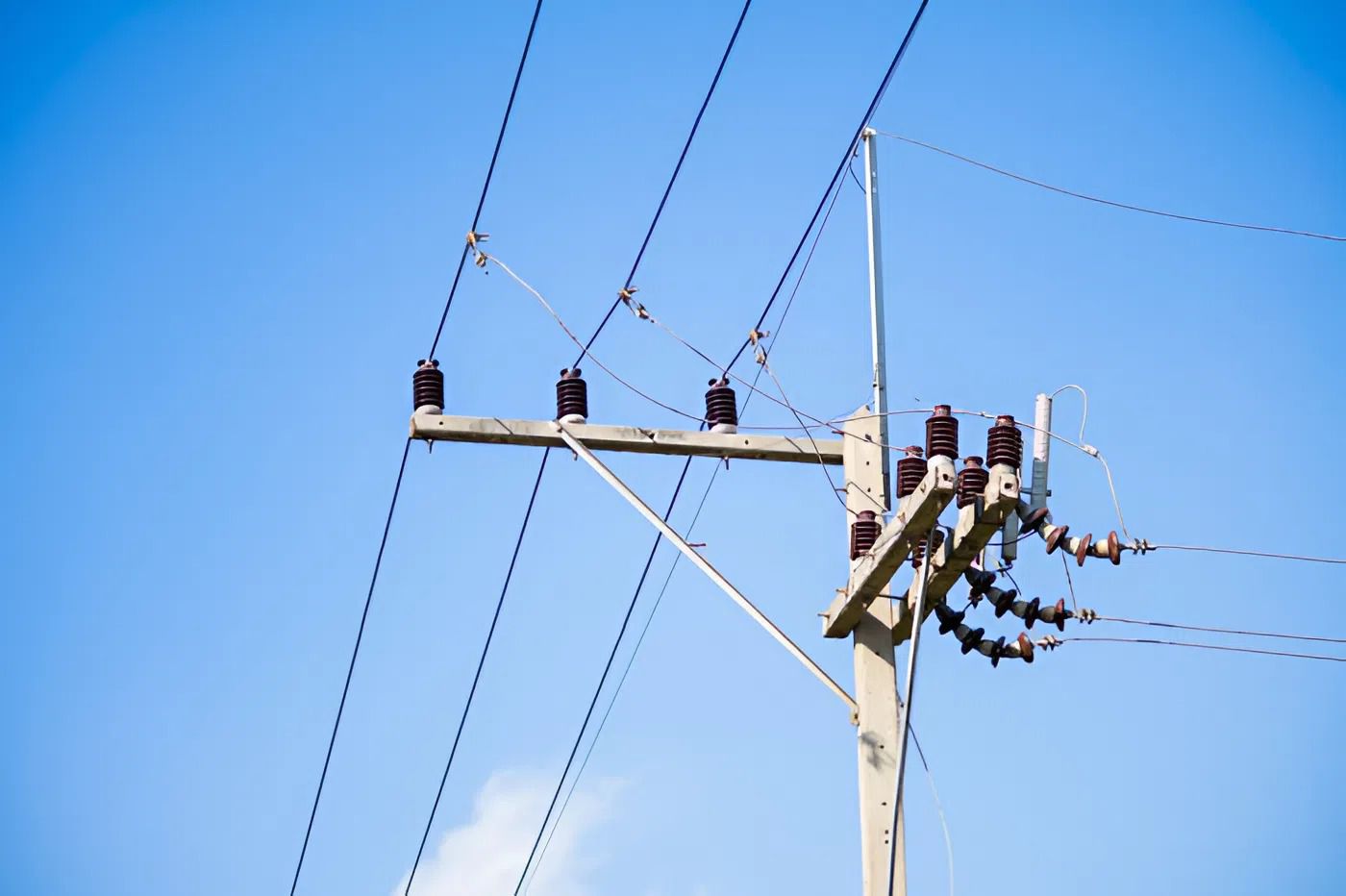
Medium voltage wiring systems are usually accompanied by electric poles about 9 to 12 meters high. On them will be installed insulating porcelain pillars, commonly the supporting porcelain or hanging porcelain type. The line can be covered wire or bare wire and is fixed on the porcelain pillar to ensure safety when transmitting electricity.
How many volts is medium voltage usually?
Medium voltage is usually in the range of 1kV to 35kV. In Vietnam today, the common voltage levels are 6kV, 10kV, 22kV and 35kV. Depending on the scale of the factory or industrial park, the appropriate medium voltage level will be selected to ensure stable operation.
Medium voltage line installation also varies according to actual usage needs. Normally, the wire can be covered or bare and is fixed on an insulating porcelain pillar to ensure safety during transmission.
Safe distance of medium voltage
When it comes to medium voltage, in addition to the concept and voltage level, another important factor to pay attention to is the safety distance. Voltage can be up to 35000V, so the risk of electric discharge when standing close is very high and can be completely dangerous for people.
According to regulations, the minimum safety distance is determined as follows: with voltage from 1kV to 15kV, the distance must be at least 0.7 meters, and with voltage from 15kV to 35kV, the distance must be 1 meter or more. Knowing this information will help you better understand the medium voltage power grid as well as choose additional appropriate measuring equipment to ensure safety when working.
Suggested basic equipment for measuring medium voltage - clamp meter
One of the basic devices for measuring medium voltage that technical people often mention is the clamp meter. This type of clamp meter can measure voltage levels up to 35kV, suitable for quickly checking medium voltage power sources in production.
In fact, the medium voltage clamp meter also belongs to the clamp meter group but is designed with a wider measuring range. This device operates based on magnetic field sensors in two clamps, so it can measure directly with high accuracy without having to cut off the power.
To ensure safety, medium voltage clamp meters are often manufactured with a sturdy insulating shell, accompanied by an insulated pole from 9 to 13 meters long. Thanks to that, users can measure directly on overhead lines without having to climb poles or use ladders.
With the ability to measure outdoors, monitor medium voltage currents carrying loads or check for distortion on lines, medium voltage clamp meters are increasingly widely used in practice.
You can refer to:
UNI-T UT255A: Clamp meter for measuring leakage current and high voltage current, range 0V~69kV. This is a very close choice for measuring medium voltage up to 35kV.
Voltage measuring range up to 69kV is more than enough for medium voltage (medium voltage max ~35kV)
Leakage current measuring range from very small (0.01mA) to 600A → can measure from light to very heavy loads.
Comes with an insulated pole for safer outdoor/high-altitude measurements
In addition, you can see high voltage measuring devices at: EMIN High Voltage Testing Equipment