What characteristics does a desktop multimeter have?
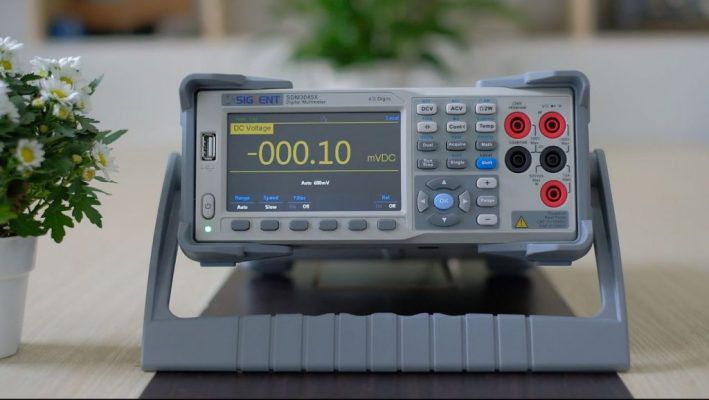
Below are some features commonly found on desktop clock models
- Ability to measure current quickly and with high accuracy.
- Display measurement results in a detailed, easy-to-observe chart.
- The screen has high resolution, helping users see clearly.
- Diverse measurement features and many smart features.
- Store and manage data on long-term device memory.
- Integrated PC connection software for effective data analysis.
Some advantages of a desktop multimeter
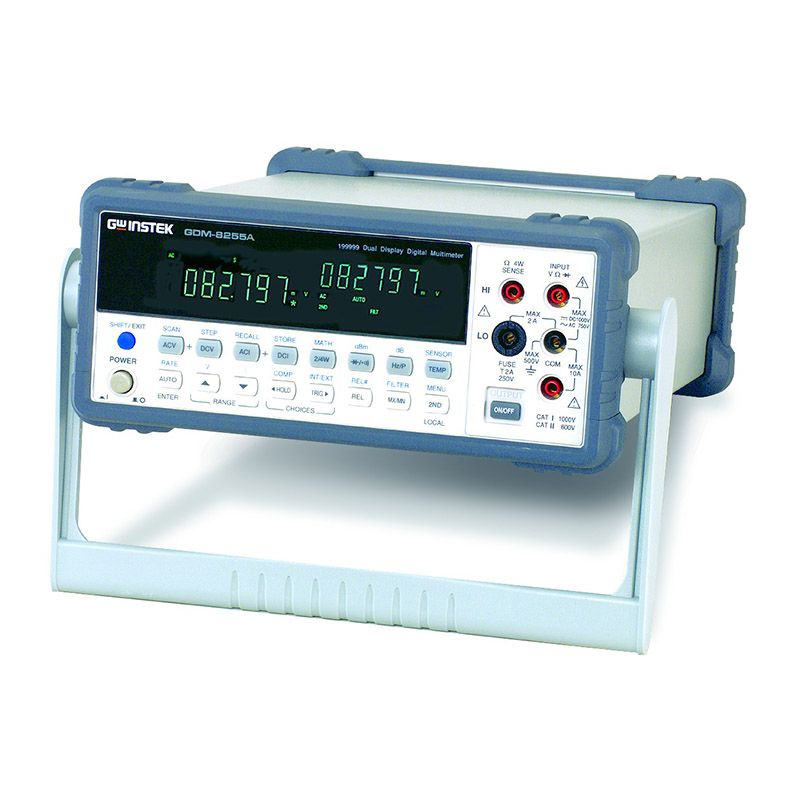
The benchtop multimeter is manufactured using modern technology to ensure the highest accuracy in measurement. Device highlights include:
- Simple, user-friendly design.
- Insulated, impact-resistant outer shell.
- Digital screen displays results quickly and accurately.
- Diverse voltage measurement functions such as current, resistance, frequency, continuity.
- Provides accurate measurement results for safe electrical testing.
- Equipped with smart measurement technology such as True RMS, connected to phones and computers.
- Included smart features such as backlight, saving measurement values, providing min and max measurement data
Suggest you a desktop multimeter model that is currently available at a good price
Due to the popularity of measuring devices on the market, manufacturers have provided a variety of high-quality benchtop multimeter models for customers to choose from. Besides quality, a reasonable price also helps customers easily access products to serve their work.
GW Instek GDM-9061 desktop multimeter
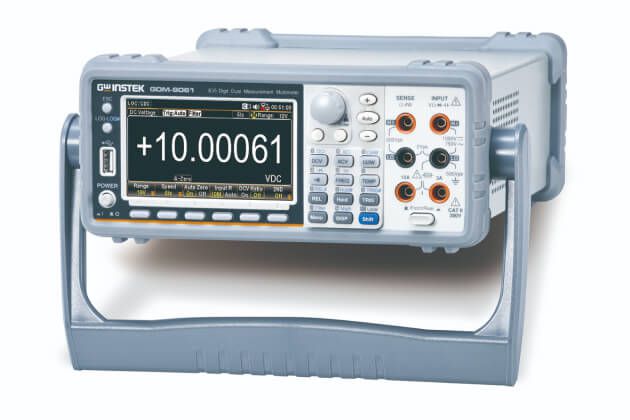
GW Instek GDM-9061 desktop multimeter from GW Instek, stands out with its ability to measure DC voltage with high accuracy and fast sampling speed. This device supports 12 measurement functions including DC voltage/current, AC voltage/current, 2-wire/4-wire resistance, frequency, cycle, diode, continuous beep, temperature, capacitance.
In addition, it also integrates 6 mathematical functions such as dB/dBm, Comparison, MX+B, Percent and 1/X. With diverse communication interfaces such as USB Host/Device, RS-232C, LAN, digital I/O and optional GPIB, GW Instek GDM-9061 delivers comprehensive measurement capabilities with outstanding accuracy and speed. dominant.
Working ability of GW Instek GDM-9061 Desktop Multimeter
-6 1/2 digit display: 1,200,000 Counts
-LCD screen: 4.3 TFT Graphic
- DCV basic accuracy: 0.0035% (GDM-9061)
- Sampling rate up to 10k SPS
- Dual measurement function allows two measurements to be performed simultaneously
- Graphical display capabilities including Histograms, Bar Gauges and Guides
- Supports RTD temperature measurement, Thermistor as well as thermocouple
- Standard communication: USB Host/Device, RS-232C, LAN, digital I/O
- Optional communication: GPIB
Specifications:
- DCV voltage range: 100 mV ~ 1000 V
- Resolution: 0.1 μV ~ 1 mV
- Accuracy: 0.0050 + 0.0006% (depending on measuring range)
- ACV voltage range (True RMS): 100 mV ~ 750 V
- Resolution: 0.1 μV ~ 1 mV
- Accuracy: 0.35 + 0.04% (depending on measuring range)
- DCA current range: 100 μA ~ 10 A
- Resolution: 100 pA ~ 10 μA
- Accuracy: 0.050 + 0.025% (depending on measuring range)
- ACA current range (True RMS): 100 μA ~ 10 A
- Capacitance: 1,000 nF ~ 100.0 μF
- 12 measurement functions: DCV, ACV, DCI, ACI, 2-wire and 4-wire resistance, Frequency, Cycle, Diode, Continuity, Temperature and Capacitance.
See more models at Desktop Multimeters
Above are my shares about desktop multimeters. If you need advice or a quote for the GW Instek GDM-9061 desktop multimeter, you can contact us for the best support.