Thermal camera results can be completely inaccurate if factors such as the environment, reflective materials, or surface emissivity are overlooked. The following article provides a detailed analysis of physical principles to help you utilize this equipment with maximum precision and efficiency.
The Nature of Surface Temperature Measurement
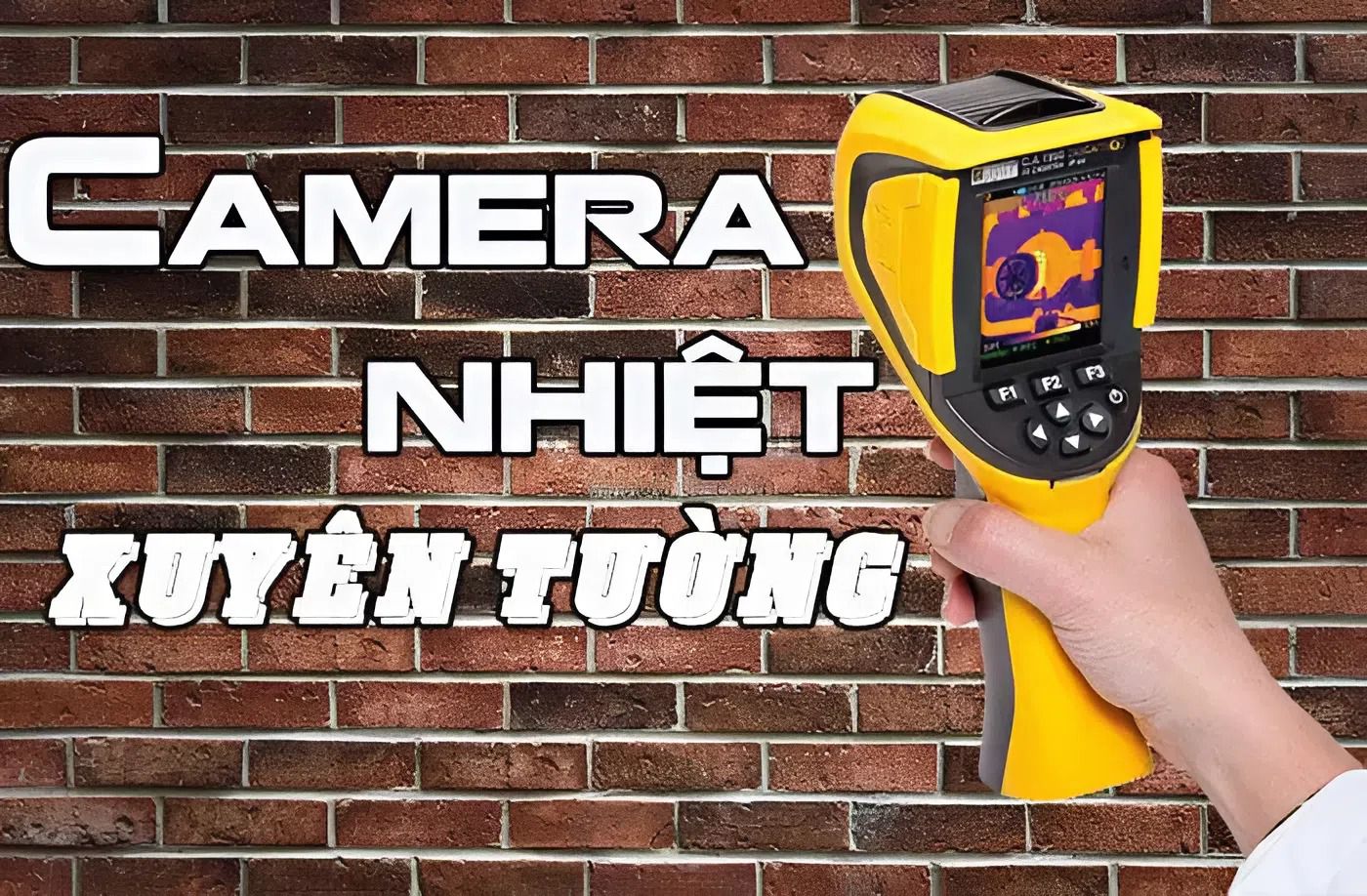
One of the most common questions is whether thermal cameras can see through walls. Technically, the answer is no. These devices are only capable of capturing infrared radiation emitted from the outermost surface of an object; they cannot penetrate solid structures such as brick walls, concrete, or wood.
The "heat ghosting" phenomenon appearing behind a wall is actually a result of thermal conduction. An internal heat source (such as a hot water pipe or an electrical short circuit) increases the temperature of the wall's inner surface, and this thermal energy gradually permeates to the outer surface. The camera records the temperature differential at that outer surface rather than seeing through to the interior. If the wall has sufficient thermal insulation, the device will fail to detect any abnormalities.
Interaction with Glass and Reflective Materials
While thermal cameras operate effectively in smoky or dusty environments, glass acts as an absolute barrier to infrared rays. Glass possesses highly reflective thermal properties. When pointing a camera at a window or an electrical cabinet's glass panel, the device will measure the reflected temperature of the surroundings or the operator instead of the actual temperature of the object behind the glass. This is a critical technical limitation to consider to avoid errors during electrical panel inspections or structural monitoring.
See more:
Smartphone Thermal Camera - 5 technical specifications that determine product quality
Is the Flir C5 Thermal Camera truly as user-friendly as the manufacturer claims?
The Decisive Influence of Emissivity
Emissivity is the most vital technical parameter, directly affecting up to 80% of measurement accuracy. Every type of material (paint, metal, wet surfaces) has a different capacity to emit thermal radiation.
Using default settings for all measurement targets is a common mistake leading to significant errors. Especially in electrical system or mechanical equipment inspections, failing to correctly calibrate emissivity based on the material can result in deviations ranging from a few degrees to tens of degrees Celsius, compromising safety assessments.
Impact of Ambient Environmental Conditions
Data from thermal cameras is highly sensitive to environmental factors. Thermal radiation emitted from an object is disturbed by wind speed, air humidity, and direct sunlight.
Even with high-end equipment, if measurements are performed outdoors without accounting for environmental correction factors, the results obtained serve only as a baseline reference and are insufficient to conclude the technical condition of the subject.
Furthermore, to accurately determine the internal condition of a construction project, it is essential to integrate non-destructive testing (NDT) equipment, such as concrete ultrasonic testers or rebar detectors. Relying solely on thermal imaging to evaluate structural integrity is a technical error.