Handheld stirrers are indispensable equipment in the laboratory, helping to stir solutions quickly and effectively. With a compact design, easy to move and use in many different environments, hand-held stirrers effectively support scientists in the research and experimentation process.
1. What is a hand mixer?
Handheld stirrers are devices used to stir solutions in scientific experiments, especially popular in chemistry, biology and medicine laboratories. This device is compact in size, easy to hold and move, helping users stir liquids quickly without using bulky fixed stirrers.
In the laboratory, hand-held stirrers help ensure that solutions are mixed evenly, avoiding sedimentation or stratification of components. This is important to ensure the accuracy and reliability of experimental results. For example, when preparing samples or mixing reaction solutions, hand-held stirrers save time and effort compared to manual stirring with a traditional stirrer.
In addition, hand-held stirrers can also be used in space-limited environments such as incubators or safety chambers, thanks to their compact design and flexible battery or mains operation.
2. Practical laboratory applications of hand-held stirrers
2.1 Stirring chemical solutions
Handheld stirrers are commonly used to stir chemical solutions, helping to quickly dissolve solids into solvents or mix liquid solutions together. For example, in analytical laboratories, when it is necessary to prepare standard solutions, hand-held stirrers help ensure that the solution is homogeneous, increasing the accuracy of the next analytical steps.
2.2 Support for microbial culture
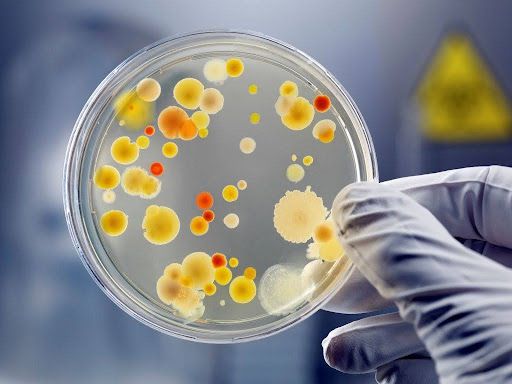
In the biology laboratory, hand mixers are used to stir microbial culture media such as bacteria or cells. Stirring helps to provide oxygen and nutrients evenly in the medium, promoting the growth of microorganisms. Compact hand mixers are also convenient to use in incubators or biological protection devices.
2.3 Pharmaceutical research and testing
Handheld stirrers are also used in the pharmaceutical industry to mix drug ingredients or test mixtures. Stirring ensures that the ingredients are evenly distributed, thereby improving the quality of the final product. For example, when testing the dissolution of drugs, a hand-held stirrer helps to homogenize the test sample.
3. Introduction of Stuart Cole Parmer ST-200-P Handheld Stirrer
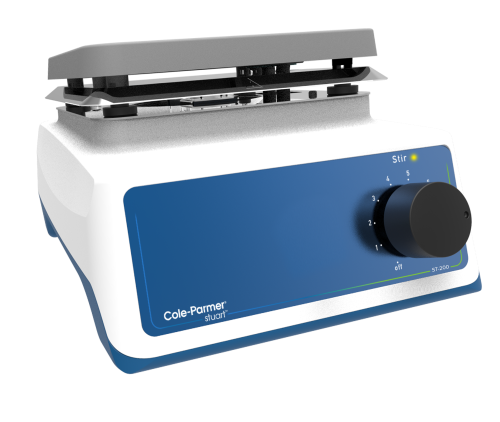
Stuart Cole Parmer ST200-P hand-held stirrer is one of the hot selling hand-held stirrers today, trusted by many laboratories thanks to its compact design, high performance and outstanding durability.
Design: Chemical-resistant ABS plastic shell, size 150x160x70 mm, weight 1.3 kg, easy to hold and move.
Stirring speed: Flexible adjustment from 0 to 1300 rpm, suitable for many types of solutions and different experimental requirements.
Power source: Can be operated by 4 alkaline batteries type D or 230V power source, allowing flexible use in the laboratory or in the field.
Outstanding features: The machine has a low battery indicator light, helping users easily control the operating status; sturdy design, impact resistance and good chemical resistance, ensuring long-term durability.
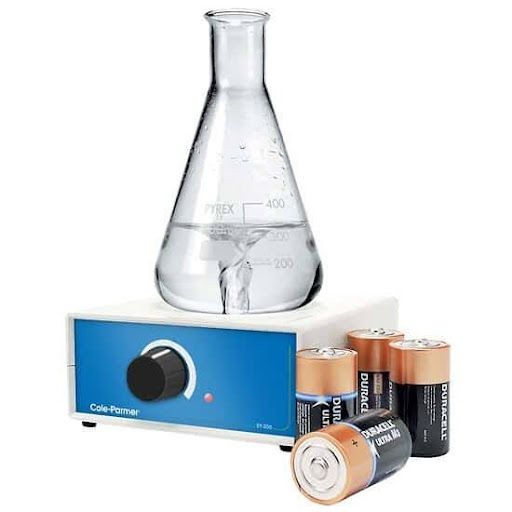
Handheld stirrers are essential equipment in the laboratory, helping to stir solutions quickly, evenly and accurately. With the advantages of being compact, flexible and high performance, handheld stirrers such as Stuart Cole Parmer ST200-P effectively support the research and experimental work of scientists. If you are looking for a quality, durable and convenient handheld stirrer, this is definitely a choice not to be missed.