Definition of water distiller
Water distiller helps create pure water from regular water. With common capacities such as 4, 8, and 12 liters per hour, water distillers are often used in laboratories. Most water distillers on the market today are manufactured by developed countries such as the US, Japan, UK and Germany, ensuring high quality and performance, and absolute safety for users.
How many types of machines are there?
As mentioned, water distillers produce pure water using distillation. Based on the distillation method, people classify it into two main types: 1-time water distiller and 2-time water distiller.
One-time distilled water machine:
This machine performs a distillation cycle: boiling, evaporation, and cooling to produce distilled water. However, the distilled water from this machine is not of high purity.
Double distilled water machine:
This machine uses two distillation cycles to produce distilled water. Distilled water from this machine has much higher purity than a single distilled water machine.
How water distiller works
The operating principle of a water distiller can be summarized in three simple steps:
1. Boil the sample water to turn it into steam.
2. Condense and cool the water vapor, returning it to its liquid state.
3. Remove non-volatile impurities such as minerals and microorganisms from sample water.
To start the process, sample water is introduced into the heating chamber. In this chamber there is a heating element, which is responsible for raising the temperature of the water to a gentle boil. When water begins to boil, steam will form. The steam then escapes through the vent at the top of the heating chamber and enters a condenser where it will be cooled.
A high-powered fan is used to cool the steam, forming water droplets. These water droplets then flow through the condenser tube and are filtered through an activated carbon filter. This filter helps remove some of the contaminants that may exist in the steam and condense with it. Activated carbon in the filter helps remove pollutants left on water droplets. Finally, the purified water flows out of the distiller and is collected in a glass or steel container.
Calculate the application of water distiller
In the laboratory:
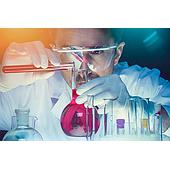
As you know, distilled water is pure water and does not contain impurities, containing only the chemical components of hydrogen and oxygen. Therefore, when using distilled water to prepare solutions, analyze or test, you will not have to worry about side effects or deviations in experimental results.
Various industrial fields:
Water distillers are also widely used in many different fields such as aviation, shipbuilding, mining, chemicals, petrochemicals, metallurgy, and processing plants. In addition, water distillers also play an important role in the jewelry, perfume, and cosmetics manufacturing industries.
Suggesting 2 typical lines of water distillers today:
Single distilled water machine W4000
The W4000 water distiller is a one-time water distiller, mainly made of glass material with a water distillation capacity of 4L/hour.
Double distilled water machine A4000D
The A4000D water distiller is a double distillation device with a capacity of 4L/hour. The device operates completely automatically, is easy to use, and is safe in assembly and maintenance. Designed to be placed on a table or mounted on a wall. Distilled water quality is of high purity, suitable for experimental, analytical and research applications.
Conclude:
Above are my shares about water distillers and machine classification. If you want to buy reputable water distillers at good prices, please contact us immediately for advice and quotes.