
For full functionality of this site it is necessary to enable JavaScript.
EMINKH.COM
0

What Is Amplification? How Does It Support Spectrum Analysis and Radio Frequency?

11/25/2025 16:14:24

Have you ever wondered how tiny signals can be boosted to power a wide range of modern electronic devices? Power amplification helps you understand how signals are utilized in the fields of spectrum analysis and radio frequency (RF).


Amplification technique in signal processing

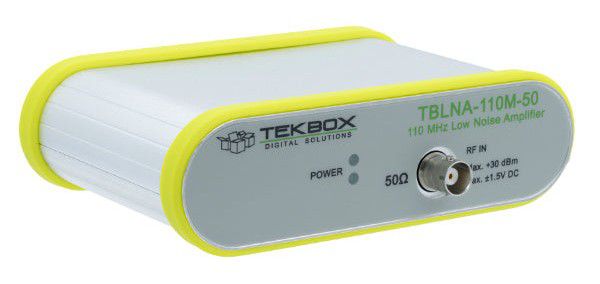
Amplification is the process of increasing the amplitude of an electronic signal without losing its fundamental properties. This allows the signal to retain its original content while having a larger amplitude, making it easier to process, transmit, or measure. The Power amplifier TekBox TBLNA-110M-50 enables weak signals to be amplified to levels more easily handled by spectrum analyzers or radio receivers.

A key aspect of amplification is balancing signal boost with limiting added noise. The DC-Coupled technology in the TekBox TBLNA-110M-50 reduces input noise, preserving the amplified signal's near-original state. This is crucial in spectrum analysis for accurately identifying frequency components in the signal. DC-coupled amplifiers inherently reduce low-frequency noise and offset, improving signal fidelity as compared to AC-coupled approaches, which can introduce capacitive coupling limitations or increased complexity.
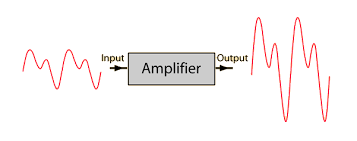
Amplification technique

How to support for amplification in spectrum analysis and radio frequency

In spectrum analysis systems or radio frequency measuring devices, amplification is not merely increasing signal amplitude but also helps measure and analyze very low-level signals. Amplifiers raise small signals to a level where measurement devices like spectrum analyzers can accurately read and analyze them. This is particularly useful for analyzing frequency components in radio waves, allowing detection of weak signals that are masked or unwanted frequency interferences.
Moreover, amplification in spectrum analysis circuits helps detect and measure harmonic distortion and intermodulation, thus improving the performance of radio systems and transmission.

Power amplifier TekBox TBLNA-110M-50

Conclusion

Amplification is the process of boosting signal amplitude to help weak signals become strong enough for accurate processing and analysis, especially important in spectrum analysis and radio frequency. This technique not only strengthens the signal but also preserves fidelity, enabling detection of weak signals and unwanted noise, thereby improving signal transmission quality and measurement reliability.

Related News

Which products are tested using a -40°C to +150°C thermal shock chamber?
07/22/2026 14:45:25

Automotive circuit boards, sensors, modules, and plastic components can all experience issues after repeated transitions between cold and hot environments. A thermal shock chamber operating from -40°C to +150°C enables the replication of these temperature fluctuations under controlled testing conditions.

Does thermal shock cause damage to electronic components?
07/22/2026 10:40:49

An electronic component may operate stably under constant temperature conditions yet fail after repeated rapid transitions between hot and cold. The issue typically stems not from a specific temperature level, but rather from the rate of temperature change and the number of hot-cold cycles

The rigorous standards behind a multi-million-dollar MRI suite
07/21/2026 14:54:01

An MRI system may be correctly installed and fully connected to the power supply, yet still encounter issues if the surrounding environment fails to meet technical specifications. Electromagnetic interference, RF shielding, power quality, grounding, temperature, humidity, and particulate levels are all factors that may require assessment, depending on the facility's design and the manufacturer's requirements.

Sinusoidal and Random Vibration: A Test Setup Guide for Industrial Engineers
07/21/2026 10:30:38

During the operation of industrial machinery or the transportation of goods, persistent mechanical vibrations inevitably occur; these are a primary cause of material fatigue, loosened connections, and cracking in printed circuit boards (PCBs). To ensure product integrity before delivery to customers, R&D and QA/QC engineers must simulate these dynamic forces using vibration test systems.

Capacities of laboratory centrifuge tubes
07/20/2026 13:55:40

Tubes with capacities of 0.2 ml, 1.5 ml, 15 ml, or 50 ml are commonly found in laboratories, yet each type is associated with specific sample categories and equipment configurations. DNA and RNA samples typically require small-volume microtubes; blood and cell samples often utilize 5 ml or 15 ml tubes; while large-volume processing workflows may require tubes of 50 ml, 100 ml, or greater capacity

Stay Updated with Offers

Get exclusive volume discounts, bulk pricing updates, and new product alerts delivered directly to your inbox.

By subscribing, you agree to our Terms of Service and Privacy Policy.

Quick Support

Direct access to our certified experts