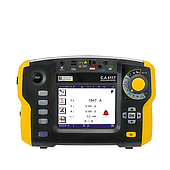
The difference between a 30 mm and a 55 mm clamp jaw is not simply a matter of mechanical dimensions. It directly affects magnetic circuit characteristics, noise immunity, and measurement stability when working with continuously varying loads.
Why Smaller Clamp Jaws Are Often More Stable for Low-Current Measurements
Clamp meters operate by detecting the magnetic field generated around a conductor carrying electrical current. The magnetic core inside the clamp jaw captures this field and converts it into a measurable signal.
As the clamp jaw diameter increases, the magnetic flux area also expands. This makes the magnetic field distribution inside the core more difficult to control, especially when the conductor is not positioned exactly at the center of the jaw. Even a misalignment of just a few millimeters can noticeably affect low-current measurements.
With clamp meters using smaller jaws around 30 mm, the distance between the conductor and the magnetic core is shorter, allowing the magnetic field to remain more concentrated. Lower magnetic leakage improves signal stability. This is one reason why many inverter and HVAC maintenance technicians prefer compact-jaw clamp meters, even when extremely high current ranges are unnecessary.
Large Clamp Jaws Are More Convenient but More Sensitive to Noise
In high-power electrical systems, wide clamp jaws are almost essential because power cables, heavily insulated conductors, or busbars are physically larger. Clamp meters with 50–55 mm jaws allow faster measurements without disconnecting cables or shutting down loads.
However, increasing the jaw diameter introduces a major technical challenge: maintaining magnetic circuit uniformity. The surrounding magnetic field no longer behaves like an ideal sinusoidal waveform. Larger jaws capture more external interference because the sensing area becomes wider. As a result, displayed readings may fluctuate more easily, especially when measuring low currents in high-power electrical systems.
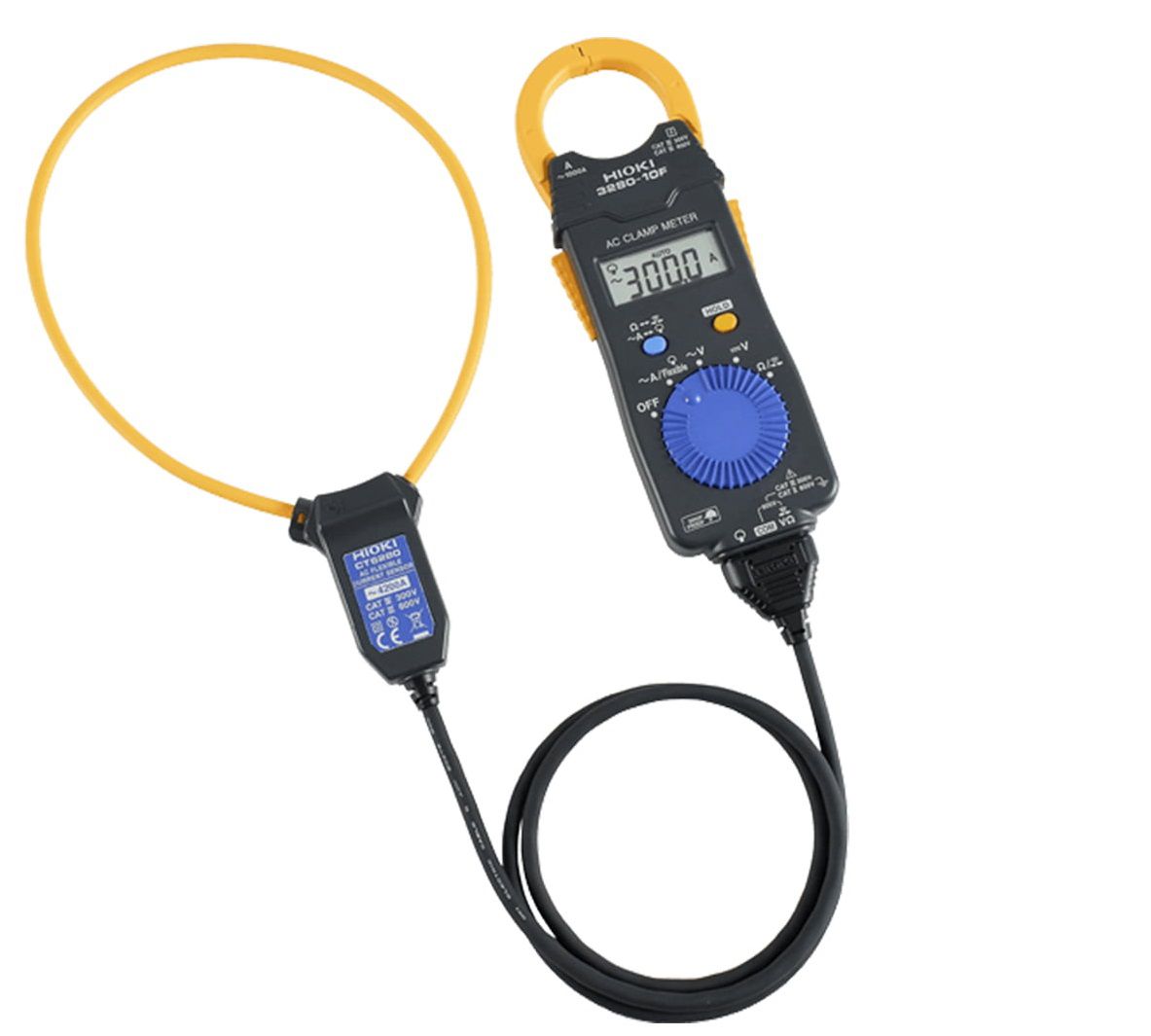
Even Tiny Mechanical Gaps Can Affect Accuracy
Many users assume that measurement errors mainly originate from the electronic sensor inside the clamp meter. In reality, for clamp-type current meters, the mechanical structure of the jaw itself has a major impact on long-term accuracy.
The two halves of the clamp jaw must close almost perfectly to form a sealed magnetic circuit. As jaw size increases, maintaining flatness and tight contact across the mating surfaces becomes more difficult. Over time, metal dust, mechanical wear, or physical impacts can create microscopic gaps at the contact point.
These gaps alter the magnetic reluctance of the core, causing part of the magnetic signal to leak before reaching the sensor. At high current levels, the effect may be minimal. However, during low-current measurements or when analyzing rapidly changing signals, the resulting error can become significant.
This also explains why many industrial large-jaw clamp meters perform well at several hundred amperes but become unstable when checking leakage current or light electrical loads.
Real-World Accuracy Depends on the Operating Environment
In technical specifications, manufacturers usually state accuracy under ideal test conditions, with the conductor centered inside the jaw and minimal electromagnetic interference. In actual field conditions, measurement performance depends heavily on how the clamp jaw interacts with the real electrical environment.
Large-jaw clamp meters are better suited for thick power cables, high-capacity electrical panels, and power distribution systems. Smaller-jaw models, despite their cable size limitations, often deliver more stable results in environments with nonlinear loads such as variable-frequency drives, HVAC systems, leakage current inspection, automation control systems, and industrial electronics.
Smaller clamp jaws generally provide better magnetic field control and reduce the influence of surrounding interference. As clamp diameter increases, managing magnetic flux, suppressing noise, and maintaining precise mechanical sealing become increasingly complex. For this reason, selecting the right clamp meter should involve more than simply choosing the highest current range. The actual application environment, load characteristics, and signal behavior are equally important considerations.