For full functionality of this site it is necessary to enable JavaScript.
EMINKH.COM
0

Which handheld metal hardness tester is good?

06/27/2024 15:45:07

Metal hardness is a common concept in industry. So what is metal hardness and why is determining hardness important? Does using a handheld metal hardness tester help increase work efficiency? EMIN will explain to you in the article below!

How to understand metal hardness

First of all, it is necessary to know what the metal hardness is. Metallic hardness is the ability of a metal to withstand compression or expansion when applied by an external force. This helps determine the quality and durability of products made from metal, which are widely used in the mechanical, machining, and manufacturing industries. 

Common methods for measuring metal hardness include Vickers, Rockwell, and Brinell. These methods use a durometer to determine the hardness of a material. Normally, hardness measurement is performed in a laboratory with complete and modern equipment.

Why is it necessary to measure metal hardness?

Metal hardness helps determine the quality and durability of products made from metal, affecting the product's load resistance, wear resistance and deformation resistance. Therefore, during the production and processing process, hardness measurement is necessary to ensure the output quality of the product.
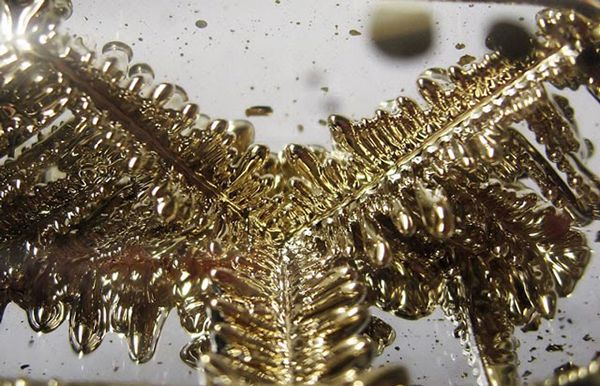
In particular, metal hardness is very important in the tool manufacturing and metal material processing industry. This parameter helps businesses manage and ensure product quality, and is applied in the production process and quality control of goods.

Total Meter HM-6560 metal hardness tester 

The hardness tester that I want to introduce is HM - 6560. Handheld hardness tester HM-6560 with a separate probe is used to measure the hardness of metal workpieces. This equipment is widely used in manufacturing operations, making metal molds, inspecting bearings and other mass-produced parts on the production line.
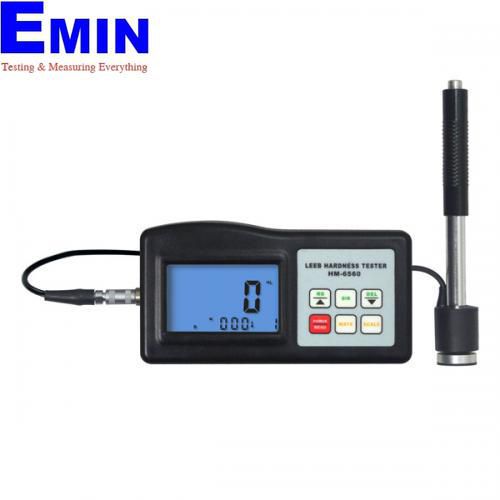
HM-6560 is a portable hardness tester with a compact size that fits in the palm of your hand, very convenient for narrow spaces and can perform testing at any angle, even upside down. The machine has an LCD screen that directly displays the hardness scales HRB, HRC, HV, HB, HS, HL. The machine's large capacity memory allows storing 50 groups of results, including single measurement value, impact direction, material and hardness scale. 

Users can calibrate the machine when necessary. The HM-6560 also features manual or automatic shutdown, low battery indicator, and uses a USB/RS-232 data output for connection to a PC, along with a convenient Bluetooth data output option.

Refer to the product at: EMIN hardness tester

Refer to the product at: 

Conclude: 

The article has helped you understand what metal hardness is and why you need to use a metal hardness tester. If you don't know where to buy genuine products at good prices, go to EMIN, we currently distribute hardness testers from many famous brands: InsizeUNI-THUATEC,...

Related News

Which products are tested using a -40°C to +150°C thermal shock chamber?
07/22/2026 14:45:25

Automotive circuit boards, sensors, modules, and plastic components can all experience issues after repeated transitions between cold and hot environments. A thermal shock chamber operating from -40°C to +150°C enables the replication of these temperature fluctuations under controlled testing conditions.

Does thermal shock cause damage to electronic components?
07/22/2026 10:40:49

An electronic component may operate stably under constant temperature conditions yet fail after repeated rapid transitions between hot and cold. The issue typically stems not from a specific temperature level, but rather from the rate of temperature change and the number of hot-cold cycles

The rigorous standards behind a multi-million-dollar MRI suite
07/21/2026 14:54:01

An MRI system may be correctly installed and fully connected to the power supply, yet still encounter issues if the surrounding environment fails to meet technical specifications. Electromagnetic interference, RF shielding, power quality, grounding, temperature, humidity, and particulate levels are all factors that may require assessment, depending on the facility's design and the manufacturer's requirements.

Sinusoidal and Random Vibration: A Test Setup Guide for Industrial Engineers
07/21/2026 10:30:38

During the operation of industrial machinery or the transportation of goods, persistent mechanical vibrations inevitably occur; these are a primary cause of material fatigue, loosened connections, and cracking in printed circuit boards (PCBs). To ensure product integrity before delivery to customers, R&D and QA/QC engineers must simulate these dynamic forces using vibration test systems.

Capacities of laboratory centrifuge tubes
07/20/2026 13:55:40

Tubes with capacities of 0.2 ml, 1.5 ml, 15 ml, or 50 ml are commonly found in laboratories, yet each type is associated with specific sample categories and equipment configurations. DNA and RNA samples typically require small-volume microtubes; blood and cell samples often utilize 5 ml or 15 ml tubes; while large-volume processing workflows may require tubes of 50 ml, 100 ml, or greater capacity

Stay Updated with Offers

Get exclusive volume discounts, bulk pricing updates, and new product alerts delivered directly to your inbox.

By subscribing, you agree to our Terms of Service and Privacy Policy.

Quick Support

Direct access to our certified experts