
For full functionality of this site it is necessary to enable JavaScript.
EMINKH.COM
0

Why do technicians often connect oscilloscopes to computers?

10/24/2025 16:51:05

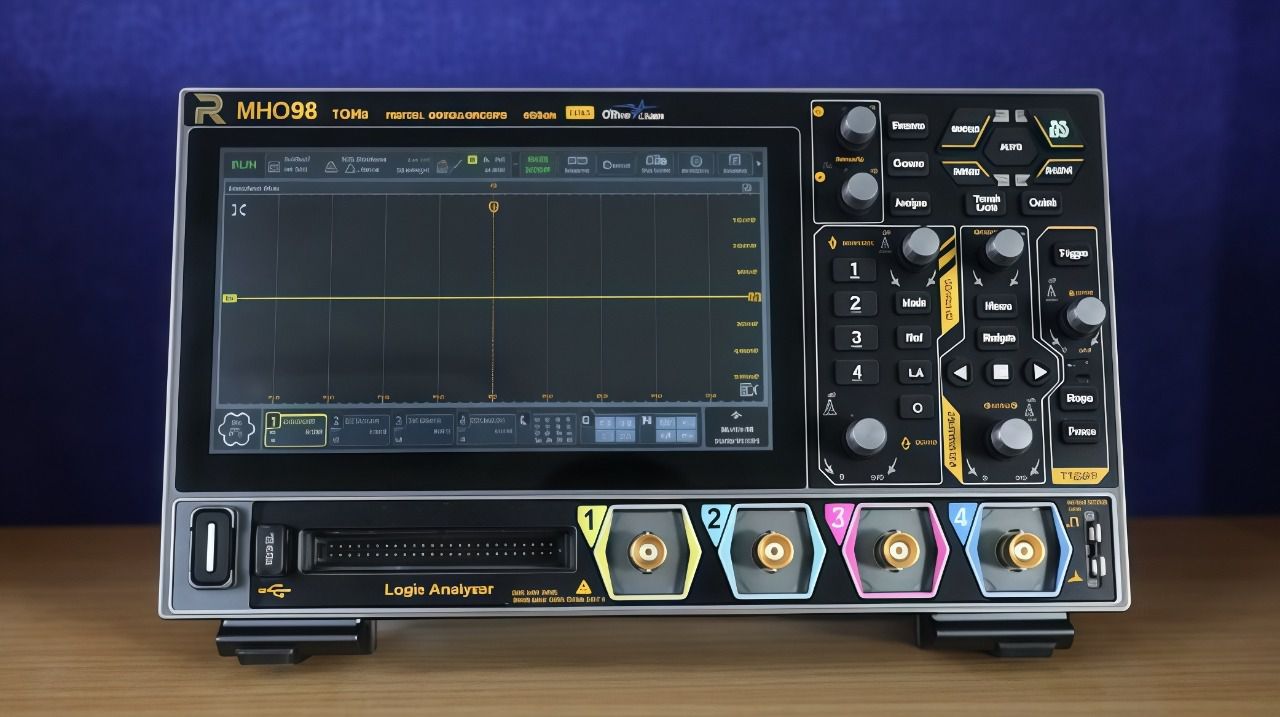
When working with electronic devices, you must have heard about connecting an oscilloscope to a computer and wondered why this operation is so popular. This connection helps to expand the ability to observe signals and increase the speed of testing and analysis during work. You will be surprised by the convenience it brings, especially when experiencing devices like Rigol MHO98, one of the newly launched models with many modern features.

Benefits of connecting oscilloscope to computer in technical testing

- Save time and improve productivity:

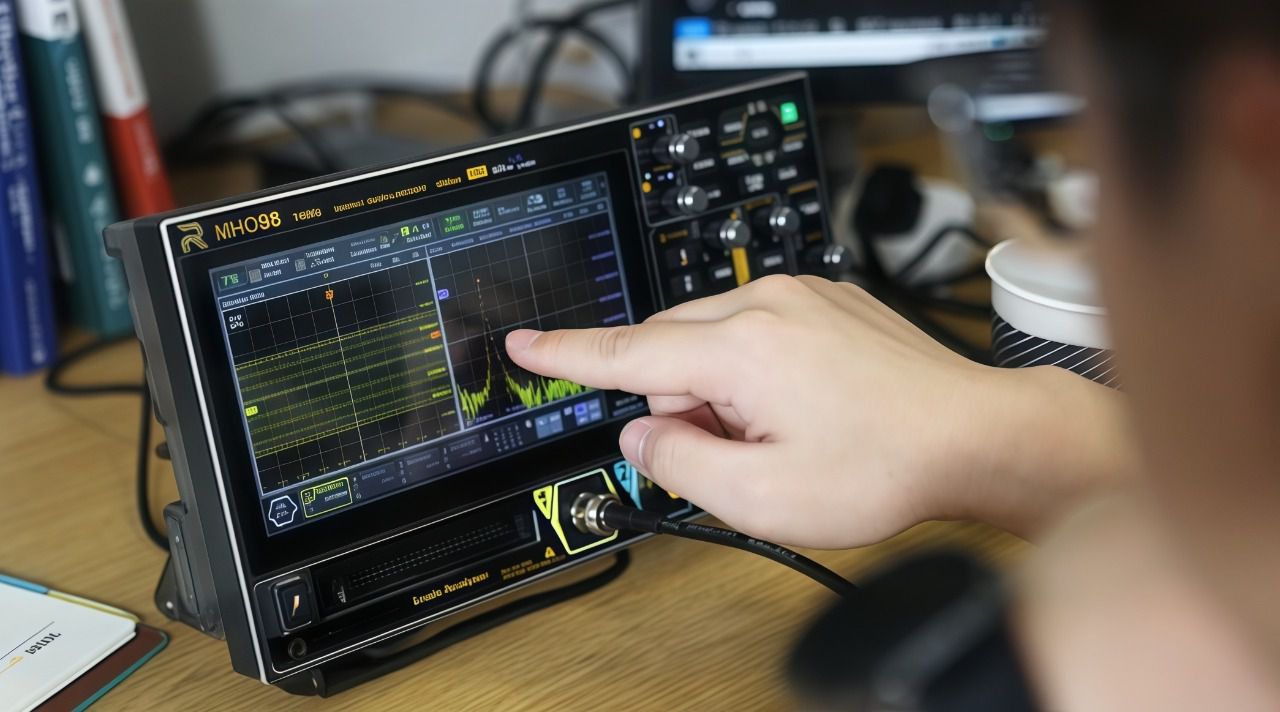
For those who are new to the connection, when connecting the oscilloscope to the computer, you can observe the waveform directly on the large screen and operate faster through the included software.

This way helps avoid having to look at the small screen of the machine, and allows multiple measurements to be performed at the same time thanks to the integrated analysis tools. The Rigol MHO98 oscilloscope allows you to save waveform data for later comparison and analysis without losing data.
- Simplify the process of analyzing complex signals:

When the oscilloscope is connected to a computer, you can exploit many new software features. Software from the manufacturer often provides automatic tools to measure and analyze common parameters such as frequency, amplitude or complex waveforms.

When to connect an oscilloscope to a computer
Remote monitoring and data logging:

In many cases, direct on-site observation is not possible. In this case, the oscilloscope can be connected to a computer to monitor the signal remotely via a software interface, and record data at any time. With the MHO98, this feature is developed to suit applications that require continuous monitoring in the laboratory or manufacturing plant.

Advanced signal processing and analysis:

Technicians often work with complex waveforms or high-noise signals. The software provides noise filtering, displays multiple signal types, and allows annotations to be added directly on the computer.

Integration with other devices and software:

Connecting the oscilloscope to the computer also supports working with programming software or automation design. This is a useful solution for technicians who want to build an automatic testing system or collect data for research and product development.

Read more:

Point out 4 common mistakes when testing equipment with an oscilloscope

For those new to oscilloscopes, See now 6 tips for using oscilloscope for beginners

Core control groups on an oscilloscope and how to use them

Conclude:

By exploiting the features of the Rigol MHO98 series, you can improve your testing process, analyze signals and work more efficiently.

If you want to learn more about how to connect and use an oscilloscope with a computer, you can refer to the instructions or practical experience to evaluate the most obvious benefits.

Related News

Which products are tested using a -40°C to +150°C thermal shock chamber?
07/22/2026 14:45:25

Automotive circuit boards, sensors, modules, and plastic components can all experience issues after repeated transitions between cold and hot environments. A thermal shock chamber operating from -40°C to +150°C enables the replication of these temperature fluctuations under controlled testing conditions.

Does thermal shock cause damage to electronic components?
07/22/2026 10:40:49

An electronic component may operate stably under constant temperature conditions yet fail after repeated rapid transitions between hot and cold. The issue typically stems not from a specific temperature level, but rather from the rate of temperature change and the number of hot-cold cycles

The rigorous standards behind a multi-million-dollar MRI suite
07/21/2026 14:54:01

An MRI system may be correctly installed and fully connected to the power supply, yet still encounter issues if the surrounding environment fails to meet technical specifications. Electromagnetic interference, RF shielding, power quality, grounding, temperature, humidity, and particulate levels are all factors that may require assessment, depending on the facility's design and the manufacturer's requirements.

Sinusoidal and Random Vibration: A Test Setup Guide for Industrial Engineers
07/21/2026 10:30:38

During the operation of industrial machinery or the transportation of goods, persistent mechanical vibrations inevitably occur; these are a primary cause of material fatigue, loosened connections, and cracking in printed circuit boards (PCBs). To ensure product integrity before delivery to customers, R&D and QA/QC engineers must simulate these dynamic forces using vibration test systems.

Capacities of laboratory centrifuge tubes
07/20/2026 13:55:40

Tubes with capacities of 0.2 ml, 1.5 ml, 15 ml, or 50 ml are commonly found in laboratories, yet each type is associated with specific sample categories and equipment configurations. DNA and RNA samples typically require small-volume microtubes; blood and cell samples often utilize 5 ml or 15 ml tubes; while large-volume processing workflows may require tubes of 50 ml, 100 ml, or greater capacity

Stay Updated with Offers

Get exclusive volume discounts, bulk pricing updates, and new product alerts delivered directly to your inbox.

By subscribing, you agree to our Terms of Service and Privacy Policy.

Quick Support

Direct access to our certified experts