What is the difference between an infrared moisture drying scale and a Halogen moisture drying scale?
Moist drying technology
Humidification technology plays an important role in the process of analyzing and determining the moisture content of samples. Infrared moisture drying scales use infrared rays to dry specimens, outstanding with the ability to evenly distribute heat in the drying drum. This helps the specimen dry evenly through intermolecular interactions. This technology not only ensures uniformity during drying but also prevents deformation of the specimen with appropriate intensity.
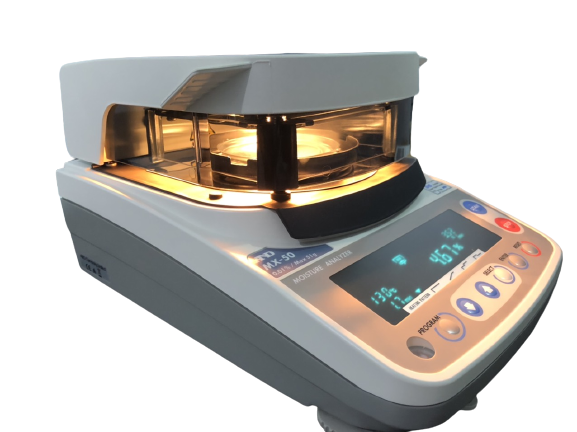
In contrast, halogen drying scales use halogen lamps to heat and vaporize the sample. Although it provides the ability to determine moisture content, it can be difficult to dry at high temperatures or for extended periods of time, which can lead to deformation of the specimen. Although halogen lamps are long-lasting and provide fast and uniform drying, be aware of the potential for specimen deformation and the need to replace the bulb over time.
Drying temperature
In the drying temperature range, the infrared moisture dryer has the advantage of being able to perform drying in a wide temperature range from 50 degrees Celsius up to 160 degrees Celsius, with an increase of 50 degrees Celsius. This poses an advantage. Obviously compared to the halogen moisture dryer, it can only dry in the range of 50 degrees Celsius to 200 degrees Celsius and needs to be divided into 4 drying modes to increase the temperature for each degree Celsius.
Drying Time
The infrared moisture drying scale gives users high flexibility with drying times ranging from 1 to 99 minutes. This gives you the flexibility to set or use automatic drying times, making it easy for you to control the heat source in the most effective way.
In the world of infrared moisture drying scales, products from famous brands such as AND, Kern, and Ohaus have quickly become reliable companions in laboratories. Models such as Kern DAB 100-3, Kett FD-720, Kett FD-660 are all highly appreciated for their ability to quickly weigh and dry moisture at high temperatures.
On the other hand, halogen moisture drying scales stand out with the ability to dry up to 40% faster than infrared competitors. These models are also equipped with timer or auto-dry settings to accurately reflect the moisture level of the material. Products from trusted manufacturers such as Ohaus, AND are popular choices. Typically Ohaus MB25, AND MX-50, AND ML-50 are all notable and popular names on the market.
For each product, drying time is not only the deciding factor in effectiveness but also the key to opening the world of accuracy and flexibility in the moisture analysis process. Explore and select information carefully to ensure you get the right tool for your needs and requirements.
You should buy an infrared moisture drying scale or a Halogen moisture drying scale to suit your needs
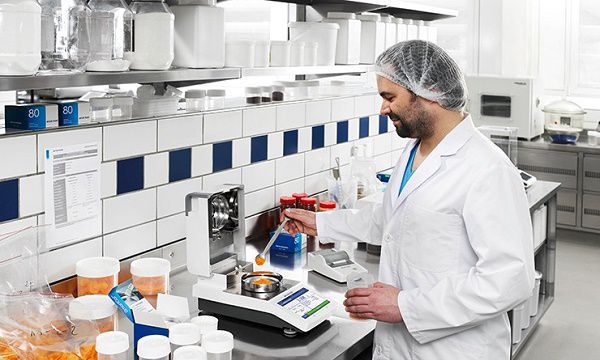
Infrared and halogen moisture drying scales, each type has its own unique advantages, bringing convenience to users in choosing moisture analysis methods. Infrared moisture drying scales stand out with the ability to evenly dry specimens, have high drying temperatures and do not deform the specimens.
This technology helps create ideal conditions for maintaining the original shape of the specimen after the drying process. A special feature is the ability to distribute heat evenly in the drying drum, creating uniformity in analytical results.
In contrast, halogen moisture drying scales emphasize the advantages of speed and low cost. With the ability to dry samples effectively in a short period of time, halogen balances are suitable for applications that require time and cost savings. This makes it the ideal choice for those who want high performance without sacrificing sample quality.Bài viết liên quan:
What is a moisture drying scale? Why use a moisture drying scale?
Conclude:
If you want to use an accurate, modern scale that can dry at many different temperatures, you can choose an infrared moisture drying scale. This is also a type of scale with many diverse features such as time settings and drying mode settings. The device is very suitable for use in laboratories, research rooms, and food factories.
Halogen moisture drying scales are also suitable for fast drying and are highly durable. If you want to save investment costs, you can completely choose this scale line. , from the inside
The answer to the comparison of whether to buy infrared and halogen moisture dryers will hopefully help you get more useful information. From there, you will easily choose the appropriate moisture analysis balance for the job. If you find the information below interesting and useful, don't hesitate to contact us to receive the new spring promotion.