For full functionality of this site it is necessary to enable JavaScript.
EMINKH.COM
0

Can a Laser Level replace a square? A practical application analysis

03/30/2026 16:07:01

In construction, interior installation, and industrial sectors, many users wonder whether to invest in a traditional Square or if a Laser Level is sufficient. This article analyzes whether these two devices are interchangeable and suggests the most suitable laser levels for squaring applications.

What are Laser Levels and Squares? What are they used for?

A Laser Level is a device that utilizes laser beams to project precise horizontal, vertical, or plumb lines onto walls, floors, and ceilings. These units usually feature a self-leveling mode powered by a pendulum system, accelerometers, or spirit levels, ensuring the beam remains stable within a range of +/-3 to 5 degrees. For instance, the UNI-T LM573LD-II Laser Level can project multiple horizontal and vertical lines-and even cross-lines-to quickly create an orthogonal grid in a 3D space.

On the other hand, a Square is a mechanical or laser-based tool with physical edges or beams that form a precise 90-degree angle.
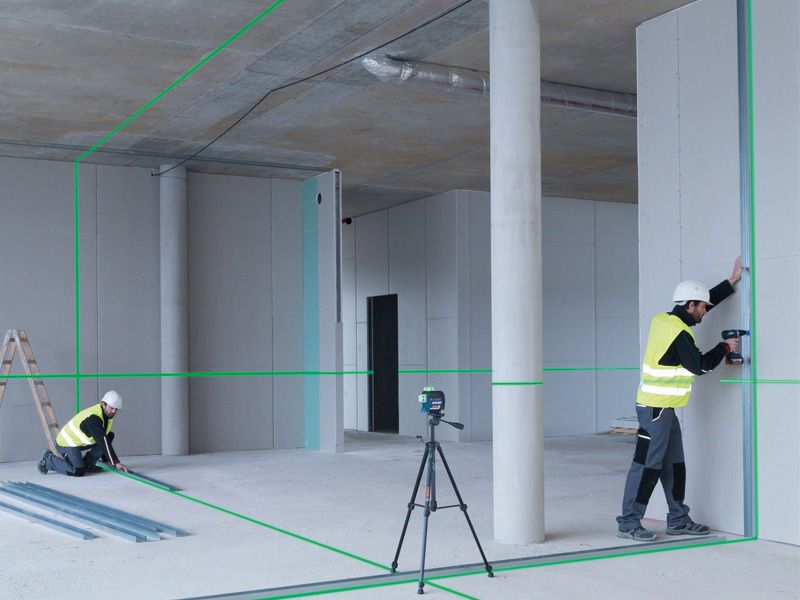
Civil Application of Laser Level

So, can a laser level replace a square?

Squaring Capabilities of a Laser Level

A laser level can assist in establishing orthogonal reference lines but cannot completely replace a physical square. Laser levels project horizontal and vertical lines (and sometimes cross-lines or 3D grids), allowing users to visualize perpendicular lines on a surface. However, while the laser provides a reference line, it does not physically check the squareness between two planes or two edges as a manual square does.

For example, using the BOSCH GLL 50-15 XG Laser Level, which projects 5 lines to create a squaring grid, is highly effective for interior fit-outs, wall tiling, and flooring. However, for verifying the 90-degree angle between two edges of a door frame, a mechanical square is more accurate as it directly measures the contact between two physical planes.

Limitations of Laser Levels

Although laser levels offer high precision, they are dependent on surface flatness, ambient lighting, and build quality. In high-brightness environments, the laser beam can become difficult to see, affecting accuracy. Furthermore, a laser level cannot measure the squareness of two non-parallel planes or work at ultra-short distances as effectively as a handheld square.
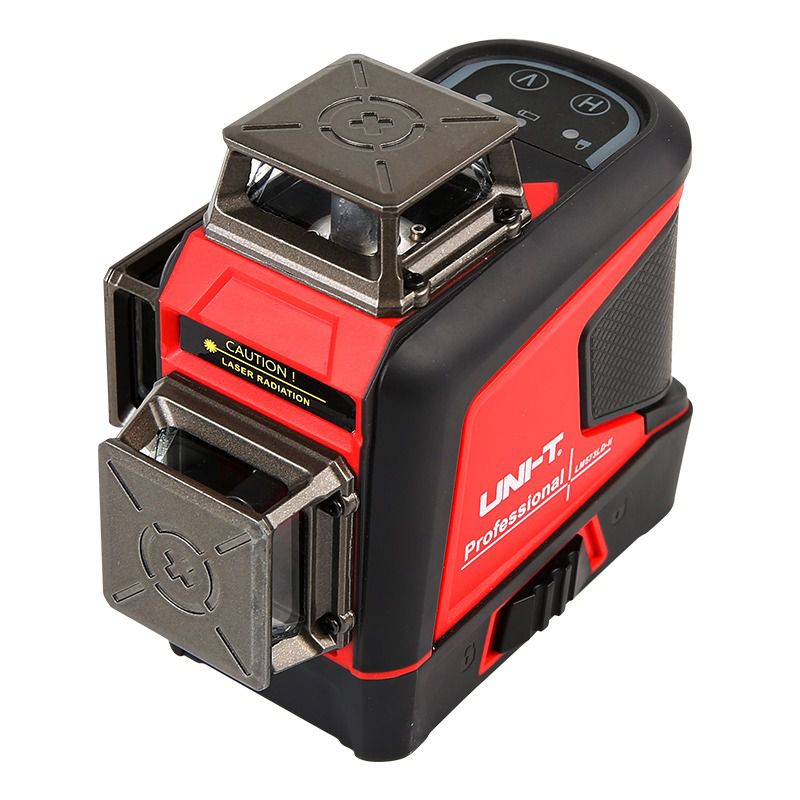
Well-known Laser Level recently

Read more: What is a Laser Level? Construction and Operating Principles.

Key Considerations When Choosing a Laser Level for Squaring

Accuracy: Select a unit with low margins of error, typically +/-1 mm / 5 m or better.

Number of Laser Lines: Multiple lines help create a comprehensive squaring grid, but choose based on your specific workflow requirements.

Self-Leveling/Out-of-Level Compensation: This feature allows the device to auto-adjust for tilt, ensuring the integrity of the reference lines.

Working Environment: For outdoor sites, opt for a Green Beam laser, which offers a wider range and higher visibility, along with IP-rated water and dust resistance.


Related News

Does thermal shock cause damage to electronic components?
07/22/2026 10:40:49

An electronic component may operate stably under constant temperature conditions yet fail after repeated rapid transitions between hot and cold. The issue typically stems not from a specific temperature level, but rather from the rate of temperature change and the number of hot-cold cycles

The rigorous standards behind a multi-million-dollar MRI suite
07/21/2026 14:54:01

An MRI system may be correctly installed and fully connected to the power supply, yet still encounter issues if the surrounding environment fails to meet technical specifications. Electromagnetic interference, RF shielding, power quality, grounding, temperature, humidity, and particulate levels are all factors that may require assessment, depending on the facility's design and the manufacturer's requirements.

Sinusoidal and Random Vibration: A Test Setup Guide for Industrial Engineers
07/21/2026 10:30:38

During the operation of industrial machinery or the transportation of goods, persistent mechanical vibrations inevitably occur; these are a primary cause of material fatigue, loosened connections, and cracking in printed circuit boards (PCBs). To ensure product integrity before delivery to customers, R&D and QA/QC engineers must simulate these dynamic forces using vibration test systems.

Capacities of laboratory centrifuge tubes
07/20/2026 13:55:40

Tubes with capacities of 0.2 ml, 1.5 ml, 15 ml, or 50 ml are commonly found in laboratories, yet each type is associated with specific sample categories and equipment configurations. DNA and RNA samples typically require small-volume microtubes; blood and cell samples often utilize 5 ml or 15 ml tubes; while large-volume processing workflows may require tubes of 50 ml, 100 ml, or greater capacity

How Much Does Atmospheric Pressure Need to Drop Before It Rains ?
07/20/2026 10:11:04

A barometric pressure meter (barometer) often detects changes in weather conditions before rainfall begins. As atmospheric pressure falls, the structure of the surrounding air mass is also changing. However, there is no fixed pressure threshold that guarantees rain will occur.

Stay Updated with Offers

Get exclusive volume discounts, bulk pricing updates, and new product alerts delivered directly to your inbox.

By subscribing, you agree to our Terms of Service and Privacy Policy.

Quick Support

Direct access to our certified experts