This is also why the same test procedure and identical temperature profile can sometimes produce different aging results between the two chamber types, especially when testing electronic components, lithium batteries, or heat-sensitive polymer materials.
Why Do Test Results Different Even Under the Same Settings?
In bentop temperature test chambers, the smaller internal volume allows the system to respond more quickly during temperature transitions. This is particularly advantageous for testing electronic components or small R&D samples. The target temperature can be reached rapidly while also saving valuable laboratory space. However, the compact chamber size also means that circulating airflow interacts more directly with the specimen surface. During certain long-duration temperature and humidity tests, areas near the air outlet may experience localized drying or slight temperature deviations that central sensors cannot fully detect. Initially, these variations are often invisible. Laboratories usually discover the issue only after comparing samples placed at different positions inside the chamber, where inconsistent oxidation rates on component leads or uneven degradation of surface coatings begin to appear.
By contrast, floor-standing temperature test chambers generally provide a more stable environment thanks to their larger internal space and softer airflow circulation. For long-term reliability testing or tests involving multiple samples simultaneously, this chamber design typically maintains better temperature uniformity.
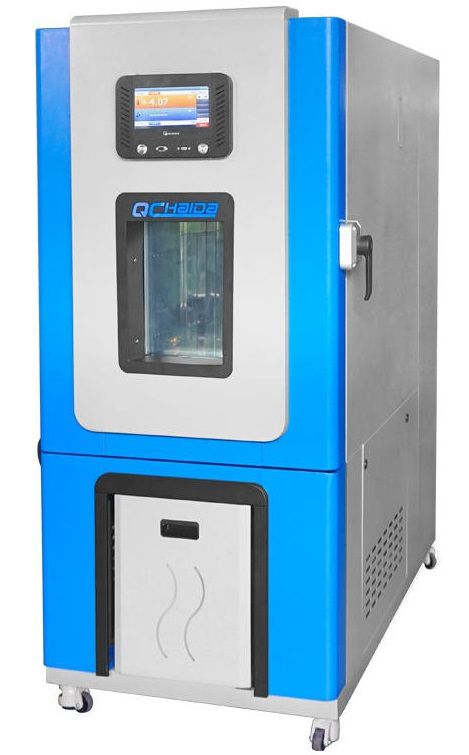
However, the larger chamber volume also means the system requires more time to stabilize after each temperature cycle. If thermal transitions occur too rapidly, temperature differences between the sample surface and its internal core can still develop, particularly with power modules or multilayer materials.
Smaller Chambers Are Not Always the Better Choice
In continuous tests lasting hundreds of hours, the refrigeration system in smaller heating and cooling chamber often cycles on and off repeatedly to maintain stable temperatures. Over extended operation, minor sensor drift or reduced compressor efficiency may cause temperature fluctuations at certain locations that exceed what is shown on the display panel.
Some electronics laboratories only identify the problem when test results begin losing repeatability. In some cases, certain circuit boards exhibit earlier corrosion despite being tested under the same cycle conditions and using identical materials.
On the other hand, floor-standing chamber consume more power but are generally more suitable for long-duration reliability testing or large product evaluations. The larger internal space also improves airflow stability and reduces localized heat concentration around the test specimen.
Other Factors to Consider When Selecting a Temperature and Humidity Chamber
Airflow velocity inside the chamber can directly affect moisture evaporation from the specimen surface. Some chamber designs use stronger airflow to improve temperature uniformity, but this can unintentionally expose samples to a much drier environment than actual operating conditions.
Sensor placement and airflow circulation structure also create significant differences between environmental chamber models. In large-capacity chambers, areas near the door often experience greater temperature fluctuations due to repeated opening and closing during operation. During temperature and humidity testing, these locations are also more prone to localized condensation that the control system may not immediately detect. For moisture-sensitive electronic components or polymer-coated materials, even a very small amount of condensed moisture can completely alter long-term aging results after days of testing.
Trend: In labority with high reliability requirements such as electronics, batteries, automotive systems, and advanced materials, engineers are increasingly focused on reproducing real operating environments as accurately as possible. Many laboratories now use both benchtop and floor-standing temperature test chambers for different stages of product development. Smaller chambers are used for rapid validation during prototype development, while larger chambers are reserved for extended durability and long-term reliability testing.
Selecting a climate test chamber is therefore not simply a matter of choosing the right size or technical specifications. More importantly, it involves determining how temperature, humidity, and airflow will interact with the product throughout material aging and reliability testing processes.