During transformer operation and maintenance, measuring the DC resistance of windings is an essential test for evaluating the condition of connections, contact points, and winding stability. A transformer winding resistance tester performs the measurement by applying a DC current to the winding, allowing the reading to stabilize, and then determining the winding resistance.
Measurement results can vary depending on winding temperature, test current, and the actual condition of contact points. Therefore, test conditions should be controlled and the same measurement procedure should be maintained across inspections. Comparing results over time helps identify abnormal changes and provides a more reliable basis for assessing winding condition.
What Is a DC Resistance Tester ?
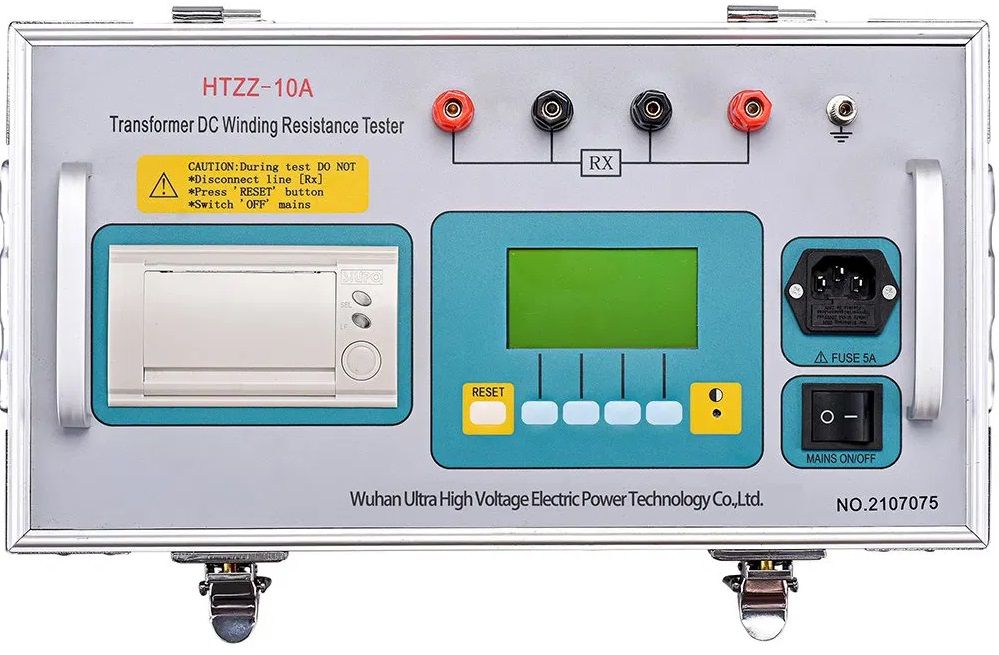
A DC resistance tester is a specialized instrument used for testing inductive equipment, particularly transformer windings. The instrument applies a specified test current and measures the DC resistance of the winding. This approach is intended to evaluate resistance under a test current appropriate for the characteristics of the equipment being tested.
Compared with measurements using a lower test current, a higher test current may be more suitable for testing equipment with significant inductance or very low resistance. However, the test current should not be selected using a single formula for every application. The operator should consider the equipment type, the condition of the test object, and the applicable test procedure.
Why Measure the DC Resistance of Transformer Windings ?
DC resistance is a basic electrical parameter of a winding. Changes in this value may indicate the need for further inspection of issues such as loose connections, poor contact, broken conductors, or winding deformation. For this reason, DC resistance measurement is commonly used as an important source of data when assessing transformer condition.
A conclusion should not be based on a single measurement value alone. The data becomes more useful when evaluated against the historical measurement records of the same transformer, the temperature at the time of testing, and the winding connection configuration. This approach helps identify changes and trends rather than relying only on an instantaneous reading.
Factors Affecting Measurement Results
Temperature of the Test Object
Temperature has a significant effect on conductor resistance. Based on the available reference data, resistance tends to increase as temperature rises, and the resistivity of copper and aluminum also increases with temperature. Therefore, the actual temperature should be recorded during testing to support correction and comparison according to the applicable procedure or standard.
Test Current
Test current is directly related to measurement stability when testing inductive equipment. Large-capacity equipment or equipment with low resistance may require a higher test current to obtain a stable and reliable reading. The appropriate current should be selected according to the equipment type and resistance range being measured. The test current should not be increased arbitrarily without first determining a suitable test method.
Connection and Winding Condition
The winding connection configuration, contact quality, and actual condition of the test object can all affect the resistance reading. A poor contact point or an insecure connection may distort the measurement data. Before testing, the connections should be inspected to minimize errors caused by the test setup.
How to Use a DC Resistance Tester Effectively
Identify the test object and measurement method: Determine the type of inductive equipment, winding configuration, and condition to be assessed before selecting the appropriate measurement mode.
Select an appropriate test current: The test current should be compatible with the rated capacity and resistance range of the test object. The aim is to obtain a stable reading that can be used for assessment.
Maintain stable environmental conditions: When possible, perform the measurement under stable temperature conditions. Record the temperature at the time of testing to support subsequent comparison and correction.
Follow the proper test procedure: Users should understand the instrument's functions, operating sequence, and connection method. Consistent procedures help minimize variations between measurements.
Analyze the data in context: Compare the measured value with historical data, temperature, and information about the equipment's condition. When a significant difference is observed, the overall measurement conditions should be reviewed rather than relying on a single reading.
Considerations When Choosing a DC resistance tester
When selecting a DC resistance tester, businesses should prioritize the instrument's suitability for the actual test object and their internal inspection procedures. Key considerations include the type of inductive equipment to be tested, required test current, operating method, and measurement data management requirements.
An instrument with a clear interface and straightforward operating procedure can help users perform measurements more consistently. However, measurement reliability still depends on selecting the appropriate test method, controlling test conditions, and evaluating the data systematically.
Frequently Asked Questions
Does the temperature need to be recorded during the measurement ?
Yes. Because resistance changes with temperature, recording the test temperature provides an important basis for correcting and comparing measurements taken at different times.
How should the test current be selected ?
The appropriate test current depends on the rated capacity and resistance range of the equipment being tested. Large-capacity equipment or equipment with low resistance may require a higher test current to obtain a stable reading. However, the current should always be selected in accordance with the applicable test method.
What can a transformer winding DC resistance tester detect ?
Changes in winding resistance may indicate the need for further inspection of potential issues such as broken conductors, loose connections, poor contact, or winding deformation. The results from low resistance meter should be analyzed together with historical data and test conditions.