Autonics sensors
Reliable sensing and process feedback are central to stable machine operation, whether the application involves fluid pressure monitoring, electrical indication on a control panel, or integration into a broader automation architecture. In many industrial environments, engineers look for devices that are practical to install, easy to read, and suitable for continuous use in production systems. That is where Autonics sensors and related monitoring instruments fit naturally into modern control cabinets and field installations.
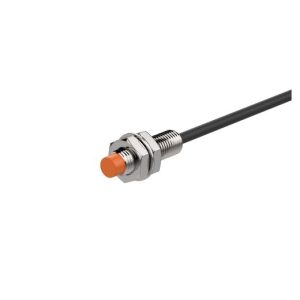
Where this category fits in industrial automation
This category focuses on sensing and indication products from Autonics that support measurement, monitoring, and signal visibility in automated systems. While the product mix may include both field-mounted transmitters and panel-mounted display devices, the common role is straightforward: convert operating conditions into usable information for operators, technicians, and control systems.
In practice, these devices are often used alongside controllers, HMI layers, and supervisory platforms. For projects that require system-level monitoring, it can also be helpful to review related SCADA components when building a complete data and control structure.
Typical product types in this range
A large part of this category is built around pressure transmitters designed for measuring liquid, gas, or oil in industrial processes. The listed TPS30 series examples cover several pressure ranges, including 0~0.7 MPa, 0~2 MPa, 0~3.5 MPa, and 0~5 MPa, making them relevant for utilities, hydraulic lines, pneumatic systems, and general process monitoring. These models are also offered with different pressure port standards such as G1/4, G3/8, R1/2, and NPT1/4, which helps match the transmitter to existing piping or manifold arrangements.
This category also includes panel-facing measurement devices used for local indication. Examples such as the Autonics MT4W-AA-4N Digital Panel Meters and the Autonics M4W-P Power factor meter show how local displays can support fast visual checks on machine status, electrical load conditions, and process variables without requiring access to a central control screen.
Why pressure sensing matters in real applications
Pressure feedback is often one of the most useful signals in an automation system because it helps operators understand whether a process is running within expected limits. In pumping systems, compressed air lines, lubrication units, and hydraulic circuits, a stable pressure signal can be used to detect blockage, leakage, overload, or poor system response before those issues lead to unplanned downtime.
Several products in this category, including models such as Autonics TPS30-G29AN4-00, TPS30-G28AG4-00, and TPS30-G25AN4-00, are intended for current output in the 4-20 mA format. This output type remains widely used in industrial environments because it is practical for transmission over distance, easy to integrate with PLC analog input modules, and familiar to maintenance teams working on process equipment.
Selection points before choosing a suitable model
When comparing products in this category, the first point to confirm is the required measurement range. Selecting a transmitter with a range that is too high can reduce useful resolution in normal operation, while a range that is too low may expose the device to overpressure conditions. For example, a 0~0.7 MPa model may suit lower-pressure utility lines, whereas 0~3.5 MPa or 0~5 MPa versions may be more appropriate for higher-pressure process equipment.
The second point is mechanical compatibility. Thread type matters just as much as signal type, especially when replacing an installed sensor. Variants with G1/4, G3/8, R1/2, or NPT1/4 ports help simplify retrofits and reduce the need for extra adapters. It is also worth checking environmental suitability, especially where vibration, humidity, or washdown exposure may influence installation decisions.
For panel instruments, buyers typically compare display readability, power supply requirements, measurement input type, and whether the device is intended for display only or for a broader control role. The MT4W-AA-4N, for instance, is positioned as a digital panel meter for AC current indication, while the M4W-P is focused on power factor display from a DC 4-20 mA transducer signal.
Examples of devices used in this category
The Autonics MT4W-AA-4N Digital Panel Meters are suitable where operators need direct, front-panel visibility of AC current values. With a compact DIN-format footprint and LED display, this kind of instrument is typically used in switchboards and machine panels where quick local confirmation is more important than advanced output functions.
The Autonics M4W-P Power factor meter serves a different purpose by displaying power factor based on a 4-20 mA input from a transducer. In facilities that monitor electrical efficiency or load behavior, this type of meter can provide a simple indication point on the panel without adding unnecessary interface complexity.
Within the transmitter range, models such as TPS30-G29AG4-00, TPS30-G27AN4-00, and TPS30-G25AG8-00 illustrate how the series spans both pressure range and port configuration choices. That makes the category useful not only for new machine design but also for maintenance stock planning and replacement sourcing.
Integration with wider control and monitoring systems
Sensor data becomes more valuable when it is part of a broader automation workflow. A pressure transmitter with a current output can feed a PLC, be logged for trend analysis, or be displayed on a local panel for operators. In applications that require data history or event tracking, these signals are often paired with a data logger for automation systems to support diagnostics and maintenance analysis.
For many projects, local indication and centralized supervision are complementary rather than competing choices. A field signal may be shown on a panel meter for immediate visibility and also sent upward to supervisory software for alarms, trend review, or remote status reporting.
What buyers usually look for in this category
Industrial buyers typically prioritize a few practical factors: consistent signal output, installation compatibility, enclosure suitability, and ease of maintenance. For pressure transmitters, that usually means checking the measuring medium, pressure range, thread standard, power supply range, and protection level. For panel devices, the focus is often on display clarity, panel cutout compatibility, and signal matching with existing transducers or measurement circuits.
Brand consistency can also matter in multi-machine facilities. Using products from the same manufacturer may simplify documentation, spare parts handling, and technician familiarity, especially when the site already uses other automation devices from the same ecosystem.
Choosing with confidence
This category is well suited for buyers who need dependable sensing and indication products for machine panels, utility systems, and process equipment. Whether the requirement is a stainless steel pressure transmitter with a 4-20 mA output or a compact panel instrument for electrical indication, the available Autonics models provide practical options for common industrial applications.
If you are comparing models, start with the process variable, required measuring range, connection type, and how the signal will be used in the control system. A clear match between operating conditions and device format will usually lead to a more reliable installation and easier long-term maintenance.
Get exclusive volume discounts, bulk pricing updates, and new product alerts delivered directly to your inbox.
By subscribing, you agree to our Terms of Service and Privacy Policy.
Direct access to our certified experts