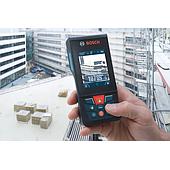
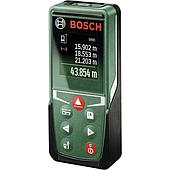
The Bosch GLM laser distance meter series has long been a staple on construction sites and in manufacturing workshops. Mastering these hidden features optimizes construction schedules and significantly reduces manual operational errors.
The Bosch GLM laser distance meter series has long been a staple on construction sites and in manufacturing workshops. Mastering these hidden features optimizes construction schedules and significantly reduces manual operational errors.

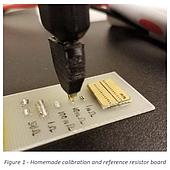
A 2-port probe can measure PCB power-rail impedance with minimal board changes. For the VDD_3V3_S0 example, ON-state impedance was checked against an approximately 8 mΩ target through 7 kHz.

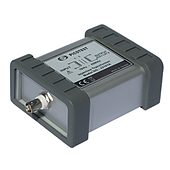
The 2-port shunt-through technique is used for milliohm impedance measurements at very high frequencies. Ground loops from instrument grounds and test cabling can introduce major error; the Picotest J2102A is used as a ground-loop breaker for measurements down to 20 micro-ohms.

Power-hungry AI accelerators and other high-performance chips increase the relevance of power integrity testing. Key topics include voltage regulator modules, PDN impedance measurement, and reducing the effect of probe ground-loop resistance with a low-noise isolator.

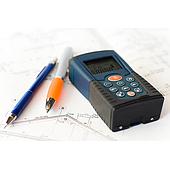
Choosing the right laser distance meter for your industry helps optimize work efficiency, reduce costs, and ensure measurement accuracy.

Laser distance meters typically achieve millimeter-level accuracy indoors, but errors immediately appear when used on a blazing construction site. The root of the issue lies deep within the physical and optical mechanisms operating inside the device

Directive (EU) 2024/1799 of the European Union (adopted on June 13, 2024, and officially taking effect on July 31, 2026) is the "Right to Repair" Directive, aimed at promoting the repair of goods rather than their disposal.

In classrooms where dozens of students sit in close proximity, air conditioners are turned on and windows kept tightly shut during hot weather, causing CO2 from exhaled breath to accumulate rapidly. This article addresses the questions frequently raised by school administrators, teachers, parents, and school management bodies covering everything from the impact on students and the CO2 thresholds requiring monitoring to the proper selection and installation of sensors

Modern office buildings are designed to be airtight to retain cool air and conserve energy for central air conditioning systems. If the supply of fresh air falls below design specifications, CO2, fine dust, and volatile organic compounds (VOCs) begin to accumulate within the workspace. This impacts employee health, work quality, personnel costs, and the building owner's reputation. This article addresses the questions frequently raised by business owners, building managers, and HVAC engineers

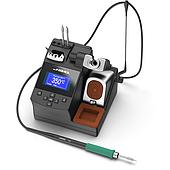
Lead-free soldering stations provide fast, stable heating to meet stringent quality and durability requirements across industries such as aerospace, medical devices, and automotive electronics. They also help protect operators' health and reduce environmental pollution.
Get exclusive volume discounts, bulk pricing updates, and new product alerts delivered directly to your inbox.
By subscribing, you agree to our Terms of Service and Privacy Policy.
Direct access to our certified experts