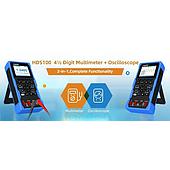
Set up two multimeters at the same location and their displays may still differ by several volts or a few percentage points. The difference often comes from how each device processes the input signal before converting it into a displayed value.

Set up two multimeters at the same location and their displays may still differ by several volts or a few percentage points. The difference often comes from how each device processes the input signal before converting it into a displayed value.

When using a microscope, turning the focus knob is often considered the decisive step in image quality. If the image is not clear, increasing magnification, adjusting focus or increasing light is a very natural reaction. However, there are cases where images still lack detail and low contrast despite correct measurement operations.

A measured voltage of 220V does not necessarily mean the system is operating stably. When the multimeter display and actual equipment behavior begin to contradict each other, the inspection should be expanded to include load conditions, electrical contact quality, and waveform characteristics rather than repeatedly performing the same voltage measurement.

Understanding the difference between dBm and dB helps ensure optical measurement data is interpreted consistently and prevents incorrect conclusions during system acceptance testing or maintenance.

The same cable route and the same equipment can produce different measurement results after each reconnection. Repeatability should be checked by taking multiple measurements with the same configuration using a fiber optic cable loss tester before evaluating the quality of the link.

An optical power meter is used to measure the power level of optical signals at a specific point along a fiber optic transmission line. When combined with an optical light source, the optical power meter can also be used to evaluate fiber link loss, verify installation quality, and support troubleshooting activities. With fast measurement capability, ease of use, and reasonable investment costs, optical power meters are widely applied in various fields related to optical transmission systems

Metal detectors operate on the principle of passive electromagnetic induction and can only detect isolated metal objects such as gold, copper, and iron. These devices cannot trace utility paths because they cannot differentiate the direction or depth of long, buried continuous pipes. For insulated electrical cables or plastic pipes, metal detectors are completely ineffective as there is no AC current to generate a magnetic field. Furthermore, the detection depth of standard consumer metal detectors is typically limited to 1 - 2 meters for small objects, whereas underground utility lines are often buried 3 - 5 meters deep or even more.

Two metal detectors may have fairly similar specifications, but their field results can differ significantly. Some devices operate stably on park ground, while others exhibit significant interference when moved to red basalt soil or coastal areas

Even with the same device and the same object, the detection results are not always the same. In some areas, the signal is clearly visible from a considerable distance, while in other areas, the probe must be brought close to the ground to receive a response.

Paint gloss meters are widely used in quality control departments, material testing laboratories, and paint production facilities. These instruments measure the amount of light reflected from a coated surface, helping manufacturers maintain consistency between production batches and meet appearance-related quality standards.
Get exclusive volume discounts, bulk pricing updates, and new product alerts delivered directly to your inbox.
By subscribing, you agree to our Terms of Service and Privacy Policy.
Direct access to our certified experts