For full functionality of this site it is necessary to enable JavaScript.
EMINKH.COM
0

Seminar: Predictive Maintenance for Solar Power Systems, Maximizing Safety - Driving Performance

04/13/2026 09:37:15

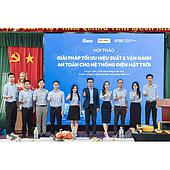
On May 14, EMIN, in collaboration with Fluke, will host a technical seminar in Nha Trang, focusing on testing and maintenance solutions for solar power systems.

Renewable energy is rapidly developing, and maintaining system performance and lifespan becomes a practical challenge for solar power development companies. To ensure proper operational design over the years, it's crucial to determine the lifespan of the system before its completion.

Damage from weather effects or component degradation is often difficult to detect through visual inspection. Knowledge of testing equipment and appropriate maintenance techniques is an effective solution to ensure the value of your initial investment.

On May 14th, EMIN, in collaboration with Fluke, will be organizing a specialized workshop in Nha Trang, focusing on solutions for testing and maintaining solar power systems. Attendees will also have the opportunity to directly experience and evaluate the equipment under real-world operating conditions.

Event Information:

- Time: Morning, Thursday, May 14, 2026

- Location: Novotel Hotel, 50 Tran Phu Street, Nha Trang City, Khanh Hoa Province.

Main topics at the workshop

At the workshop, you will gain hands-on experience and master:

IEC Standards in the Solar Industry: The most up-to-date regulations regarding safety testing and system performance (per IEC 62446-1).

Decoding I-V Curve Tracing: How to interpret I-V curves for precise troubleshooting—identifying everything from power loss due to soiling and shading to micro-cracks and Potential Induced Degradation (PID).

Hands-on with Fluke’s Latest Specialized Tools:

+ Fluke GFL-1500: A precision Ground Fault Locator solution that minimizes system downtime.

+ Fluke 283 FC Digital Multimeter: A dedicated measurement tool for PV systems up to 1500V DC, ensuring absolute safety for O&M engineers.

Here is a list of typical testing equipment that we have personally experienced:

1, Fluke PVA 1500HE2 for viewing battery voltage diagrams

2, Fluke ii915 for remote leak detection

3, Fluke-283 for measuring basic electrical parameters

4, Fluke GFL1500 for quick ground fault detection

5, Fluke 1625-2 for grounding system testing

6, Fluke RSE60 for fixed thermal monitoring

7, Fluke Ti401U for handheld thermal imaging of solar panels

8, Fluke 393 FC for high-voltage DC clamp meter

9, FLUKE FLK-PTI120 Pocket Thermal Camera for Quick Inspection

10, Fluke 87-5 Multimeter for All Environments

and a range of other advanced measurement and testing solutions from the company.

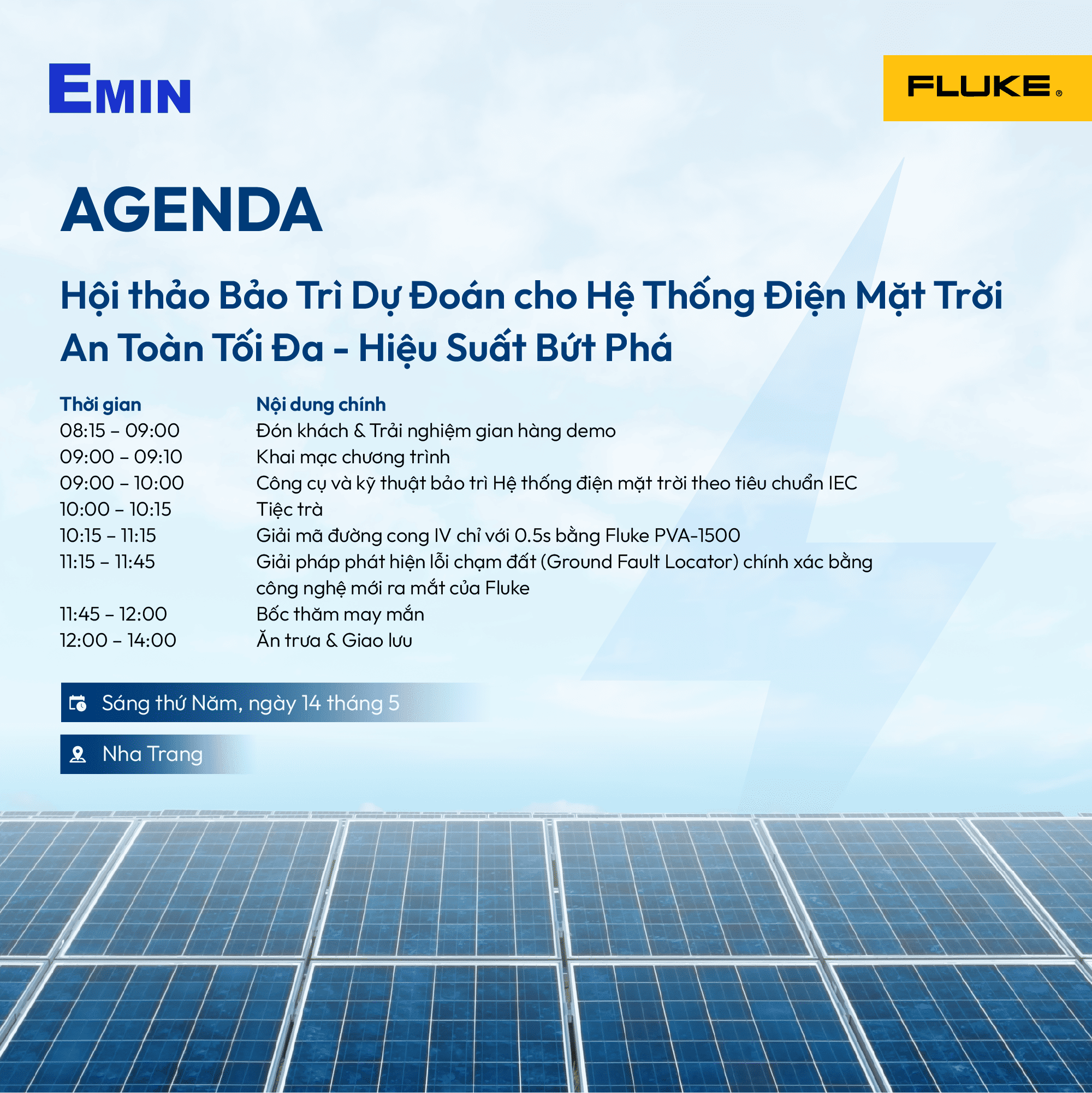
Timeline of the planned program
Benefits of attending

By participating in the project program, invited students will have the opportunity to experience firsthand and familiarize themselves with the latest testing equipment from Fluke, thereby gaining a better understanding of how to apply it to real-world work, while also expanding their network with professionals in the same field.

In addition to professional content, the program also provides instructional materials for participants to use long after the event. Especially noteworthy is the lucky draw with outstanding prizes such as Fluke 301E, Apple AirPods, smartwatches, power banks, and many other attractive gifts.

Register to attend:

The event is free to attend; however, seats are limited.

Register to reserve your spot here 👇

EMIN looks forward to welcoming you to the event
Related News

Which products are tested using a -40°C to +150°C thermal shock chamber?
07/22/2026 14:45:25

Automotive circuit boards, sensors, modules, and plastic components can all experience issues after repeated transitions between cold and hot environments. A thermal shock chamber operating from -40°C to +150°C enables the replication of these temperature fluctuations under controlled testing conditions.

Does thermal shock cause damage to electronic components?
07/22/2026 10:40:49

An electronic component may operate stably under constant temperature conditions yet fail after repeated rapid transitions between hot and cold. The issue typically stems not from a specific temperature level, but rather from the rate of temperature change and the number of hot-cold cycles

The rigorous standards behind a multi-million-dollar MRI suite
07/21/2026 14:54:01

An MRI system may be correctly installed and fully connected to the power supply, yet still encounter issues if the surrounding environment fails to meet technical specifications. Electromagnetic interference, RF shielding, power quality, grounding, temperature, humidity, and particulate levels are all factors that may require assessment, depending on the facility's design and the manufacturer's requirements.

Sinusoidal and Random Vibration: A Test Setup Guide for Industrial Engineers
07/21/2026 10:30:38

During the operation of industrial machinery or the transportation of goods, persistent mechanical vibrations inevitably occur; these are a primary cause of material fatigue, loosened connections, and cracking in printed circuit boards (PCBs). To ensure product integrity before delivery to customers, R&D and QA/QC engineers must simulate these dynamic forces using vibration test systems.

Capacities of laboratory centrifuge tubes
07/20/2026 13:55:40

Tubes with capacities of 0.2 ml, 1.5 ml, 15 ml, or 50 ml are commonly found in laboratories, yet each type is associated with specific sample categories and equipment configurations. DNA and RNA samples typically require small-volume microtubes; blood and cell samples often utilize 5 ml or 15 ml tubes; while large-volume processing workflows may require tubes of 50 ml, 100 ml, or greater capacity

Stay Updated with Offers

Get exclusive volume discounts, bulk pricing updates, and new product alerts delivered directly to your inbox.

By subscribing, you agree to our Terms of Service and Privacy Policy.

Quick Support

Direct access to our certified experts