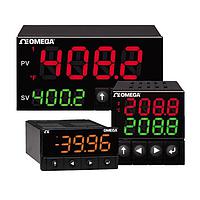
PID Controllers
Stable process control is often the difference between consistent production and costly variation. When temperature, pressure, flow, or speed must stay close to a target value, engineers typically rely on PID Controllers to keep the process responsive, accurate, and repeatable across changing operating conditions.
On this page, you can explore PID control solutions used in industrial automation, laboratory systems, and machine control. Whether you are replacing an existing unit, designing a new control loop, or comparing options with related devices such as power controllers, it helps to understand how PID control works and where it fits within a broader automation system.
Why PID control remains widely used in industry
A PID controller uses a closed-loop control method to compare the actual process value with a desired setpoint, then adjusts the output to reduce the difference. This feedback-based approach makes it suitable for systems where operating conditions can drift over time, such as heating equipment, fluid systems, and production lines with varying loads.
The reason PID remains so common is practical: it offers a strong balance between response speed, stability, and controllability. In many industrial environments, it provides a reliable way to maintain process performance without requiring overly complex control architecture.
How the P, I, and D functions work together
The three terms in PID each serve a different purpose. The proportional function reacts to the present error, so the controller responds quickly when the process moves away from the setpoint. The integral function looks at accumulated error over time and helps remove steady-state offset. The derivative function responds to the rate of change, which can help reduce overshoot and improve damping in dynamic systems.
These three actions are most effective when they are tuned to the behavior of the actual process. A heating system, for example, behaves differently from a pump or motor-driven system, so the controller settings must reflect response time, inertia, and the acceptable level of fluctuation. Proper tuning is what turns a basic control loop into a stable and usable process control solution.
Where PID controllers are commonly applied
PID controllers are widely used wherever a variable must be held near a target value. Common examples include temperature control in furnaces, ovens, and HVAC systems; pressure regulation in pipelines and vessels; flow control in process systems; and speed control in motor-driven equipment. They are also relevant in laboratory environments where repeatability and stable operating conditions are important.
In more demanding sectors such as food processing, chemicals, pharmaceuticals, and general manufacturing, PID control helps reduce process deviation and improve consistency. For applications involving tank management or similar feedback loops, users may also compare PID devices with a dedicated level controller depending on the required control logic and process complexity.
Key points to consider when selecting a PID controller
Choosing the right unit starts with the variable being controlled and the behavior of the system itself. Temperature loops may require different control output characteristics than pressure or flow loops, while fast-changing machinery may place more importance on input response and tuning flexibility. The available sensor types, required output signals, and integration with existing control hardware should all be reviewed before selection.
It is also important to consider how the controller will be operated in the field. Some users prioritize straightforward setup and local display, while others need broader automation compatibility or more configurable control behavior. In installations where the logic extends beyond a single loop, it may be worth evaluating whether programmable controllers are needed alongside PID control for higher-level sequencing and coordination.
PID control within an industrial automation ecosystem
A PID controller rarely works alone. In a typical installation, it forms part of a complete loop that includes sensors, actuators, power elements, and supervisory equipment. The sensor measures the process variable, the controller calculates the required correction, and the actuator carries out the adjustment. This continuous feedback cycle allows the process to remain close to the desired operating point.
Because of this role, PID control often sits alongside other specialized controllers. For example, systems focused on environmental conditions may combine PID functionality with a humidity controller, while thermal applications may require coordinated output control to heating elements or related power devices. Understanding that wider context helps buyers choose a controller that fits the real operating environment rather than only the setpoint value on paper.
Featured manufacturers in this category
This category includes products from established automation and control brands such as OMEGA, IDEC, and ATC Automatic Timing & Controls. These manufacturers are known in industrial environments for control and instrumentation solutions used across manufacturing, utilities, testing, and facility systems.
When comparing brands, the most useful approach is to focus on application fit rather than only brand familiarity. Engineers typically look at control stability, installation requirements, ease of parameter setting, and compatibility with the surrounding system. That approach leads to better long-term performance than choosing on specification labels alone.
When a PID controller is the right choice
PID control is a strong fit when the process variable changes continuously and needs active correction based on feedback. It is especially useful where simple on/off control would cause excessive cycling, instability, or poor accuracy. In those cases, a properly selected and tuned controller can improve product quality, reduce waste, and support more consistent operation.
At the same time, the right selection depends on the application goal. Some systems need only a simple dedicated controller, while others require a broader automation strategy with multiple devices working together. Reviewing the process type, sensor input, control output, and integration needs will usually make the best choice much clearer.
For buyers evaluating options in this category, the most important step is to match the controller to the dynamics of the real process. A well-chosen PID controller supports stable operation, better repeatability, and easier control of critical variables across industrial and laboratory applications.
Get exclusive volume discounts, bulk pricing updates, and new product alerts delivered directly to your inbox.
By subscribing, you agree to our Terms of Service and Privacy Policy.
Direct access to our certified experts