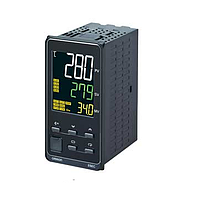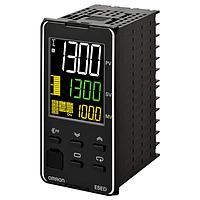
Temperature Controller
Stable thermal control is a basic requirement in many production and process environments, from packaging lines and ovens to laboratory equipment and HVAC-related systems. When temperature drift affects product quality, cycle time, safety, or energy use, selecting the right Temperature Controller becomes an important part of system design rather than just a simple component choice.
On this page, you can explore temperature control solutions used in industrial automation for monitoring, regulating, and maintaining process conditions. The category is relevant for engineers, maintenance teams, panel builders, and OEMs looking for practical control hardware that fits real operating requirements.
Where temperature controllers are used
A temperature controller is typically applied wherever a process must hold a target temperature within an acceptable range. Common examples include heaters, furnaces, hot plates, molding equipment, sealing machines, drying systems, food processing lines, and environmental chambers. In these applications, the controller receives a signal from a temperature sensor, compares it with the setpoint, and adjusts the output to keep the process stable.
Depending on the machine or process, the controller may switch relays, drive solid-state outputs, or work with external devices that regulate heating power. In broader automation systems, temperature control often works alongside functions such as PID control, timing, alarms, and communications for operator visibility and process consistency.
What to consider when choosing a controller
The right selection usually starts with the process itself. Heating-only applications may be straightforward, while systems that heat and cool, run in batches, or respond slowly to load changes need more careful tuning. Key considerations include sensor compatibility, control method, output type, panel size, display readability, alarm functions, and whether the controller must integrate with a PLC, HMI, or supervisory system.
It is also important to think about the operating environment. Electrical noise, ambient heat, cabinet space, and maintenance access can all influence long-term reliability. For projects that involve more than one control variable, users may also compare temperature devices with related categories such as humidity control solutions or level-based control depending on the process.
Control behavior and process stability
Not all thermal processes behave the same way. Some respond quickly and can tolerate simple on/off control, while others need smoother correction to reduce overshoot and shorten stabilization time. In industrial settings, process stability often matters as much as reaching the setpoint, especially when the temperature directly affects material properties, curing, bonding, viscosity, or dimensional consistency.
For that reason, buyers often evaluate whether a controller supports more advanced regulation methods and how easily it can be configured during commissioning. A well-matched control strategy helps reduce temperature fluctuation, improve repeatability, and lower unnecessary energy consumption over long production runs.
Integration in industrial automation panels
Temperature controllers are frequently installed as part of a larger control architecture rather than used as isolated devices. In machine panels, they may operate with contactors, SSRs, alarms, safety devices, indicators, and programmable logic. This makes interface and communication requirements especially important when the system must report operating status or allow centralized parameter changes.
For more complex machines, users may also review programmable controllers when sequence control, data handling, or multi-step automation is required. In that setup, the temperature controller continues to handle the thermal loop while the PLC or related controller coordinates the wider machine logic.
Manufacturers commonly used in this category
This category may include temperature control products from established industrial brands such as Autonics, Delta, Honeywell, Fuji, Dwyer, Endress+Hauser, and Advantech. Each manufacturer is known in industrial markets for different strengths, such as panel automation, process instrumentation, or general control integration, so the best choice depends on the application rather than brand name alone.
When comparing options, it is useful to look at ecosystem fit as well as controller features. For example, a project may benefit from using a brand already present in the facility if that simplifies spare parts planning, operator familiarity, or communication with existing equipment. This is often a practical consideration in B2B purchasing and maintenance planning.
How to match the category to your application
For OEM design, repeatability and panel standardization are usually major priorities. Buyers often focus on form factor, wiring convenience, front-panel usability, and whether the controller supports consistent deployment across multiple machine models. For maintenance or retrofit work, the priority may shift toward replacing an older unit with minimal changes to panel cutout, wiring, and process behavior.
In process environments, the required level of control precision should be aligned with the actual thermal load and operating risk. A simple machine may only need basic control, while a system with variable throughput or sensitive product quality targets may need a more refined approach. If the application also involves heater load management, reviewing a related power controller category can help clarify how thermal output is being regulated at the power stage.
Why this category matters for engineering and purchasing teams
Choosing from a focused temperature controller category saves time because it narrows the search to equipment intended for thermal regulation in industrial settings. That is useful for engineers defining control architecture, purchasers comparing available brands, and technicians looking for replacements that fit established systems.
A good category structure also supports faster technical evaluation. Instead of sorting through unrelated automation components, users can compare products intended for similar tasks and then decide based on sensor type, output requirements, installation constraints, and process expectations. This makes it easier to move from specification review to implementation with fewer mismatches.
Final considerations
Temperature control is closely tied to product quality, process repeatability, equipment protection, and energy performance. Whether you are building a new machine, upgrading a control panel, or replacing an existing unit, the most effective approach is to match the controller to the thermal behavior of the application and the needs of the wider automation system.
Use this category to identify suitable industrial temperature control options, compare relevant manufacturers, and narrow down the right solution for your operating environment. A well-selected controller helps create a system that is easier to tune, easier to maintain, and more consistent in day-to-day production.
Get exclusive volume discounts, bulk pricing updates, and new product alerts delivered directly to your inbox.
By subscribing, you agree to our Terms of Service and Privacy Policy.
Direct access to our certified experts