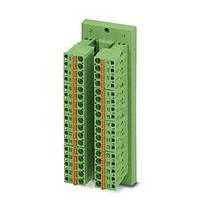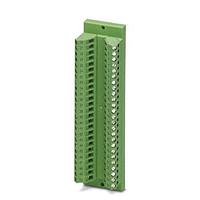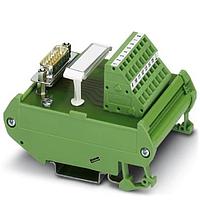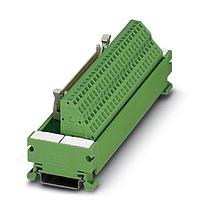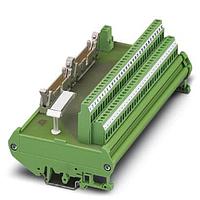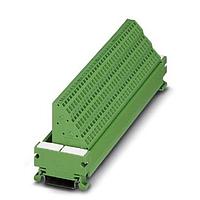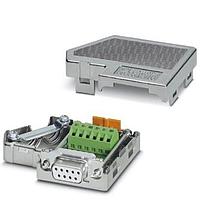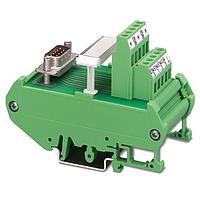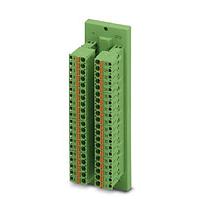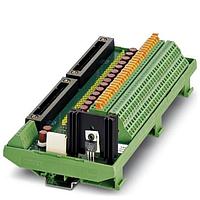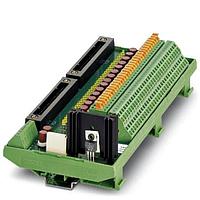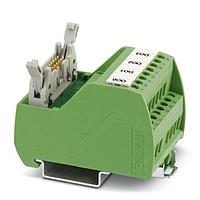
Terminal Block Interface Modules
Clean panel wiring often depends on more than just landing conductors securely. In many control cabinets, the real challenge is organizing signals between field devices, PLC I/O, relays, and test points without creating a crowded or hard-to-service layout. Terminal Block Interface Modules help solve that problem by bringing wiring termination and signal interfacing into a more structured, maintainable form.
These modules are commonly used where engineers need a practical bridge between control hardware and field wiring. They can simplify installation, improve traceability during maintenance, and make cabinet modifications less disruptive over time. For machine builders, system integrators, and maintenance teams, this category is relevant wherever clear signal distribution and panel efficiency matter.
Where terminal block interface modules fit in a control panel
Interface modules sit between devices that generate or receive signals and the wiring infrastructure inside the enclosure. In a typical automation panel, that may mean connecting PLC inputs and outputs, relays, sensors, actuators, or other control points through a compact, organized interface. Instead of routing every connection directly in an ad hoc way, the module provides a more deliberate termination point.
This approach supports structured signal routing, especially in panels with many repetitive I/O channels. It can also make labeling, isolation of wiring sections, and troubleshooting more straightforward. When a system needs orderly handoff between electronics and field-side conductors, this type of module becomes a practical part of the panel architecture.
Common applications in industrial automation
Terminal block interface modules are widely used in factory automation, process control, machine building, and OEM panel assembly. They are particularly useful in applications where multiple sensor and control signals must be routed clearly, documented well, and serviced quickly. In these environments, better wire management is not just about appearance; it directly affects commissioning time and long-term maintainability.
They are also helpful when different parts of a cabinet need to be separated logically, for example between controller-side wiring and field-side terminations. In service situations, technicians benefit from having accessible connection points that are easier to inspect and verify. When downtime is costly, even small improvements in panel clarity can save meaningful time.
How they differ from standard terminal blocks
Standard terminal blocks are primarily used to terminate and join conductors in a reliable, modular way. If your goal is basic wire landing and distribution on a rail, a dedicated range of DIN rail terminal blocks may be the more direct choice. Interface modules, by contrast, are typically selected when the wiring task also involves signal organization, connection handoff, or easier interfacing to control equipment.
In other words, the value is not only in termination, but in creating a clearer relationship between devices, circuits, and wiring zones. Depending on the panel design, that can support faster assembly and reduce the risk of confusion during modifications. For projects with higher I/O density or more documentation requirements, the difference becomes more noticeable.
Key selection factors for engineers and panel builders
Choosing the right module starts with the application rather than the part number alone. Engineers typically look at the number of circuits involved, the type of signals being handled, available installation space, and how the module will integrate with adjacent terminal hardware. Connection style, panel layout, and maintenance access are also important because these products often influence the serviceability of the entire enclosure.
It is also useful to consider the broader terminal ecosystem around the module. For example, related items such as terminal block tools and accessories can affect marking, assembly efficiency, and ongoing maintenance work. In practice, a good selection balances electrical compatibility, mechanical fit, and the workflow of the technicians who will build and service the panel.
Manufacturer landscape in this category
This category may be relevant to buyers working across a range of industrial and control brands. Well-known names in adjacent connection, automation, and panel hardware ecosystems include PHOENIX CONTACT, HARTING, Omron Automation and Safety, SCHNEIDER, Eaton Bussmann, and AMP Connectors - TE Connectivity. Their presence in related industrial connectivity and automation environments often makes them familiar reference points for engineers comparing cabinet components.
Depending on the project, buyers may also encounter solutions associated with broader automation suppliers such as Advantech. The right choice is usually driven less by brand visibility alone and more by panel standards, wiring practices, integration needs, and preferred maintenance workflow. For B2B procurement teams, consistency across the cabinet bill of materials can be just as important as the module itself.
Benefits for maintenance, testing, and panel changes
One of the strongest advantages of interface modules is the way they support service-friendly panel design. Clear terminations and organized signal paths make it easier to inspect circuits, identify connection points, and isolate wiring during troubleshooting. This can be especially useful during startup, retrofits, or fault finding in systems with many similar signals.
They also help when a machine or control panel evolves over time. Expansions, rewiring, and component replacement tend to be easier in layouts that were designed with accessible interfaces from the start. While no single component solves every maintenance issue, a well-planned interface layer often contributes to better documentation and smoother intervention in the field.
When this category is the right fit
If your application requires more than a simple conductor-to-conductor connection, this category is worth reviewing. Terminal block interface modules are often selected when the goal is to connect control systems to field wiring in a way that is cleaner, easier to manage, and more practical for long-term service. They are especially relevant in compact panels, repetitive I/O layouts, and projects where installation quality and future maintenance both matter.
For simpler terminal arrangements, other terminal block categories may be more appropriate. But when signal interfacing, panel organization, and accessible wiring are part of the requirement, these modules offer a useful middle layer between control equipment and the rest of the cabinet.
Choosing with the whole wiring system in mind
The most effective panel designs are rarely built from isolated components. Terminal block interface modules work best when selected as part of a broader wiring strategy that includes terminals, labeling, accessories, and logical cabinet layout. Looking at the full connection path upfront can help reduce rework later and improve the consistency of the finished system.
For engineering teams and industrial buyers, this category supports a practical objective: creating panels that are easier to assemble, easier to understand, and easier to maintain. If your project involves organized signal handoff inside an automation cabinet, reviewing the available terminal block interface modules is a sensible next step.
Get exclusive volume discounts, bulk pricing updates, and new product alerts delivered directly to your inbox.
By subscribing, you agree to our Terms of Service and Privacy Policy.
Direct access to our certified experts