Timers
Accurate timing is a small detail that often has a big effect on machine behavior. In automated systems, a well-chosen timer helps coordinate delays, switching sequences, pulse control, safety-related waiting periods, and repeatable process steps without adding unnecessary complexity to the control design.
On this page, you can explore Timers used in industrial automation for panel building, machine control, and process sequencing. These devices are commonly applied where outputs must change state after a defined interval, where repeated on/off cycles are needed, or where timed coordination between sensors, relays, and actuators is part of normal operation.
Where timers are used in industrial automation
Timers are widely used in production lines, material handling systems, packaging equipment, HVAC control panels, and utility systems. A timer can delay motor startup, hold an output for a fixed duration, manage purge cycles, sequence alarms, or coordinate actions between multiple parts of a machine.
In many panels, timing functions work alongside devices such as contactors, relays, and protection components. They are also commonly integrated with PLC-based architectures, especially when designers want a dedicated hardware timing function instead of placing every event inside a software routine.
Common timing functions and control logic
Not every application needs the same operating mode, which is why timer selection should start with the required timing behavior. The most common functions include on-delay, off-delay, interval timing, one-shot pulse generation, and cyclic timing for repetitive switching.
An on-delay function is useful when an output should activate only after a set wait period. Off-delay timing is often chosen when a device must continue running briefly after a control signal is removed. Cyclic modes support recurring operations such as flashing indicators, lubrication intervals, or periodic ventilation control.
When timing requirements become part of a larger automation strategy, users may also compare dedicated timer devices with industrial controllers. The right choice depends on how much flexibility, programmability, and I/O coordination the application requires.
Key factors to consider when selecting a timer
A practical timer choice usually depends on more than just the delay range. Buyers should review the intended supply voltage, mounting format, contact configuration, output type, reset behavior, and the accuracy needed for the process. Environmental factors such as temperature, vibration, and panel space can also affect suitability.
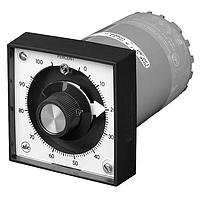
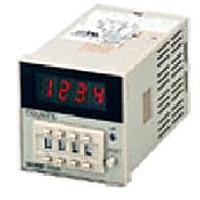
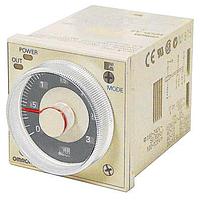
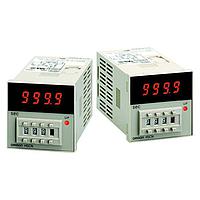
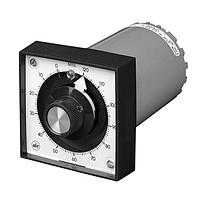
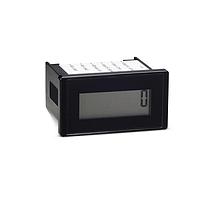
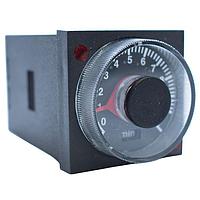
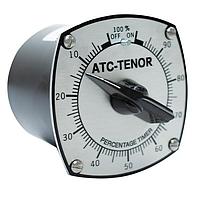
For panel builders and maintenance teams, the interface matters as well. Some applications benefit from simple dial-based setup for quick adjustments, while others require clearer digital settings to reduce operator error. In systems where repeatability is critical, consistent timing performance and straightforward commissioning are often more important than feature count alone.
It is also useful to think about how the timer will interact with surrounding equipment. If the circuit includes protective devices, overload handling, or frequent switching loads, related components in circuit protection may be relevant during design or retrofit work.
Mechanical, electronic, and panel integration considerations
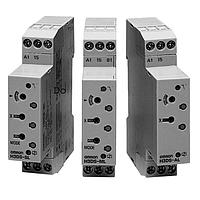
Industrial timers are available in different construction styles, and each style supports a different maintenance and integration approach. In modern control panels, electronic timers are often preferred for compact size, stable performance, and easier setting of timing ranges. They are suitable for applications where repeatability and space efficiency are important.
Installation format should match the panel architecture. DIN rail mounting, socket mounting, or front-panel installation can influence serviceability and replacement speed. For OEMs and system integrators, choosing a familiar format can simplify assembly, documentation, and spare parts planning across multiple machine builds.
Where status indication and troubleshooting visibility matter, users may prefer models with clear operating indicators or straightforward terminal layouts. This becomes especially helpful in maintenance environments where technicians need to confirm timing states quickly during commissioning or fault diagnosis.
Brands commonly considered for timer applications
This category may include products from widely recognized automation manufacturers such as OMRON, Autonics, Finder, Honeywell, OMEGA, PANASONIC, and PHOENIX CONTACT. These brands are often evaluated in industrial projects where reliability, compatibility with panel standards, and long-term availability are important purchasing factors.
Brand choice is usually influenced by existing site standards, preferred mounting systems, required timing modes, and the need for support across multiple automation components. In some projects, buyers also look for consistency with adjacent devices from the same supplier to simplify wiring practices and maintenance procedures.
How timers fit into a broader control system
A timer is rarely selected in isolation. It typically works as part of a broader control chain that may include sensors, switching devices, counters, and operator interfaces. For example, a timing relay might trigger after a sensor event, enable a motor starter after a delay, or repeat a signal used in batching or indexing equipment.
In applications involving counting, speed-related events, or event sequencing, engineers may also review counters and tachometers to determine whether the requirement is truly time-based or linked to pulses, rotation, or production count. Making that distinction early helps avoid overcomplicating the control design.
Choosing the right timer for maintenance, OEM, and retrofit projects
For replacement work, the safest starting point is to verify the original function, supply characteristics, wiring method, and the load being controlled. A timer that appears similar in form factor may behave differently in operation, especially when timing mode or output behavior changes. Matching the control intent is more important than matching appearance alone.
For new machine builds, it is worth considering future service needs from the beginning. Standardizing timer formats across panels can reduce downtime, while selecting devices that are easy to set and diagnose can improve both commissioning speed and long-term maintainability.
Whether the goal is a simple delay function or a more structured sequence within a control panel, the right timer supports stable, predictable automation. Reviewing the timing mode, installation method, electrical compatibility, and relationship to the rest of the control system will help narrow the category to the most suitable options for your application.
Get exclusive volume discounts, bulk pricing updates, and new product alerts delivered directly to your inbox.
By subscribing, you agree to our Terms of Service and Privacy Policy.
Direct access to our certified experts