
|
Maximizing Battery Life of IoT Devices By Minimizing Load Current Draw The Challenge of Measuring Low IoT CurrentsTo maximize battery life, your product current draw must be kept to an absolute minimum. This requires that you use low power components and efficient techniques to de-energize components when they are not in use. You need sensitive measurement instrumentation to measure current levels as low as nA. Determine the load current profileIt can be difficult to characterize the load current profile of a prototype IoT
To accurately capture these widely varying load current levels, you need an exceptional measurement solution that includes:
Keithley’s DMM7510 7½-digit Graphical Sampling Multimeter is well-equipped to meet these demands, as it offers:
Watch now to learn how to solve the IoT measurement challenges. Determine the Average Current of an IoT Device Simulate any battery typeHow low can the battery voltage drop before your IoT device turns off? Gauging battery performance at different stages of battery discharge is difficult, as it requires instrumentation that can accurately simulate battery performance. To address this, Keithley’s 2281S-20-6 Battery Simulator makes it easy to model any type of battery. It allows you to efficiently test prototype IoT devices in any battery state, with high repeatability to effectively estimate battery life. Combining a 2281S-20-6 Battery Simulator with a DMM7510 Graphical Sampling Multimeter will give you a complete solution for assessing power consumption and battery life of your IoT prototypes.
Program the battery simulator for any state of charge, such as near the completely discharged state, to determine how a product performs under a low battery condition and to determine the low battery shut-off voltage. Model any type of battery
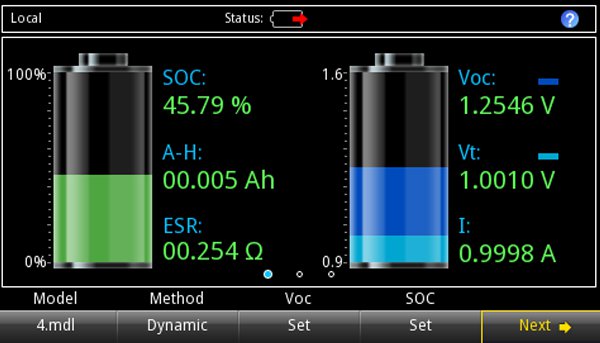
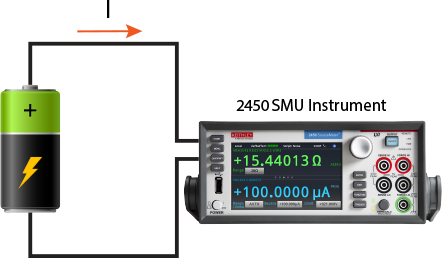
Create any battery model. The final piece of the puzzle is to create a model for the battery that powers your IoT device. Keithley’s 2450 or 2460 Graphical SourceMeter® Source Measure Unit (SMU) instruments make it easy to create the model for the battery used by your product. A battery model-generating script operates the SMU instrument as a controlled current load and derives the model parameters.
|
Maximizing Battery Life of IoT Devices By Minimizing Load Current Draw
05/03/2018 09:54:49
The Challenge of Measuring Low IoT Currents To maximize battery life, your product current draw must be kept to an absolute minimum. This requires that you use low power components and efficient techniques to de-energize components when they are not in use. You need sensitive measurement instrumentation to measure current levels as low as nA.

Related News

10/20/2026 16:35:05
Diagnosing the causes of plastic color variation, managing metamerism, distinguishing between SCI/SCE measurement modes, and applying Delta E standards for color deviation assessment in QA/QC
10/20/2026 15:07:44
On the afternoon of October 19, 2026, the workshop “Solutions for Optimizing Performance and Ensuring Safe Operation of Solar PV Systems” was successfully held at Khanh Hoa College of Technology and Energy.
10/19/2026 16:28:49
Decoding differential pressure parameters according to EU GMP Annex 1 and ISO 14644 standards, interpreting HEPA filter/AHU clogging levels, and applying error calculation formulas to select precise measurement ranges for project handover

10/19/2026 16:06:30
Explaining hydraulic phenomena codes, identifying early signs of mechanical failure, and providing guidance on selecting pressure gauges and surge-protection accessories that meet technical standards for industrial systems

10/16/2026 17:22:08
Proactively controlling CO concentrations with CO gas detectors requires a systems-based engineering approach, from optimizing combustion chambers to establishing continuous automated monitoring infrastructure.
Stay Updated with Offers
Get exclusive volume discounts, bulk pricing updates, and new product alerts delivered directly to your inbox.
By subscribing, you agree to our Terms of Service and Privacy Policy.
Quick Support
Direct access to our certified experts