In high-voltage electrical equipment such as GIS and circuit breakers, an SF6 dew point meter is used to check gas purity, moisture content/dew point, and decomposition products. Measurement results depend not only on the sensor but also on the sampling method, cleanliness of the sampling line, and the tightness of the connections.
Therefore, following the correct procedure—from equipment inspection and sampling line preparation to connection and gas sample stabilization—is essential to minimize measurement errors and ensure reliable data for assessing equipment condition.
Step 1: Clean or Evacuate the Sampling Line
This step has a direct impact on the reliability of the first measurement.
Before connecting the hose to the SF6 compartment, use the purge or hose evacuation function if required by the instrument. The purpose is to remove residual air and moisture from the sampling line.
According to the operating instructions of some SF6 dew point meters, the sampling hose should be evacuated before the first measurement. Once the preset residual pressure is reached, the evacuation process stops automatically. Other instruments use a Line Purge function to clean the sampling line before the test begins.
The hose should not be connected to the electrical equipment and used for measurement without first preparing the sampling line. Otherwise, the first gas entering the instrument may be a mixture of SF6 and residual air inside the hose.
Step 2: Connect the Instrument to the SF6 Gas Compartment
Once the sampling line is ready, connect the hose to the sampling valve of the GIS, circuit breaker, or other equipment being tested.
Before installation, check the following:
- The connector is the correct type and size.
- Threads and sealing surfaces are clean.
- The connection is free from leaks.
- The gas compartment pressure is within the instrument's allowable range.
An improperly sealed connection can not only cause gas loss but may also allow ambient air to enter the sampling line. For gas purity and moisture measurements, this can cause significant measurement errors.
After connecting the hose, open the valve according to the sequence specified for the instrument and accessories being used. Do not open the valve too quickly or change the sampling pressure without first confirming the instrument's operating limits.
Step 3: Start the Measurement and Allow the Gas Sample to Stabilize
When the gas sample begins entering the instrument, the result should not be recorded immediately.
The gas needs sufficient time to:
- Completely replace the gas remaining in the sampling line.
- Pass through the filter and flow-control system.
- Reach the sensor.
- Stabilize at the displayed value.
Response times vary depending on the parameter being measured. A moisture sensor may require more time when measuring a low dew point, while gas purity measurements may produce results more quickly. For example, an SF6 multi-parameter analyzer distributed by EMIN specifies a measurement time of less than 2 minutes, but the actual time depends on the instrument configuration and sample conditions.
Therefore, the recommended operating principle is to wait until the readings stabilize according to the manufacturer's instructions rather than recording the first value displayed on the screen.
Step 4: What Parameters Does an SF6 Dew Point Meter Measure ?
An SF6 gas leak detector typically performs measurements through an automatic or semi-automatic cycle.
Measuring SF6 Purity
SF6 purity indicates the proportion of SF6 in the gas sample. This parameter is commonly checked after gas filling, gas recovery or treatment, and during periodic maintenance.
A low purity reading may be associated with the presence of air or other gases. However, the cause should not be determined from the purity value alone. The gas handling history, sampling conditions, and other measured parameters should also be considered.
Measuring Moisture Content or Dew Point
This measurement evaluates the amount of water vapor in the gas. High moisture content can affect insulation performance and may indicate the risk of moisture entering the system.
Many instruments display the result as dew point or frost point. Units and conversion conditions should be standardized when comparing data from different measurements.
For example, some SF6 analyzers have a dew point measurement range from -80°C to +20°C. However, this is a specification of a particular model and should not be considered a general range for all SF6 gas analyzers.
Measuring Decomposition Products
Advanced SF6 analyzers may measure SO₂, H₂S, CO, HF, or other components depending on their configuration.
These parameters are commonly used to assess changes in the gas after operation, particularly when inspecting equipment following a fault or electrical arc.
It should be noted that decomposition-gas sensors have their own service life and operating limitations. When abnormal results are detected, the sensor condition, calibration status, and sampling procedure should also be checked before drawing conclusions about the condition of the equipment.
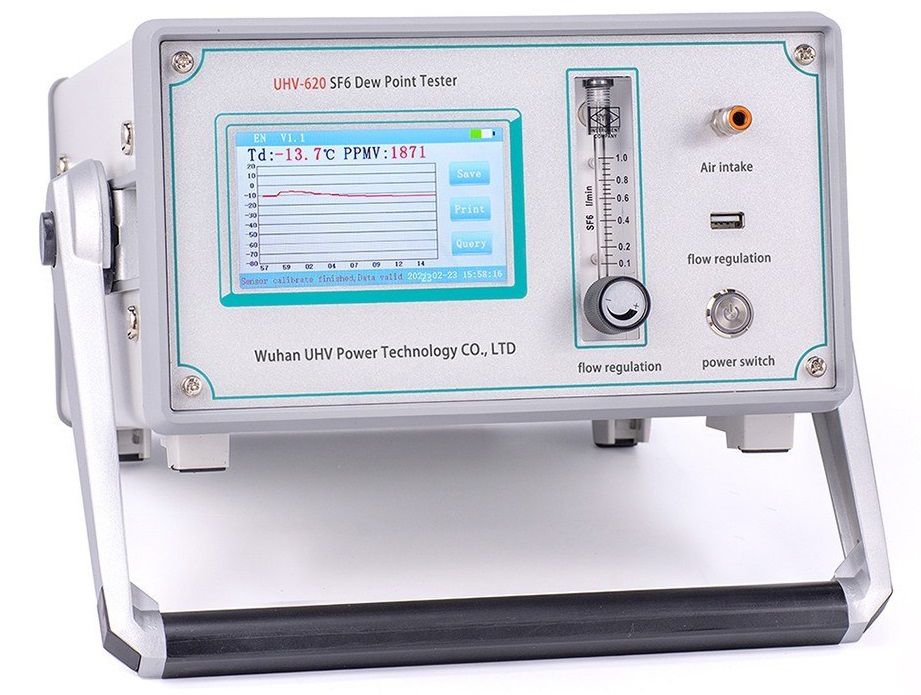
Step 5: Record and Evaluate the Measurement Results
Once the readings have stabilized, save the results in the instrument's memory or export the data using the supported method.
A measurement report should associate the results with multiple parameters, including:
- Equipment ID or sampling location.
- Measurement date and time.
- Gas parameters.
- Relevant operating conditions or equipment status.
- Measuring instrument used.
Analyzing SF6 purity, moisture/dew point, and decomposition products together allows the different parameters to be cross-checked, making abnormal conditions easier to identify and providing a more comprehensive assessment of both the gas condition and the electrical equipment.
Step 6: Recover or Handle the Gas After Measurement
After the test is completed, the gas that has passed through the instrument should be handled according to the instrument's design.
Some SF6 dew point meters are equipped with gas recovery systems, while other instruments use different sampling methods. The end-of-test procedure should therefore follow the instructions for the specific model.
If the instrument has a storage cylinder or gas recovery system, check the condition of the cylinder before and after the measurement. The gas should not be vented or handled improperly.
Next, close the sampling valve, disconnect the hose according to the specified procedure, and seal the connectors to prevent dust, moisture, or other contaminants from entering.
The reliability of measurement results depends not only on the sensor but also on sample quality, connection tightness, sampling flow rate, and the calibration status of the SF6 gas analyzer.
The operating procedure for an SF6 dew point meter can be summarized as follows: inspect the instrument → clean or evacuate the sampling line → connect the instrument → take the sample and wait for the readings to stabilize → save the data → recover or handle the gas → clean and store the instrument.