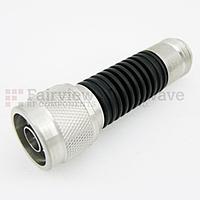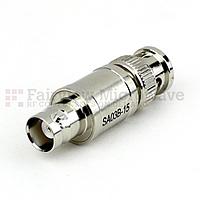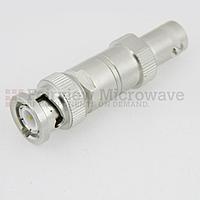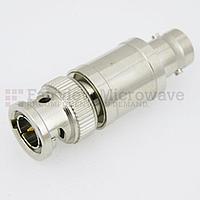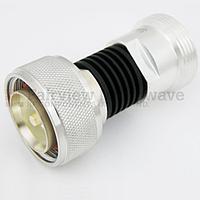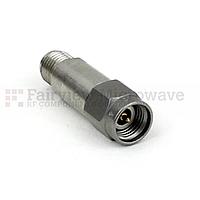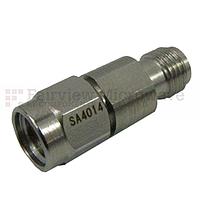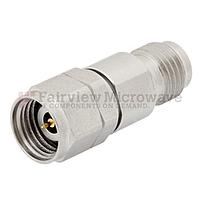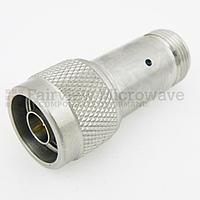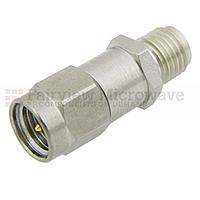
Attenuator
Signal conditioning is often just as important as signal generation or measurement in an RF design. When power levels need to be reduced in a controlled way without distorting the signal path, attenuator devices play a central role in protecting circuits, improving matching, and helping engineers manage dynamic range across wireless and RF systems.
On this category page, you can explore attenuator solutions used in communication equipment, test setups, embedded RF modules, and high-frequency signal chains. These components are commonly selected when designers need predictable loss, stable performance, and better control over signal levels between active and passive stages.
Why attenuators matter in RF signal chains
In practical RF design, signal levels are not always naturally aligned from one stage to the next. A receiver front end, amplifier stage, mixer path, or measurement port may require a lower input level to avoid overload, compression, or inaccurate readings. A fixed or controlled attenuation stage helps create a more usable and stable operating window.
Attenuators are also used to improve isolation, support impedance matching, and reduce the effect of reflections in sensitive systems. In laboratory and production environments, they are frequently part of calibration and protection strategies, especially where instruments, transceivers, and evaluation platforms need repeatable and safe signal handling.
Common applications for attenuator devices
Attenuators appear in a wide range of RF and microwave applications, from wireless infrastructure and embedded radio modules to development benches and automated test systems. They are useful wherever signal power must be trimmed to a defined level before entering another device, whether that is a measurement instrument, a converter stage, or a downstream integrated circuit.
They are also relevant in design workflows that involve RF amplifiers, since gain stages and attenuation stages are often used together to balance output level, noise, and linearity. In many systems, the correct combination of gain and attenuation is essential for stable end-to-end RF performance rather than maximum gain alone.
How to evaluate the right attenuator for your design
Choosing the right part starts with understanding where the component sits in the signal path and what problem it needs to solve. In some designs, the main requirement is straightforward level reduction. In others, the priority may be protecting a sensitive input, improving return loss behavior, or preserving signal integrity across a broader frequency range.
Engineers typically review factors such as attenuation value, frequency coverage, power handling, insertion characteristics, and integration requirements at the board or module level. Mechanical and interconnect context can matter as well, especially in compact RF assemblies where connectors, transitions, and packaging influence real-world performance as much as the nominal circuit value.
Attenuators in the broader RF component ecosystem
An attenuator rarely works in isolation. It is usually part of a broader architecture that may include filters, couplers, switches, matching networks, and active front-end devices. That is why category-level selection should be considered alongside neighboring RF building blocks such as integrated amplifier solutions and other signal-conditioning components where system balance is critical.
For sourcing teams and design engineers, this broader view helps reduce redesign risk. A component that looks suitable on paper may still need to be checked against board constraints, test interfaces, and adjacent RF stages. Looking at attenuators as part of a complete signal chain leads to better component decisions and more predictable system behavior.
Representative manufacturers in this category
This category may include products and related RF component lines from established suppliers such as Analog Devices, Broadcom, Mini-Circuits, Microchip Technology, and Maxim Integrated. These manufacturers are widely recognized in wireless and RF electronics, where component consistency and application fit are important for both development and production use.
Depending on the project, buyers may also review ecosystem compatibility with interconnect and test-oriented brands such as Amphenol, Hirose Electric, KEYSIGHT, and ANRITSU. In RF environments, component selection is often influenced not only by the attenuator itself, but also by how it fits into connectors, fixtures, instruments, and higher-level platform requirements.
Selection considerations for engineering and procurement teams
For engineering teams, the key question is usually technical fit: whether the attenuator supports the intended frequency range, signal level, and integration method. For procurement teams, consistency of supply, manufacturer preference, and compatibility with existing approved vendor lists may be equally important. A good category page should support both perspectives by making comparison easier without reducing the decision to a single specification.
It is also useful to distinguish between prototype-stage needs and production-stage needs. During development, engineers may prioritize flexibility and evaluation convenience. In production, repeatability, packaging format, and sourcing continuity often become more important. Reviewing attenuators in this wider business context can streamline both design approval and purchasing workflows.
Finding the right attenuator for your application
Whether the requirement is signal reduction, front-end protection, or cleaner level control between RF stages, the right attenuator depends on how the device will function within the complete system. A careful review of attenuation behavior, application context, and related RF components usually leads to a more reliable design outcome than selecting by part type alone.
Use this category to narrow down options that fit your wireless and RF design environment, and compare them alongside adjacent component families when needed. That approach makes it easier to build a signal chain that is not only functional on paper, but also stable, measurable, and easier to deploy in real applications.
Get exclusive volume discounts, bulk pricing updates, and new product alerts delivered directly to your inbox.
By subscribing, you agree to our Terms of Service and Privacy Policy.
Direct access to our certified experts