To thoroughly address this issue, EMIN presents the precise combination of operating temperature and specialized chemistry to maximize cleaning performance for your facility.
Controlling Bath Temperature in Ultrasonic Cleaners
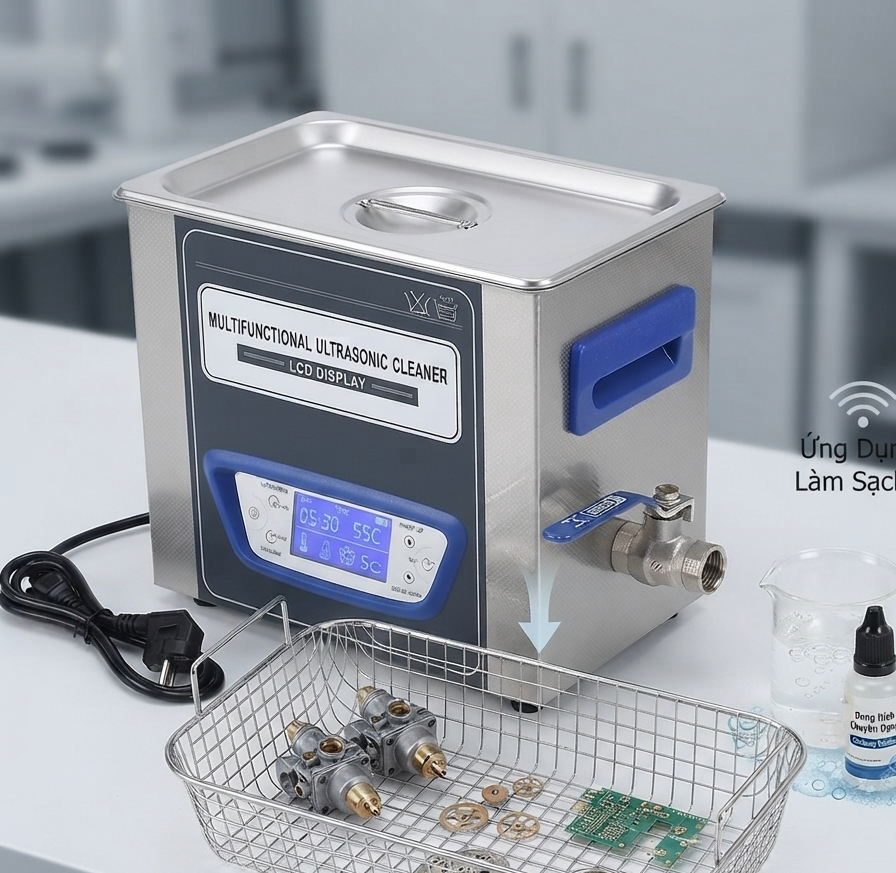
Fluid temperature plays a decisive role in cavitation bubble generation and breaking the bond of contaminants during ultrasonic cleaning.
Ideal Temperature Range of 50°C to 65°C: This optimal thermal window maximizes cavitation energy, enabling rapid stripping of protective grease, oils, and carbon deposits from machined components.
Limiting Temperatures Above 70°C: At excessively high temperatures, increased vapor pressure causes cavitation bubbles to implode prematurely before reaching high-energy collapse, significantly diminishing cleaning efficiency.
For applications requiring strict thermal regulation to prevent damage to circuit boards or plastic components, the Jeken TUC-45 Ultrasonic Cleaner (4.5L) available at EMIN serves as an ideal solution with its precise temperature control and compact footprint.
Explore more equipment at EMIN Ultrasonic Cleaners
Why Specialized Ultrasonic Cleaning Solutions Are Essential
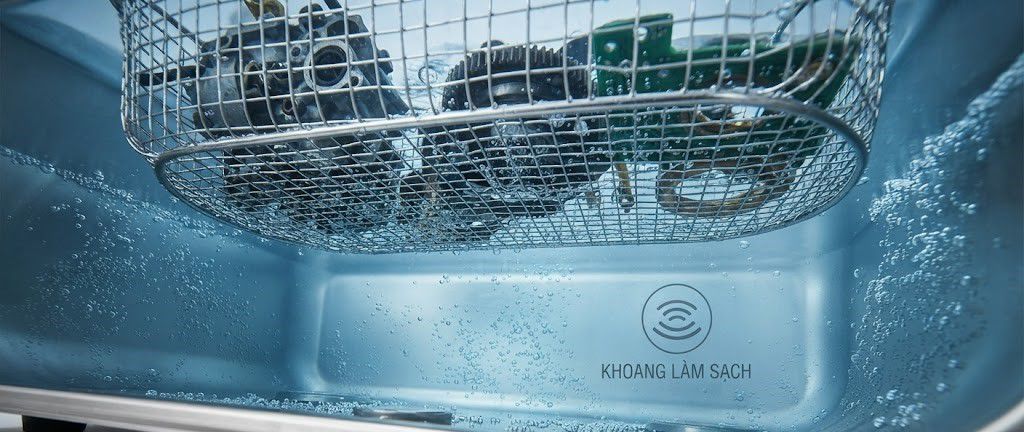
1. Plain water possesses high surface tension, forcing ultrasonic waves to expend substantial acoustic energy to induce cavitation. Formulated cleaning chemistries designed specifically for ultrasonic baths resolve this via three core mechanisms:
2. Lowering surface tension to increase micro-cavitation bubble density that penetrates blind holes, crevices, and fine threads. Added corrosion inhibitors protect copper, aluminum, and sensitive electronic contacts from flash rusting immediately post-cleaning.
3. Encapsulating and suspending liberated contaminant particles, preventing redeposition onto newly cleaned workpiece surfaces.
Process Parameters by Material Type
Depending on the specific characteristics of the component, appropriate temperature levels and chemistry formulations must be applied to maintain equipment integrity:
+ Electronic Components & PCBs: Utilize non-ionic water-based solutions, maintaining temperatures between 40°C - 50°C to safeguard solder joints.
+ Machined Parts & Engine Components: Use mild alkaline industrial degreasers combined with bath temperatures from 55°C - 65°C to dislodge heavy grease and carbon residues.
+ Medical & Surgical Instruments: Apply enzymatic biodegradable solutions maintained at 40°C to 55°C to avoid protein coagulation and baked-on organic soils.
Critical Operational Guidelines for Ultrasonic Baths
Never use flammable solvents such as alcohol, gasoline, or acetone directly inside the main tank, as acoustic friction and cavitation heat present significant flashpoint and explosion risks.
Always utilize suspension immersion baskets to hold parts; avoid resting heavy metal components directly on the transducer tank floor to prevent erosion, pitting, and stainless steel puncture.
Perform a degas cycle (idle run) for 5 to 10 minutes prior to processing parts to eliminate dissolved gases from freshly prepared cleaning solutions.
For industrial workshops and laboratory environments requiring continuous high-volume processing, the Aczet CUB-10 Ultrasonic Cleaner (9.8L) featuring a heavy-duty stainless steel tank effectively withstands high thermal loads and intense cavitation erosion.
If you require detailed guidance on selecting tank capacities or identifying the optimal chemical chemistry for your production line, contact the EMIN technical team today for sample testing support and cost optimization.