SF6 gas analyzer are used to measure gas purity, moisture content, dew point, decomposition products, and leakage conditions in high-voltage electrical equipment. Measurement accuracy does not depend solely on the sensor. The entire process before the gas reaches the instrument can also introduce measurement errors.
SF6 gas measuring and analysis instruments are available in different configurations, but the factors affecting measurement results generally fall into several main categories.
Sample Quality
A measurement begins at the sampling point, not at the sensor.
Valves, connectors, tubing, and residual gas remaining in the sampling line can all affect the sample. A gas path containing moisture or contaminants may alter the sample before the SF6 reaches the measurement chamber.
The tubing material also requires attention. Internal surfaces can absorb and release moisture, extending the stabilization time, especially when switching from a high-moisture sample to a dry sample.
For this reason, even an instrument with high accuracy specifications may produce unreliable data if the sampling process is not properly controlled.
Pressure, Temperature, and Flow Rate Directly Affect the Gas Sample
These three parameters are often closely related during measurement.
Pressure affects how moisture and dew point results are interpreted. When comparing measurement data with technical limits, the pressure conditions applicable to the measured values should be clearly identified.
Temperature can change the condition of the sample as the gas passes through the sampling line. Large temperature differences between the equipment, gas line, and surrounding environment may extend the time required for the system to reach equilibrium.
Flow rate determines how quickly the gas sample reaches the sensor. A low flow rate can slow down the measurement process, while an unsuitable flow rate may affect system stability.
A faster measurement process does not necessarily mean that reliable results will be available sooner. The sensor still requires sufficient time to stabilize.
Sensor Condition and the Effect of Previous Measurements
A sensor does not always return to its initial condition immediately after a measurement.
When samples with different characteristics are analyzed consecutively, the previous sample may affect the response time of the next measurement. This effect can be particularly noticeable when switching from a high-moisture gas sample to one with low moisture content.
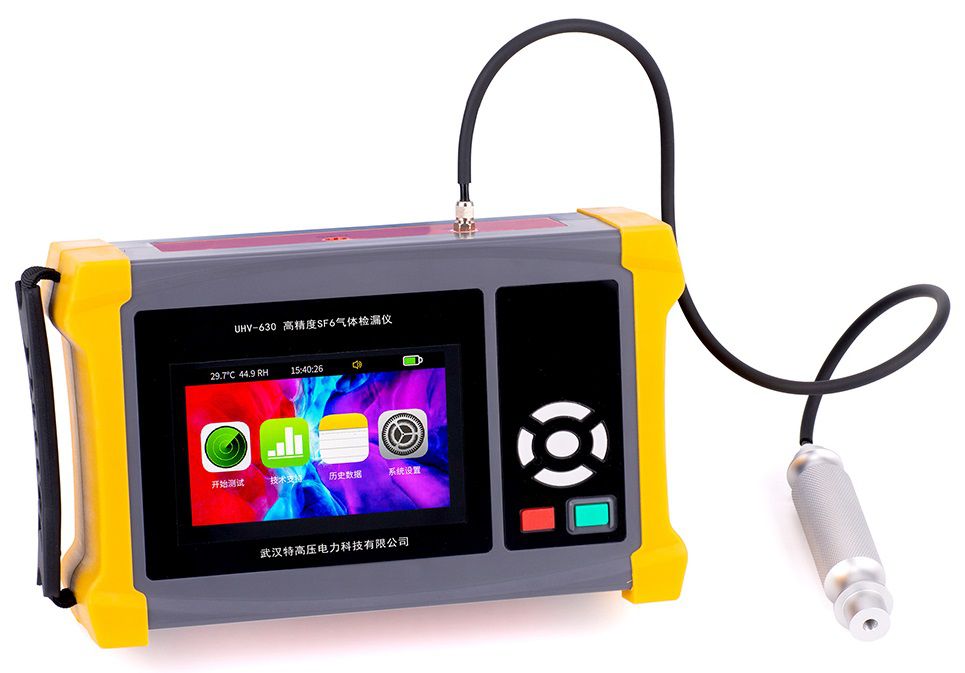
For an SF6 gas leak detector, sensor technology and its response to different gas components should also be considered.
Calibration helps control and verify the performance characteristics of an SF6 gas analyzer, but it cannot eliminate errors caused by the sampling line, gas conditions, or operating procedures.
Gas Composition and Decomposition Products Can Affect Results
Additional gas components may be present in SF6-filled high-voltage equipment after extended operation or as a result of electrical discharge.
A reduction in SF6 purity does not automatically identify the cause. Changes may be related to air ingress, gas filling procedures, sampling conditions, or changes in gas composition during operation.
For parameters such as SO₂, H₂S, HF, or CO, sensor response and cross-sensitivity should also be considered.
Therefore, evaluating SF6 condition based on multiple parameters can provide a more complete assessment than monitoring a single indicator alone.
Environmental Conditions Can Strongly Affect SF6 Gas Leak Detectors
For SF6 leak detectors, the surrounding environment becomes part of the measurement process.
Wind, ventilation systems, temperature, and enclosed spaces can affect the distribution of SF6 gas. The scanning direction and the distance between the probe and the suspected leakage point can also influence the ability to locate the leak source.
For this reason, SF6 gas analyzers and leak detectors should be operated according to actual site conditions rather than relying solely on the published sensitivity specifications of the instrument.
Gas Consumption Can Also Affect the Testing Process
For systems with multiple measurement points or small gas compartments, the amount of gas consumed during testing and the instrument's gas recovery capability can affect the operational efficiency of an SF6 gas analyzer.
In addition to measurement parameters and accuracy, it is important to consider how the gas enters the instrument, how it is analyzed, and how it is handled after the measurement when selecting an SF6 dew point tester.
Data reliability also depends on sample quality, pressure, temperature, flow rate, sensor condition, gas composition, and operating conditions. When analysis results show unexpected variations, the entire measurement chain should be checked to improve the effectiveness of SF6 gas analysis and increase the value of the data used for high-voltage electrical equipment maintenance.