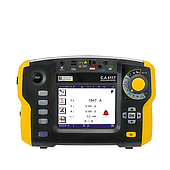
Modern machines allow for multiple measurements in a single device, but simply looking at the function names makes it difficult to grasp their practical value.

How can I get an accurate reading of the wind speed on an anemometer?
Airflow velocity is a central parameter in all air conditioning systems. Sensors (fans or heating elements) detect air movement and display it in units such as m/s or km/h.
It's important to note the measurement capability in low wind conditions. In air-conditioned spaces or enclosed rooms, air velocity is usually very low. A device with good sensitivity will maintain stable results, avoiding fluctuating data due to slow response. Stability at low velocities is a crucial factor when evaluating the practical value of the device.
See also: We measure wind flow, but the data is always different. Why is that?
How does the temperature reading on an anemometer help to accurately assess air conditions?
A multi-purpose anemometer almost always incorporates a temperature sensor. This parameter serves as supplementary data to assess the effectiveness of cooling or heat exchange.
At the same speed, the temperature variation between locations is the basis for determining whether the system is functioning correctly. A strong airflow without significant temperature variation is often ineffective.
Sensor response speed is a key consideration when performing data lookup. Moving between areas with varying temperatures and experiencing slow updates will render the data unreliable.
How does humidity readings from an anemometer affect environmental assessments?
When researching anemometers, many people focus only on speed and overlook humidity. In fact, humidity directly affects the sense of space and storage conditions.
High humidity makes the air feel heavy, while low humidity causes dryness. Environments such as storage warehouses, equipment rooms, or production areas need to control this parameter to avoid impacting operational quality.
Sensor stability over time is a common concern. Without regular calibration, errors can gradually increase without being noticeable during normal use.
Air flow provides an overall view rather than a single point measurement
Unlike velocity at a single point, airflow reflects the total amount of air moving through a cross-section over a period of time (commonly used in HVAC systems).
This result is calculated by the computer based on the velocity and area of the air inlet entered by the user. Errors often occur if the cross-section dimensions are entered incorrectly or if the sensor placement does not represent the entire airflow.
Light intensity is displayed in the multimeter for use in comprehensive environmental assessment
Some anemometers incorporate light sensors to assist in quickly checking working conditions. While not directly related to airflow, this parameter is still useful in environments requiring simultaneous monitoring of multiple factors.
Lux values help determine the level of illumination at the measurement location. In workshops or technical areas, insufficient lighting can affect operation and work accuracy.
Some anemometers incorporate light sensors to assist in quickly checking working conditions. While not directly related to airflow, this parameter is still useful in environments requiring simultaneous monitoring of multiple factors.
Lux values help determine the level of illumination at the measurement location. In workshops or technical areas, insufficient lighting can affect operation and work accuracy.